













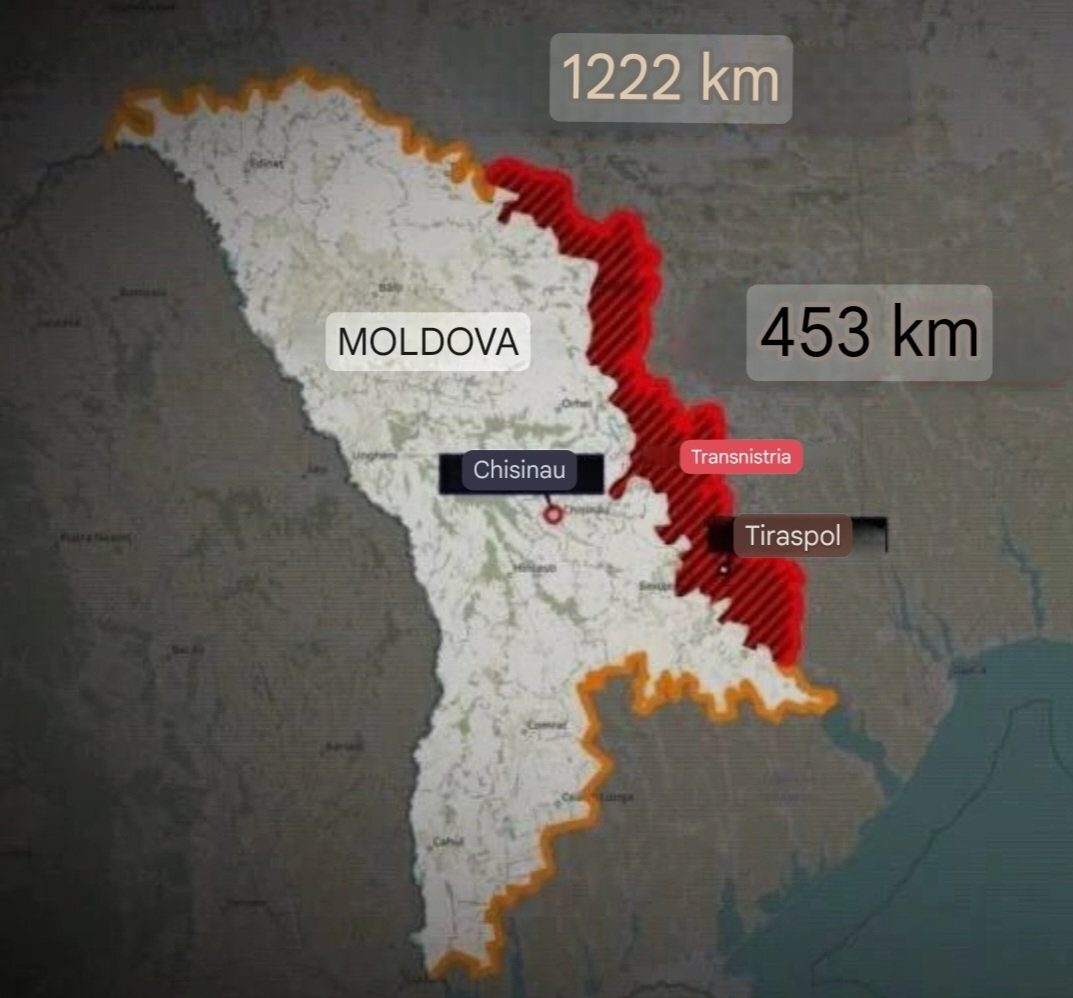
Russia on Wednesday warned the Republic of Moldova over the pro-Russia breakaway Transnistria region, claiming Chisinau wanted to “take over” the rebel province by force.
Russian Foreign Minister Maria Zakharova accused Moldova’s pro-European government of taking advantage of an impending energy crisis in the country which threatens to cause widespread blackouts and power outages.
A 60-day state of emergency began in Moldova on Monday over the prospect of a New Year’s Day halt to gas supplies to the MoldGRES Cuciurgan power plant, located in Transnistria which supplies the rest of Moldova with some 80 per cent of its electricity.
“If (gas) supplies stop, the Transnistrian region faces collapse,” said Victor Parlicov, the former energy minister, who has been blamed for the crisis.
Gazprom supplies the Cuciurgan plant for free, but the gas arrives via a pipeline in Ukraine. Almost three years into a full-scale Russian invasion, Ukraine says it will not extend its contract with the Russian energy giant which expires on January 1.
Ms Zakharova warned it would protect Transnistria residents, some of which hold Russian citizenship. “Any action that threatens their security will be considered an attack on the Russian Federation,” she said.
“It has reached the point where some hot heads in Chisinau, apparently encouraged by NATO and EU officials, have begun to fantasize about how to use the energy crisis in the country to solve the Transnistrian problem by force,” she continued.
“They claim that Russia …is indifferent to the Russians in Transnistria. I will repeat… no-one should have any doubts that Russia will respond adequately to any provocation and ensure the protection of its citizens in Transnistria.”
On January 1, Gazprom’s free gas to Transnistria will end, when the gas transit agreement between Gazprom and Naftogaz for Ukraine’s territory, signed in December 2019 expires.
The full-scale war has made signing a new contract between the Ukrainian state company Gazprom impossible.
Chișinău had hoped a temporary solution would emerge to prevent the complete cutoff, which would lead to energy price spikes and erode the popularity of the Moldova’s pro-European, pro-Ukrainian government.
By 2025, however, Moldova is expected to have an alternative to Transnistrian-Russian electricity from Romania. Construction began on a new high-voltage power line from Romania (Vulcănești–Chișinău) which will enable direct energy imports starting in 2025.
Moldova declares state of emergency as risk of Russian gas cutoff looms
