












Wolfgang Amadeus Mozart (a secret organ lover) labeled the pipe organ the “king of instruments.” Others have called it the “voice of God.”
Transylvania is home to most of Romania’s organs. Many are centuries old and sit in the medieval churches built by the Saxons after their arrival in the 12th century.
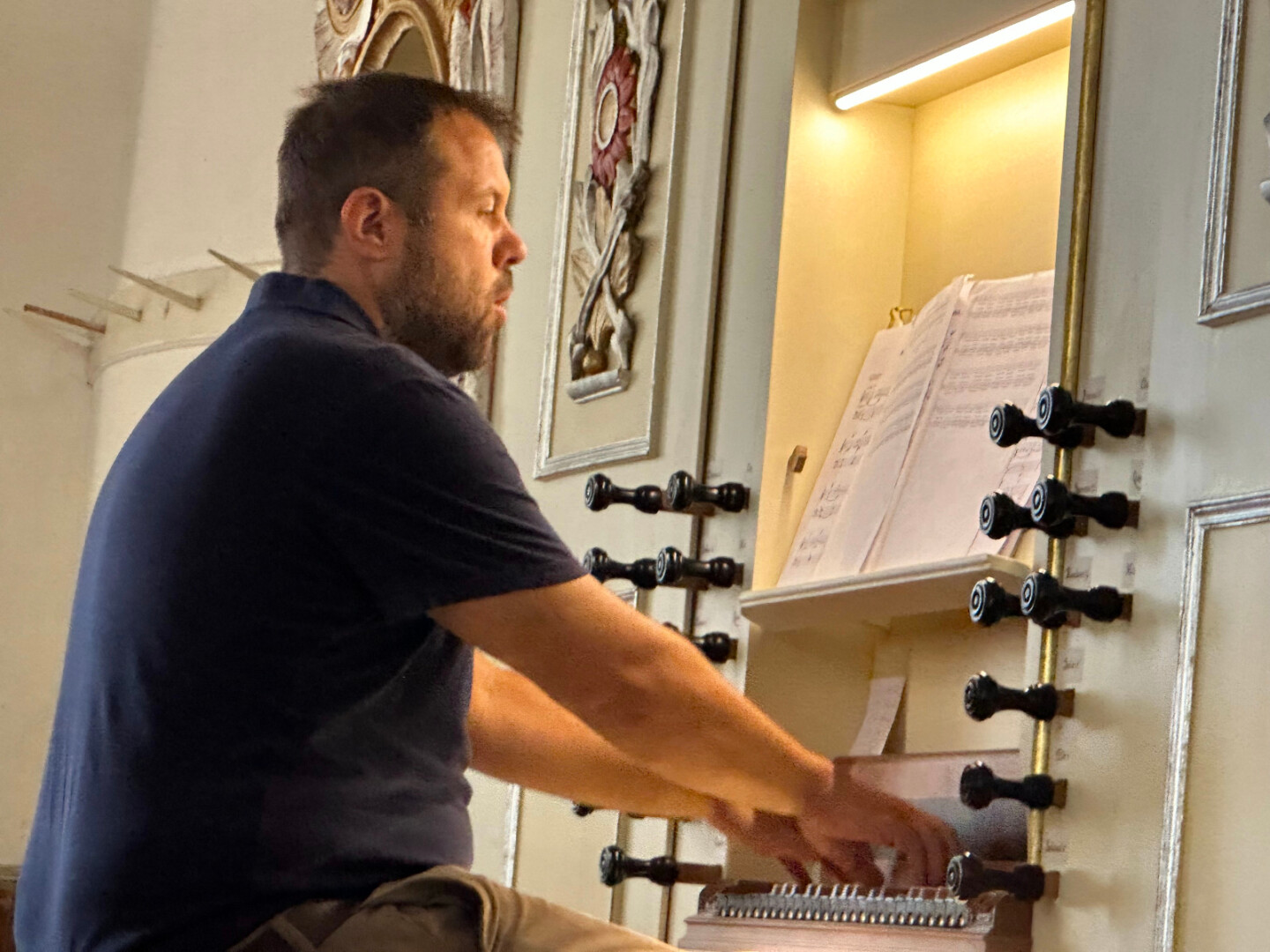
Organist Bruno Roth gave a recital on Friday on the newly restored organ built in 1786 and brought to the St. Stephen’s church in the village of Saschiz twenty years later.
He treated guests to melodious and majestic music on what he called ‘the queen of musical instruments.’
The St Stephen fortified church is a jewel in the crown of the Saxon heritage and the recital was one of the events of this year’s Haferland Week, a festival dedicated to the revival of Saxon customs and heritage, as well as boosting tourism and the local economy which was founded by entrepreneur Michael Schmidt and musician Peter Maffay.
The church is celebrating 500 years since its parish as consecrated as a a self-sustaining parish. Saschiz was designated a UNESCO World Heritage Site in 1999.
The Saxons arrived in modern day Transylvania from the Rhine and Moselle in the 12th century invited by the Hungarian rulers of the time. They built seven fortress towns and farmed the land and formed guilds and became wealthy traders. They gained a degree of freedom previously unheard of in medieval Europe.
“The Saxons are like monuments: when you have them you don’t know what to do with them, when you don’t have them you cry out for them,” said engineer and historian Rudolph Poledna Joachim.
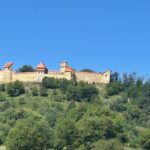
“We want to be a living community; we are only remaining parish to be self-supporting in the last 20 years. We have witnessed the renovation of the fortified church, the Fortress (Eds: on the hills above the village) and we have a proper sewerage system and paved roads,” said Joachim.
Most remaining Saxons left Romania for Germany after communism collapsed in 1989 and travel restrictions were lifted. There are now about 12,000 Saxons or ethnic Germans in Romania.
Organist Bruno Roth who comes from nearby Sighisoara, a medieval citadel built by the Saxons and the only inhabited citadel in southeast Europe, worked on the restoration of the 18th century majestic musical instrument.
He considers the organ the “queen of all instruments”, and played pieces by Johann Sebastian Bach and the Beatles during Friday’s one-hour recital.
The organ which sits in a gallery above the main body of the church was built in 1756 by Johannes Prause, an organ builder. Until two years ago, it operated on single register, meaning it could not produce the full range of sounds that the wind instrument is renowned for.
“It was restored twice, in 1878 and in 1930. The (Saxon) communities were very large at this time and decided to expand the organ’s capacity, to add registers, sounds, whistles,” Roth said.
Transylvanian bishop praises patron of Haferland festival that celebrates Saxon traditions
