










Romania’s communists twisted history in their favor and post-1989 education in schools have sometimes dismally failed to cover important aspects of Romania’s often troubled history. While there have been steps_ Romanian schools will teach about the Holocaust and the history of communism, the private sector has stepped in to fill in some of the gaps.
History is more than dates and figures, and film production company Chainsaw’s new tour kicks off with aim of bringing the ancient past alive to viewers.
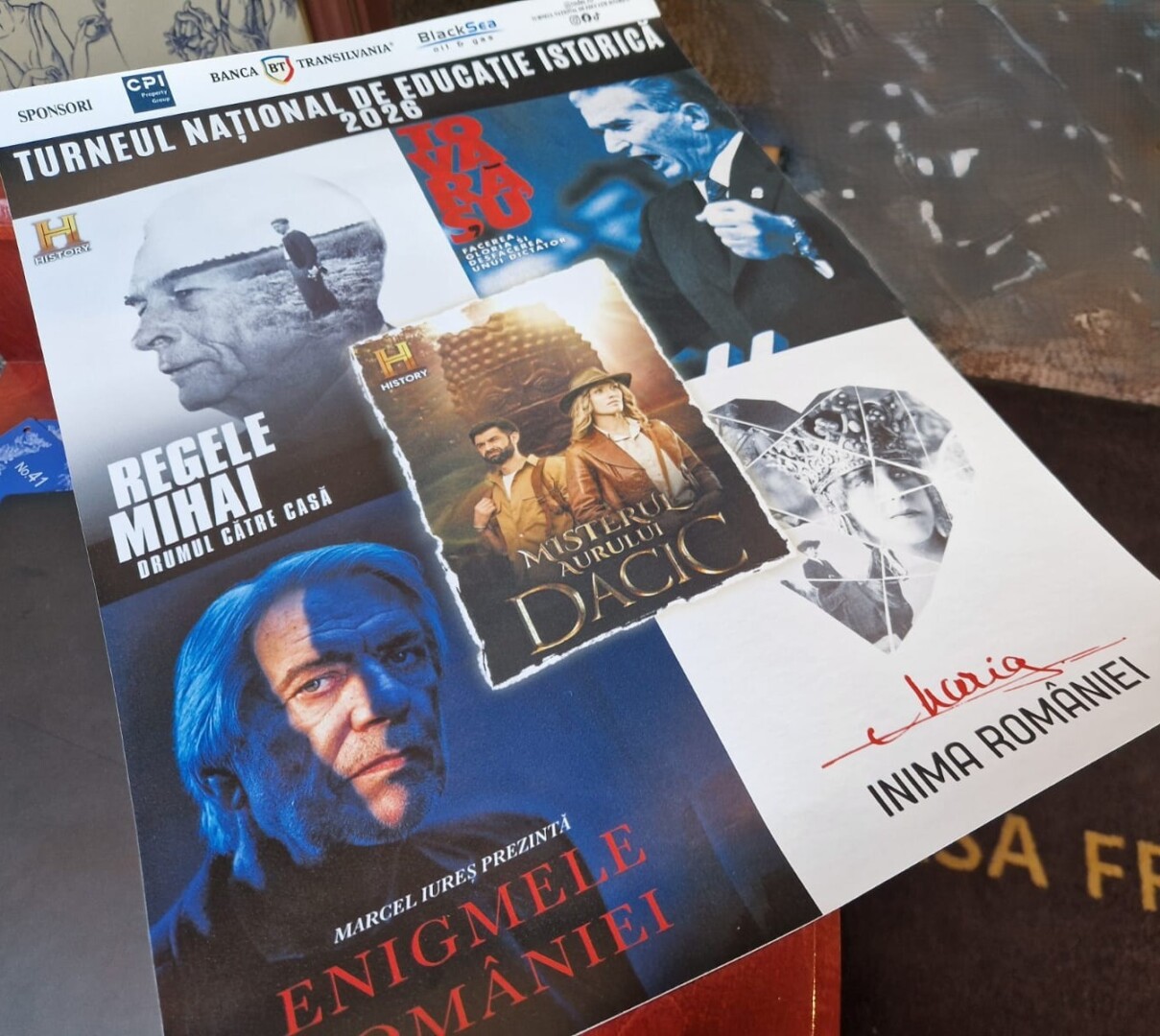
The National Historical Education Tour starts on May 7 with ‘Maria: the Heart of Romania” at Botosani’s Mijai Eminescu theater and will give the public an opportunity to view thrilling real-life stories in the very places where historical events took place, such as in Turnu Severin, where the Romans crossed the Danube in 105 AD or on the hills near the famous temples of Sarmizegetusa, where the Romans exploited Dacian gold.
The new tour returns in an edition that brings Romanian history to the public through film, dialogue and the involvement of prominent figures from Romania’s cultural and political scene. The aim is to make the country’s history captivating, relevant and accessible.
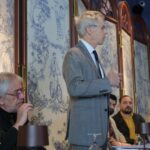
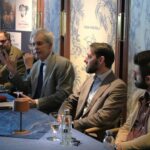
The official launch on Wednesday in Bucharest brought together actor Marcel Iureș, Prince Nicolae of Romania, actor Paul Ipate and film critic Irina-Margareta Nistor, along with executive producer John M. Florescu and the Chainsaw production team.
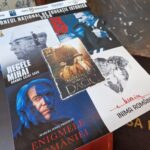
Addressed to a younger generation, the 2026 edition of the tour includes four award-winning documentaries (The King’s War, Mary: The Heart of Romania, King Michael: The Road Home and Comrade’), episodes from the Marcel Iureș Presents Romania Enigmas series, but also new productions, such as The Mystery of Dacian Gold, a hybrid docu-reality film starring actor Paul Ipate. The documentary unravels the threads of mysterious stories about the gold in the heart of the Apuseni Mountains, including that of the Dacian bracelets, one of which was recently recovered and repatriated together with the Coțofenești Helmet. Taken together, these films offer a perspective on two millennia of Romanian history and a century of royalty.
“They are a real feast, they are beautifully filmed and tell fascinating Romanian stories. Authentic and captivating, the films will delight the audience, especially the young viewers,” executive producer John Florescu said at a press conference held at Casa Fratelli.
Mr. Florescu and Historical Education Tour director, Dan Drăghicescu, will kick off the first screenings in Drobeta-Turnu Severin, where in 105 AD, Trajan’s army crossed the Danube on the bridge built by Apollodorus in Damascus and on improvised military bridges, to conquer the territory that is now Romania.
A full-length documentary ever made about King Michael’s life will be based on new interviews and information about the king’s tumultuous life. The feature film will integrate unseen footage from John Florescu’s extensive interview with King Michael in 2003 and never-before-seen archive footage. The film will include footage from the two previously broadcast productions about the king. The result will be the first full-length film biography dedicated to King Michael.
“Maria: The Heart of Romania” will also be broadcast in the U.S. to mark 100 years since Queen Marie made her historic visit from coast to coast of North America in 1926 – a visit that made headlines at the time.
In previous years, the National Historical Education Tour organized screenings in universities, monasteries, shopping malls, at a nuclear power plant, underground for miners, in town halls, civic clubs, factories, military academies, NATO bases, castles, in cinemas and film festivals, in art galleries, neighborhood parks, Romanian embassies, tourist sites, but also in places in the heart of nature.
Mr. Drăghicescu, associate producer at the numerous Chainsaw productions, said:
“I can say that there is a real thirst for history among young people. Whether here or in the diaspora, there are generations eager to rediscover their own history and I have seen this in their eyes. The films are watched with passion.” ”
The program is being planned and will include a large number of localities. The tour will start on May 7 with screenings at the Mihai Eminescu Theater in Botoșani. The tour caravan will then arrive at the “Roman Voda” National College and the Casa Hogaș Museum in Roman, where the documentaries can be watched with the support of the Roman City Hall.
The screenings will continue for several months in Bucharest, Brasov, Sinaia, Constanta (in the restored Casino), Cluj, Alba Iulia, Oradea, Sibiu (Brukenthal Museum), Tecuci, Piatra Neamt, Bran, Victoria (Badea Cârțan Museum), Danube Delta (Ivan Patzaichin Museum), Scornicești, Slatina, Balchik – Bulgaria (Queen Mary Museum) and other places yet to be confirmed.
The National Historical Education Tour 2026 will also screen other recently completed documentaries, such as “Romanian Jockey Club – The Continuing Tradition“, which recently premiered in Bucharest and was very well received by the public.
Many of the 16 documentaries produced by Chainsaw were broadcast on ProTV, History Channel, Amazon Prime, VOYO, and screened in almost 200 locations in Romania and in 53 countries around the world.
The tour is supported by Banca Transilvania, CPI Real Estate Group, Black Sea Oil and Gas, and the Radu R. Florescu Association. Thanks to corporate contributions, the films are offered free of charge to all Romanians.
Accessible to all age groups, the tour aims to present and facilitate the understanding of Romania’s history through films rich in archival images and testimonies validated by internationally recognized historians. Through on-site debates, special guests and producers, the organizers hope to stimulate interest in history and show how the past has a direct correlation with the current global events affecting Romania.