





Romania’s biggest party, the PSD’s latest offensive, is basically to mask the fact that it is essentially opposed to reforms which can be seen in the following elements:
- Triggering a major political crisis at the worst time for Romania, given the internal economic context, and the external economic and geopolitical context.
- Triggering a major political crisis at a time when the Ilie Bolojan’s Government had started to tackle, like no other government ever before, special pensions, state-owned companies, ‘smart guys’ in energy and the murky source of public funds, which has been feeding the party clientele for decades.
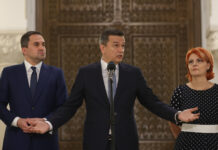
- Triggering a major crisis by trying to remove the prime minister without immediately starting the motions for a no confidence vote. After all, if Bolojan is such a failure, it would have been normal for the PSD to tell the story clearly to the public and then file no-confidence vote in Parliament. But no, PSD and leader Sorin Grindeanu preferred, for reasons obvious to all except the most naïve, to leave the ruling coalition for no good reason and then plot behind the scenes in the hope that, it will get support from the Constitutional Court or an easily impressed president. We still don’t know whether Nicușor Dan is the kind of soft president the PSD hopes; but for the moment it is fair to say that there are some justified suspicions.
The PSD had many reasons to act covertly, while publicly pretending to act as if butter wouldn’t melt in their mouth.
I can think of at least four:
- PSD-Grindeanu wants to leave the government, but without losing its advantages. This was clear from the start, as the PSD said they’d agree to a Liberal prime minister of their liking and also not excluding a technocratic prime minister. In addition, the PSD also left a handful their people in the government.
- PSD-Grindeanu has worried about a no-confidence vote for two good reasons. One, the parliamentary arithmetic: the PSD can collect the necessary signatures, but even if AUR were to join, it doesn’t have the necessary votes for it to pass and would have to “shop” around for votes which is risky. There’s the scenario in which the PSD submits a motion, but it flops, which would be a disaster of biblical proportions for Grindeanu, and he risks losing the party leadership and the PSD would no longer be seen as a major party.
- PSD-Grindeanu is loath to submit a vote of no-confidence even if it passes because if it did, it would need AUR’s votes and then it would follow that it would form a government and a parliamentary majority with AUR. A formalized collaboration with George Simion’s extremists doesn’t look good, either in Romania or abroad. Moreover, AUR is precisely a party that would eagerly swallow the PSD electorate, and besides that, Ilie Bolojan going into opposition would consolidate his status as a hero, something that has already started. And the PSD were to govern, it needs AUR, as the Liberals (PNL) and junior partner, USR have already been clear that they no longer want a coalition with the PSD, without Bolojan.
- Finally, if the PSD submits a motion which passes, but then PSD doesn’t want to govern with AUR or the other way round (at least not without extracting major concessions from the PSD), then both Grindeanu and the party he (still) leads will show their truer colors: destructive not constructive. In other words, they triggered a major crisis but refused to find a good resolution.
Political crises like this don’t disappear overnight and Romania will not benefit if this crisis continues.
The most constructive thing to do is to identify a reasonable time frame in which a solution is put on the table and equally important is that the solution is, in substance, a reasonably healthy one.
How the situation develops depends, of course, on all the parliamentary parties. But the major player here is the head of state.
So far, the president has treated the PSD with kid gloves.
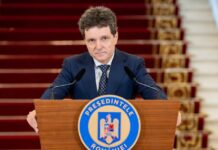
When a Hotnews reporter asked him, on Friday, what answer he has for the Romanians who want him to show firmness in dealing with the crisis, Nicușor Dan gave a totally neutral response: “I can firmly answer that I am a mediator.”
The problem with this type of firmness is rather sensitive: Romanians are already paying for the pots broken by the PSD, through this crisis and the PSD may understand this is a sign that it is on the right track and can even hope for more.
Maybe Nicușor Dan merely has communication problems, but until we see otherwise, the way he is positioning himself is flawed.
- PS: If there were a red line in the president’s deliberations in the current political crisis, it would be the following: the PSD must be made to feel as sharply as possible the costs of its irresponsible political behavior. And at the same time, it must set an example for other parties to avoid similar situations in the future. Sort of like the EU did with the UK, after Brexit.
- If Nicușor Dan takes time to look at things from this perspective, he could approach the discussions constructively and find a substantive solution to the crisis.
- Basically, Grindeanu and the PSD have infinitely fewer cards than they want people to believe. The only winning card they have is a president who agrees with them and/or afraid to really tackle the problems beyond paying lip service.
- As far as I remember, the people who voted for Nicușor Dan wanted SOMETHING ELSE that he had promised and on they perceived he had that SOMETHING ELSE from his pre-presidential political positions.
Romania’s left with minority government after exit of its biggest party
