








Hungary is headed for massive change with global impact
By Lili Anna Lempek
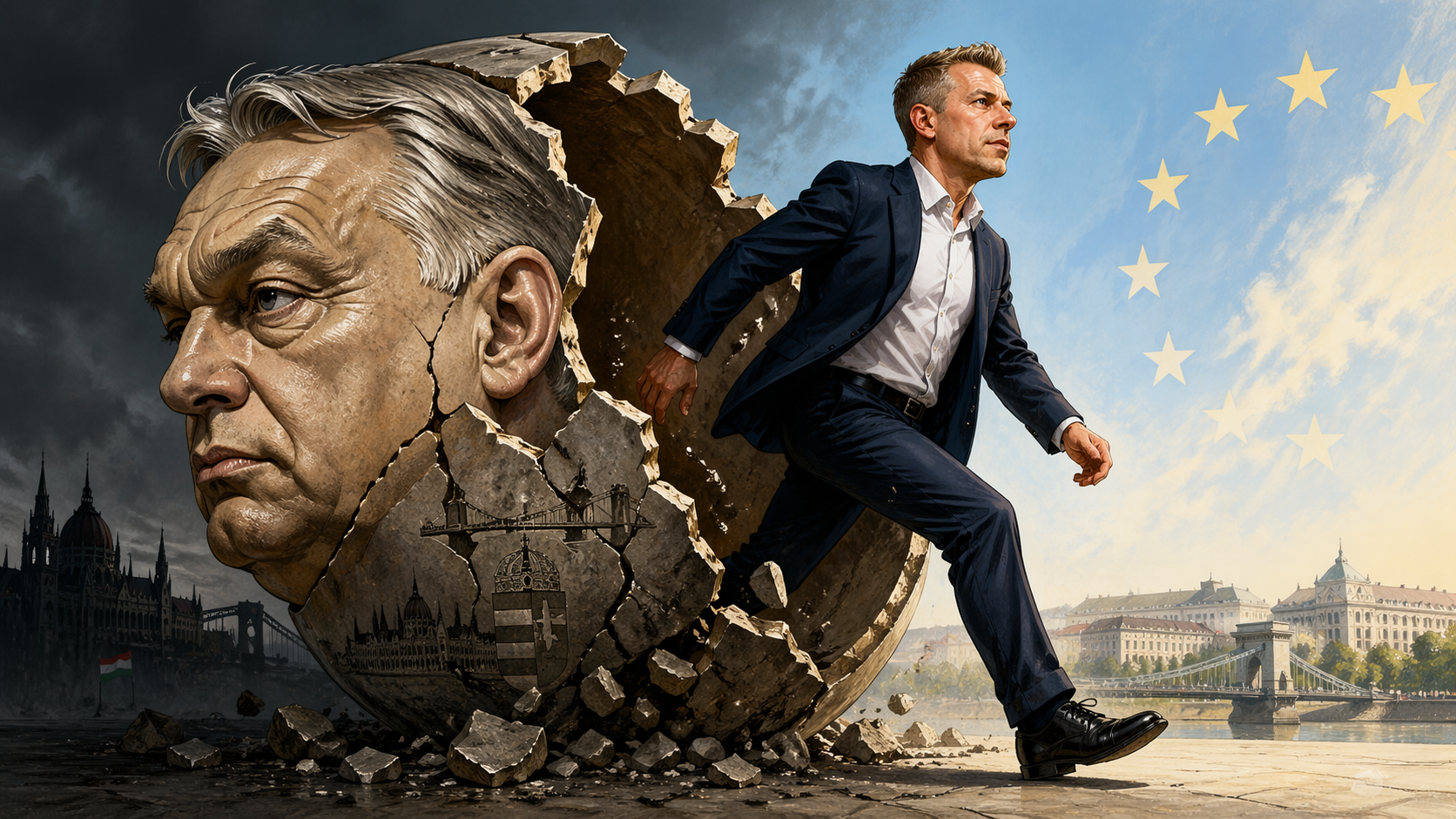
Is Peter Magyar just a more polished Viktor Orbán? That question has hovered over Hungary since the longtime strongman was finally voted out on April 12 after 16 years in power. Scepticism is understandable: Magyar’s a defector from Orbán’s Fidesz party, not an outsider who built his career opposing the system.
But viewing the moment as cosmetic is a mistake. An examination of Magyar’s planned positions on the very policies that made Orbán iconic as a pioneer of illiberal democracy suggests something more akin to regime change.
That expectation drove record turnout of nearly 80 percent, with liberals rallying behind Magyar despite his past, and yielded jubilation even surpassing that of the 1989 collapse of communism. Júlia Andok, a young aspiring track star celebrating in the streets, put it this way: “It’s every athlete’s dream to compete for their country, but it was never really mine – until today.”
Will she be disappointed by Magyar and his Tisza party? After all, Magyar campaigned on bread-and-butter and not on ideological issues, so the concern is reasonable.
Let’s, then, look at the likely new policies based on Magyar’s recent statements and the view of key experts.
Corruption: Orbán’s Hungary became synonymous with entrenched patronage, where political loyalty and economic opportunity were intertwined. Magyar’s rise was largely a revolt against what economist Krisztián Orbán (no relation to Viktor Orbán) calls “a centralized, industrial-level funneling of funds towards Fidesz.” Magyar, who campaigned with the promise of investigating every recent state investment of over $32 million, said that “Hungary has become Europe’s poorest and most corrupt country” and promised “to eradicate this.”
Hungary and the European Union: Despite financial dependence on the EU, Orbán engineered constant confrontations. Magyar’s likely to pursue a pragmatic relationship, making plans to possibly even join the Eurozone. Magyar himself worked in Brussels as a diplomat for almost a decade, and he stated that: “Hungary’s place was, is and will be in Europe and the European Union. ,,, We will start the process of joining the European Public Prosecutor’s Office, and Hungary will be a constructive partner for the Union.”
Support of Ukraine: Hungary stood out in the EU for its closeness to Moscow and hostility toward Ukraine. While Magyar opposes accelerated accession into the EU by Ukraine, he’s clear about who was the aggressor: “Ukraine is the victim of this war (and) it is the job of any Ukrainian government to protect its territorial integrity and sovereignty.” He also calls for Ukraine to be given security and territorial guarantees.
Russia and Energy: Magyar has promised to reduce Hungary’s energy dependence on Russia and to adjust the relationship to a more pragmatic one aligning more with the European Union. “This government will do everything in its power to diversify our energy mix,” Magyar has said. “If Vladimir Putin calls me, I will pick up the phone. But I will not call him myself. But if we were to speak, I can say, I will ask him to please stop the killing.”
Global Populism: Orbán positioned Hungary within a broader network of right-wing populist leaders, becoming a symbol for elected autocracy. Magyar is unlikely to maintain that – and, for example, promises to rejoin the International Criminal Court, a bugbear of the right which Orbán had bolted. “The Hungarian people made a clear decision (that) they’re proud that we are part of the EU and NATO,” Magyar stated.
Media Capture: A defining feature of the Orbán era was the transformation of state media into “extremely propagandistic” government media and suppressing independent media outlets, notes Péter Krekó, the director of the Budapest-based think-tank Political Capital. Magyar’s vow to revamp state media and restore its autonomy was supported by an open letter signed by about 100 employees of the Hungarian News Agency. “We’d like to have a board that will ensure the independence of the state media outlets, whether along BBC principles or some other way,” he says.
Rule of Law: Over more than a decade, Hungary’s institutions were reshaped to blur the line between state and party. Magyar promises to undo this as well. “We will amend the Constitution to introduce a two-term limit for the prime minister (and) restore pluralist democracy and the system of checks and balances,” Magyar said. Krekó notes that one of Magyar’s main goals is bringing EU funds back to the country frozen over rule of law and corruption concerns, “which gives us some guarantees that he will behave in a democratic way.”
LGBTQ+ Issues: Orbán made LGBTQ+ rights a key front in his “family values” culture wars. Magyar signals inclusion and in his victory speech, promised Hungary “will be a country where nobody is stigmatized because they … love different people in a different way than the majority.” A young Tisza supporter Bálint, a member of the LGBTQ+ community, said that “if they leave us alone, it would already be a significant improvement.”
Academia: The Orbán era saw high-profile clashes with academic institutions, most notably the expulsion of the Central European University. Magyar promised a clear shift toward “restoring academic freedom … liberating Hungarian universities (and) research institutions.” Krekó believes things will take a positive turn: “The previous government’s actions were irrational. We can expect less political meddling.” Orbán, the economist, also expected “stark improvement.”
Immigration: This is probably the one area of continuity. Particularly regarding Muslim migration, public sentiment itself is harsh. “Hungary has a very strong stance on illegal migration. We do not accept any pacts or allocation mechanisms,” Magyar said, referring to EU schemes to share the burden of migration. “We will maintain our border fence on the southern border … we don’t accept any illegal forms of migration.” Krekó expects the agitation, at least, to cease: “If this topic could be less of a narrative weapon, the strong negative emotions around it could decrease.”
All of this clearly amounts to a significant break.
“I don’t think the biggest risk is Magyar turning out to be the same as Orbán, but a lack of facing our past,” said Krisztián Orbán, the economist. “We need to hold the whole governing class of this system accountable. If we fail to do that, we’re bound to repeat the same mistakes.”
So there will be very little left in Hungary for the likes of Orbán’s MAGA acolytes, like Steve Bannon and Tucker Carlson, to celebrate. Knowing this, President Trump dispatched JD Vance to campaign for Orbán – a move that, if anything, backfired. The change in Hungary raises the question of contagion: will it affect the Republicans?
No less interesting is the question of redemption: Magyar admitted voting for Fidesz as recently as 2022 “while holding my nose” – saying he was even then disillusioned but felt compelled because his now ex-wife was justice minister. Convincing or not, there’s humanity there. Now he has a chance to make amends.
Lili Anna Lempek is a Hungarian journalist mentored by Dan Perry as part of the LSE IDEAS / Ratiu Forum journalism mentorship program. A version of this article was originally published in The Hill.
