






As a result of the war in Ukraine, the world has become more aware of the growth and influence of Private Military Contractors (PMCs) in those aspects of international affairs that are deemed to require military involvement.
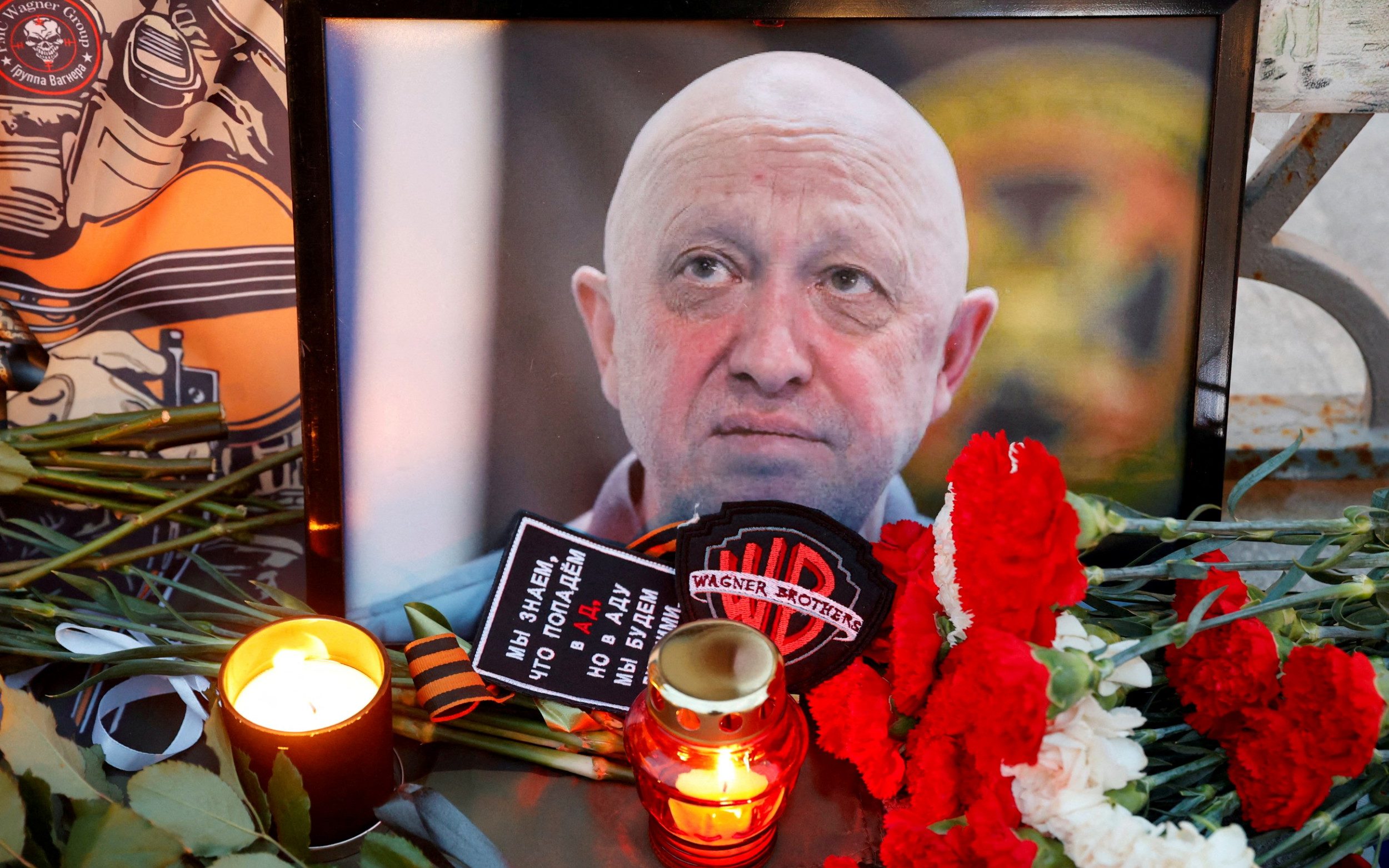
At present Russia’s Wagner Group holds centre stage and not just because of its activities in Ukraine and now Belarus. Wagner has and remains involved, at various levels, in conflicts in Syria and sub-Saharan Africa and Latin America. However we’ll come back to Wagner and the Russian situation later.
We have become more aware of the global presence of PMCs in conflicts involving major western countries relatively recently. A quick check online shows us that there are active PMCs registered in the USA, France, Germany, the UK, Turkey, South Africa, Poland, Australia, Peru and, of course, Russia.
Some PMC’s are entirely private and work on a purely business-contract basis for their clients. Others are firmly connected to official state armed forces and large corporate enterprises, providing a range of services from security consultancy, the provision of equipment maintenance and logistics, all the way up to full combat interventions by ex-military personnel.
The popular mind has become familiar with a lionized version of private military activities through popular action movies such as ‘The Expendables’, ‘Extraction 1 and 2’, ‘6 Underground’ and various ‘Sniper/Shooter’ variations. In these fictional scenarios PMC’s can either be characterized as heroes or villains, depending on the actors involved and the objectives of their clients.
The reality of PMCs’ activities have remained largely secret or highly classified, except to those who fall victim to their operations. Then occasionally, following specific events, they become known to those of the general public who have an interest in such things.
In September 2007, members of the US Blackwater PMC became involved in a fire fight with Iraqi government forces in the center of Baghdad resulting in the deaths of 20 Iraqis including women and children. Multiple international and US inter-agency investigations took place and, as the haze cleared, a profound uncertainty arose over the company’s legal right to be conducting military operations on behalf of the US government in a second country.
It should be noted that the size of the Blackwater operation in Iraq at the time numbered around 160,000 operatives, roughly similar to the official US military post-war engagement.
(Source: ‘The Dark Truth about Blackwater, Peter W. Singer, Brookings Institute, October 2007).
It is also worth noting that since this incident, Blackwater has rebranded itself as ‘Academi’.
There were also concerns regarding the level of oversight exercised by the US government of the company’s activities in Iraq and elsewhere and to that we can add the following examples of general questions, not confined to the USA:
- To what extent are PMCs active in conflict zones, including direct combat, alongside or instead of the official forces of states around the world?
- Who or which Department within the governments concerned is responsible for hiring and specifying the operational parameters of PMCs? In whose interest are they contracted to act?
- Which Departments or agencies within the governments concerned are responsible for coordinating and directing the contracted PMCs and official state forces to achieve objectives? For example, including the respective Departments of Defense or agencies such as the CIA.
- To what extent do the rules of engagement applied to PMCs active in direct combat differ from those governing the states’ official forces?
It is clear that PMCs contracted at least to fully constituted states who are members of the United Nations, falling under its conventions and resolutions, and signatories to The Hague and Geneva Conventions, should conduct themselves accordingly.
Returning to the Russian Federation, it is fair to say that ‘PMC Wagner’ is known throughout the world. It is currently active in a number of live military conflicts around the world, prosecuting the interests of the Russian State and its leading actors.
Until the apparent attempted coup in June 2023, Wagner could be said to have followed the Western model of a semi-independent PMC. While it had a number of contracts with the Russian state, most notably with regard to prosecuting Russia’s war in Ukraine, Wagner could not be said to be owned by the Russian state or by any other large Russian corporate entity.
However, Wagner’s independence placed it in direct competition with the Russian Ministry of Defense, who controls the distribution of ammunition and equipment to the armed forces and other external contractors engaged in the war. Competition turned into open conflict at the highest level and it is not clear if Wagner’s brief rebellion was aimed at the Russian government or the senior military command at the Ministry of Defense. The coup’s failure and its CEO’s disappearance* saw Wagner placed under the control of Russia’s National Guard, which reports directly to Vladimir Putin.
*Yevgeny Prigozhin was famously thought to have died in a plane crash but ‘sightings’ of him have been reported on social media.
Molfar, a Ukrainian intelligence research company, estimates that there are around 37 PMC’s registered in the Russian Federation* many of them are engaged in the war in Ukraine and active around the world. All of these companies have direct and indirect links to the Kremlin, because it is illegal not to, but they are privately financed by some of the wealthiest oligarchs in Russia and they can operate independently.
*For more detailed information on PMCs in Russia, click on https://molfar.com/en .
We know what Private Military Contractors are doing today but what kind of operations can we identify for them in the future. I present two scenarios as examples.
Scenario A – The Russian Federation
Russia’s current president is widely accepted as being an autocratic ruler, despite the Russian constitution requiring him to stand for election, now every 6 years. In fact, Russia remains an oligarchy despite Vladimir Putin becoming more powerful over the past 20 years.
There are other very powerful and very wealthy people in Russia, with backgrounds in corporate ownership, KGB/GRU/FSB secret services and the military for whom Mr Putin acts as a form of Super Managing Director. It’s fair to say that the civil-legal and regulatory business framework in Russia is only what the oligarchy wants them to be at any given time. The Enlightenment passed Russia and there is no ‘rule of law’ in the western sense.
Mr Putin will, one day, certainly pass to the great dictatorship in the sky
one day and even if there is a succession plan in place, from within the highest ranks of the oligarchy, his death will spark a period of intense competition for position and wealth.
Being Russia, that competition will be violent to the point that we may even be looking at a civil war centered on Moscow, as ever, but spreading across the regions of the largest country on Earth. It is inconceivable that many if not all of the Russian PMC’s will become engaged private armies on behalf of their owners and his interests.
Scenario B – The World During Advanced Climate Change
Almost daily we see more and more evidence of the effects of climate change around the world; storms, floods, droughts and rising temperatures are already showing us what we can expect in the future. Perhaps our most immediate threat is an increasing shortage of fresh drinking water, a crisis that is already affecting many countries in the less developed world.
Water is only the first vital resource that will run out. Obviously food supplies and other materials will be affected and let’s not forget that carbon-based energy cannot last forever. Man being man will start to compete ever harder to secure the Earth’s resources for themselves. Normally that would mean conflict between states with the wealthiest and most developed nations coming out on top as usual, but only for a while.
These days there are individuals and corporations that control the vast majority of the world’s wealth including people and companies who are even building their own spaceships (to escape?). I do not doubt that these people will do everything they can to protect their commercial resource interests and their huge profits. And will enter into direct conflict with their competitors and with smaller countries, using PMC’s to conduct their wars.
The great engine of the British Empire, India, South-East Asia, Africa and latterly China, was not created by the British Army and not even primarily by the Royal Navy. It was established from the year 1600 by the East India Trading Company, a huge commercial concern which built its own private army and navy to protect its enormously profitable business interests. This model will be revived in the face of climate change’s threat to global trade.
But remember, PMCs/mercenaries are not new. For example the Pope’s very own, historic PMC is known as ‘The Swiss Guard’.
