














Convictions, algorithm regulation, titanic fines, and teen bans are needed to focus the minds of the arrogant tech oligarchs
Mark Zuckerberg on was finally forced on Tuesday to sit in a courtroom, under oath, facing not senators angling for sound bites but jurors empowered to weigh responsibility. In Los Angeles, amid grieving families and anxious parents, Meta’s chief executive offered a line that has become almost instinctive in Silicon Valley. Enforcing age limits on social platforms, he testified, is “very difficult.”
But “difficult” is a curious defense when it comes from a company that reported roughly $60 billion in net income last year at a profit margin near 30 percent — an extraordinary level of profitability that places Meta among the most financially successful corporations in the history of humanity. Difficulty, viewed through that lens, begins to sound less like a constraint and more like a choice.
Only a tiny number of companies worldwide generate earnings measured in tens of billions. Apple, Microsoft, Alphabet — Meta sits comfortably in that rarefied league. By any comparative measure, this is not a resource-constrained enterprise struggling to fund safety innovation. It is a corporation with extraordinary financial flexibility – and it has gotten there in ways that have harmed society.
The incongruity does not end with child safety. Despite its immense revenues, Meta remains notorious among users for lacking anything resembling conventional customer service. Billions rely on its platforms, yet appeals against account suspensions or automated decisions are often opaque or ineffective. Users frequently describe a system governed by algorithms rather than responsive human support. For a company of Meta’s scale, the absence of meaningful recourse reinforces a perception of asymmetry: immense power over digital lives, limited accountability to those affected. And this largely applies across the social media ecosystem, which tends quite monopolistic in its various niches.
That imbalance forms the quiet backdrop to the landmark social-media addiction trial now unfolding in California. The lawsuit centers on a now-20-year-old plaintiff, Kaley (also identified as KGM), who alleges that years of exposure to platforms including Instagram and YouTube harmed her mental health. Her attorneys argue that these applications function less like neutral tools and more like behavioral engines — “digital casinos” designed around compulsion and psychological vulnerability.
Features marketed as conveniences are framed in court as mechanisms engineered to stimulate dopamine-driven engagement loops, particularly potent for young users. Kaley’s legal team links her extensive usage to anxiety, body dysmorphia, and suicidal thoughts, while citing experiences of bullying and sextortion that allegedly intensified her distress.
Meta and YouTube reject this narrative. Their lawyers point to a difficult upbringing, pre-existing psychological challenges, and therapist testimony suggesting social media was not a central driver of Kaley’s struggles. The jury has been instructed not to hold the companies liable simply for hosting or recommending third-party content, reflecting legal protections embedded in Section 230 – which absolves these huge dispensers of content from the responsibilities of publishers and which itself needs reexamination.
Instead, jurors must weigh a subtler proposition: whether platform design itself contributed to harm.
That question cuts to the heart of the social-media business model, and Zuckerberg has faced heat about it for years (below at a Senate hearing in 2018).
Modern platforms do far more than display content. They rank, predict, personalize, and optimize. They are continuously adapting environments calibrated to maximize engagement. Attention is the currency, and algorithms are the engines.
Critics argue this architecture systematically favors distortion. Engagement-maximizing systems reward what provokes emotion — outrage, fear, affirmation — rather than what reflects reality. Lies often outperform truths because falsehoods face no constraint of verification. Extremes travel faster because they are rarely dull. The problem is not merely that misinformation exists online, but that automated systems amplify emotionally charged material at unprecedented scale.
Truth, in such systems, becomes structurally disadvantaged. The consequences are visible in politics. Viral conspiracies and fabricated narratives circulate with a reach once reserved for mass media, eroding consensus reality. Algorithms determine what billions encounter. Amplification is coded.
Among young users, constant exposure to idealized images and quantified approval metrics can distort self-perception. Girls have long borne these pressures. Boys increasingly face parallel distortions — algorithmic streams celebrating hyper-masculine archetypes and curated lifestyles. Recommendation systems may steer vulnerable users toward ever more extreme content. Alienation itself becomes engaging.
Even cognition may be reshaped. Endless feeds of rapid fragments compete with sustained, complex material. Educators report declining reading stamina and comprehension. Long-form reasoning struggles in ecosystems optimized for novelty.
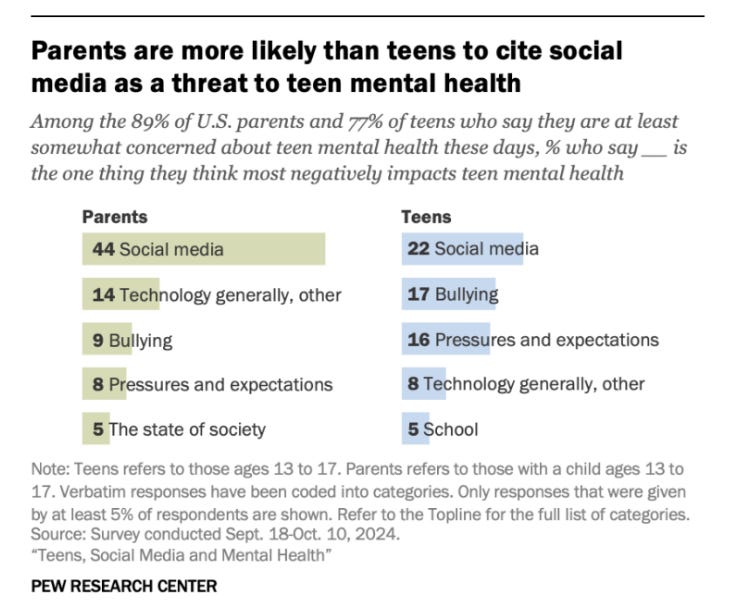
Why is all this happening? Because the companies want to maximize profits. So society needs to decide whether profits achieved by knowingly causing great harm are protected by some law or principle.
So let’s just say that Zuckerberg’s invocation of difficulty appears less persuasive. The world’s most profitable attention companies possess the technical infrastructure to predict user behavior with extraordinary precision – that’s the whole point of how they make money. If platforms can detect micro-patterns of engagement to optimize advertising, they can invest meaningfully in identifying underage users or mitigating harmful dynamics.
They will clearly not be persuaded. There is too much money at stake. So society needs to chance the risk equation and incentive structure.
What is needed now is not hand-wringing, not voluntary pledges, or lame excuses – but a monumental structural correction. Court convictions in cases that successfully demonstrate harm would mark a turning point, establishing that platform design is not beyond legal scrutiny. Regulation must tighten around algorithmic transparency, an effort likely to be led by the European Union, whose Digital Services Act already signals a willingness to challenge platform opacity. Systems that shape information flows for billions cannot remain black boxes governed solely by corporate incentives.
Beyond regulation lies a deeper democratic question. Societies may soon confront whether age-based restrictions on social media should be decided not merely by legislators but by voters themselves. A global discussion — backed, where politically feasible, by referendums — on limiting or banning social-media access for younger teens is no longer a fringe proposition.
Australia, notably, has decided to stop theorizing and start acting. Rather than accepting the familiar industry refrain that protecting children online is “complicated,” it imposed one of the most sweeping safeguards yet attempted in a democratic society: a binding minimum age of 16 for social-media accounts. Crucially, the obligation falls not on parents or teenagers but on the platforms themselves, which now face heavy penalties if they fail to take meaningful steps to keep underage users off their systems. Basically, these fines should be as heavy as they need to be, period, to focus the minds of the arrogant tech gods.
The idea is spreading. France and Spain are advancing their own restrictions, while governments from Northern Europe to Southeast Asia, including India, the world’s most populous country, are exploring similar limits.
Just as the U.S. is an outlier on the death penalty, on the ease of buying guns, and on abortion bans, so it may well be quite soon in tolerating a continuation of this madness.
