









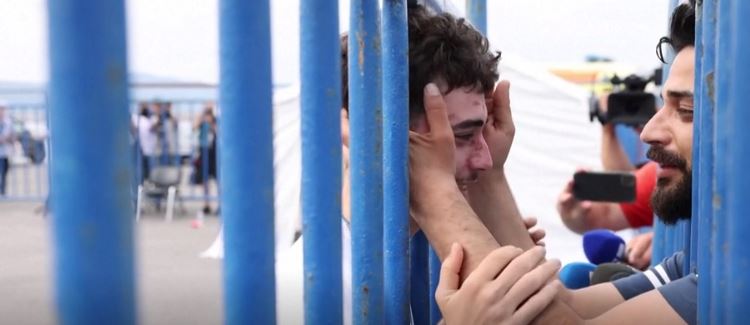
The UK has offered dozens of stranded migrants, held for years in a camp on a UK-US military island in the Indian Ocean, a temporary move to Romania.
After six months, they could be moved to the UK, the UK promises – though the likelihood of this is questionable, given that its government has said that bringing them to Britain risked the opening of a “backdoor migration route”.
Others in the group are being offered financial incentives to go to Sri Lanka where they say they face persecution, the BBC says.
Why Romania of all places, and what is the nature of this deal? This hasn’t been made clear yet.
Of course, it is true that relocating vulnerable migrants while their legal claims are processed would offer them greater safety and wellbeing, but the ambiguity and randomness of the new destination is likely to raise Romanian eyebrows, if only for the reason that it is precisely Romania’s status as a “backdoor migration route” that has delayed its entry into the Schengen space.
A Foreign Office spokesperson said ministers had been working to find a solution which protects the welfare of migrants and “the integrity of British territorial borders”.
The offer to the migrants by British officials on the island of Diego Garcia came after the UK announced it was handing sovereignty of the British Indian Ocean Territory (Biot), which includes Diego Garcia, to Mauritius. A military base, however, will remain on the island.
The BBC gained unprecedented access to Diego Garcia last month to attend a court hearing over whether the group had been unlawfully detained in a small fenced camp, which is guarded by private security company G4S. A judgement is expected soon.
There are currently 56 Tamils still on Diego Garcia, who have been there since 2021. A further eight are currently in Rwanda after being transferred there for medical care after self-harm or suicide attempts. Romania is known for its lack of mental health resources and is a curious choice in this regard, though it is unlikely that such subtleties have been discussed. Nevertheless, one man, currently in Rwanda, who has been offered the move to Romania described it as “a very big relief”. Another migrant there touchingly said it was the “happiest day in three years”.
To be fair, over the summer, the top official running the territory, Paul Candler, requested that the government bring all of the migrants to the UK because of what he described as a “dangerous and unsustainable situation” in the camp amid mass incidents of self-harm. But he stepped down only a month later.
Hand-written signs are hung in the camp with slogans such as “We are treated like animals in a cage” and “This is a bad place”, says the BBC.
Some showed off efforts to improve their living situation, including a dining table made of pallets, and plant beds lined with coconut husks.
Recently, an internal fence was erected splitting the camp between the single men there and families.
An independent social worker hired by one of the migrants’ lawyers described the situation in the camp late last year as an “emerging mental health pandemic”.
Most of the migrants are awaiting decisions on their international protection claims or appealing rejections. In total, eight have been granted international protection.
Migrants (both on the island and in Rwanda) whose claims for international protection have been approved, as well as families in the camp with children, are to be offered a transfer to a “safe centre” run by the United Nations in Romania for up to six months, while the UK government continues to search for a “durable solution”.
“Within those six months, the UK will continue to develop a durable solution for you in line with international standards. You can choose to accept any solution presented to you during this time. If you do not wish to accept any offers made during those six months, you will be brought to the UK,” administration specified.
Those who have had their protection claims rejected and are not part of family units within the camp have been offered financial incentives to return to Sri Lanka, including £3,000, medical insurance for three years, accommodation for up to three years, as well as a job or training or education opportunities.
