











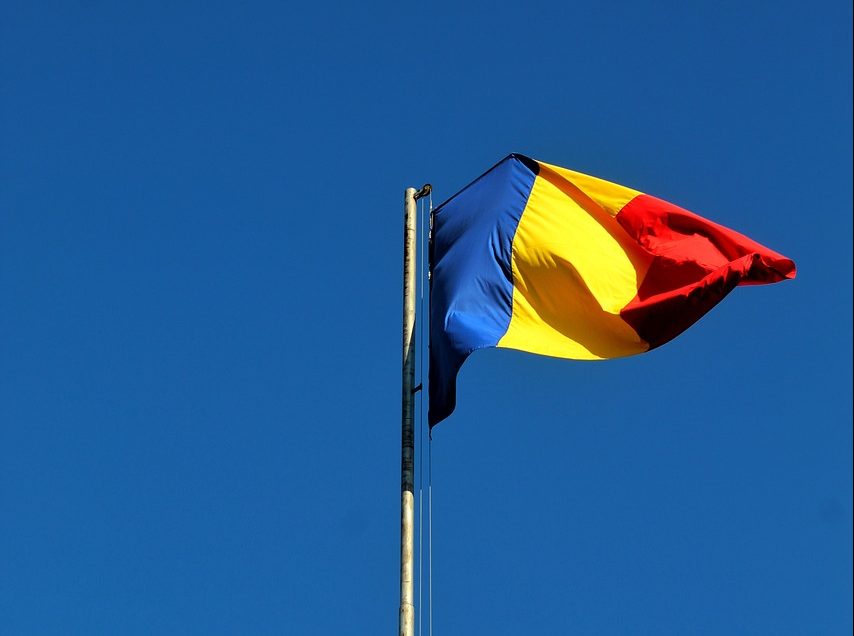
Romania celebrated National Independence Day on Friday in a nod to its pre-communist past and a time of prosperity and social progress.
Some 57 Liberal lawmakers originally proposed the day in 2016 to “restore the historical truth and resume the historical tradition of 1866-1947, when May 10 was celebrated as Romania’s National Day.” It was voted into law in 2021.
When the communists came to power after World War II, they canceled May 10 as a national holiday and replaced it with August 23 to fit with the ideology of the time.
May 10 has special significance for Romania’s history, the initiators said in their proposal. “On May 10, 1881, Prince Charles of Hohenzollern-Sigmaringen proclaimed Romania a Kingdom and for more than half a century enjoyed a period of prosperity and economic and social progress.
On May 10, 1866, Prince Charles of Hohenzollern-Sigmaringen took an oath before the Parliament of the United Principalities; On May 10, 1877, the Senate proclaimed the Independence of the Romanian state, when the leader of the Romanian state at that time, Prince Carol I, signed the proclamation “The absolute independence of Romania.”
Romania’s Senate adopted the draft law to celebrate Romania’s National Independence Day on May 10 on December 22, 2016, while the Chamber of Deputies approved it almost five years later. It was signed into law by President Klaus Iohannis on July 8, 2021.
Under the law, the Parliament, the Romanian Presidency, the Government, and other government authorities will organize cultural and artistic events to celebrate the day. May 10 should not be confused with December 1, which is Romania’s national day.
That day marks the reunification of Transylvania, Bessarabia or Moldova and Bukovina with the rest of Romanian Kingdom in 1918.
But May 10 also has significance for Romanians. On May 10, 1866, Prince Carol of Hohenzollern-Sigmaringen, who had been elected by plebiscite as Ruler of Romania, took the oath of allegiance: “I swear to be faithful to the laws of the country, to guard the religion of Romanians, as well as territorial integrity and to reign as constitutional ruler”, according to the work “Romanian History in Data”. He was proclaimed Prince of Romania under the name Carol I.
The 48 years of reign of Carol I marked a period of great progress for Romania: demographically, economically, socially, administratively, politically and culturally. Carol I spoke out in favor of maintaining and bolstering Romania’s international status and domestically modernized the country’s economic, political and military structures.
On May 9, 1877, there was an extraordinary session of the Assembly of Deputies, which proclaimed Romania’s independence. Foreign Minister Mihail Kogalniceanu said: “In a state of disrepair, with broken ties, what are we? We are independent; We are a nation in our own right (…) Therefore, deputies, I do not have the slightest doubt and fear to declare before the National Representation that we are a free and independent nation”, according to the volume “Romanian History in Data” (2003).
After the speech, the Assembly of Deputies approved a motion noting that “the conflict between Romania and Turkey, with the breaking of our ties with the Porte and Romania’s absolute independence have received their official consecration”.
Although Romania’s independence was proclaimed in Parliament, it was necessary to conquer it on the battlefield. In July 1877, Romanian troops crossed the Danube. The Romanian army without any war experience, but with great dedication and courage, conquered Griviţa, Rahova, Opanez and Smârdan.
The International Congress in Berlin in June-July 1878 which ended the conflict, recognized Romania’s independence, the union of Dobrogea, but ceded to Russia the counties of Bolgrad, Cahul and Ismail in southern Bessarabia or Moldova, according to the volume “A History of Romanians” (Ion Bulei, 2007).
