















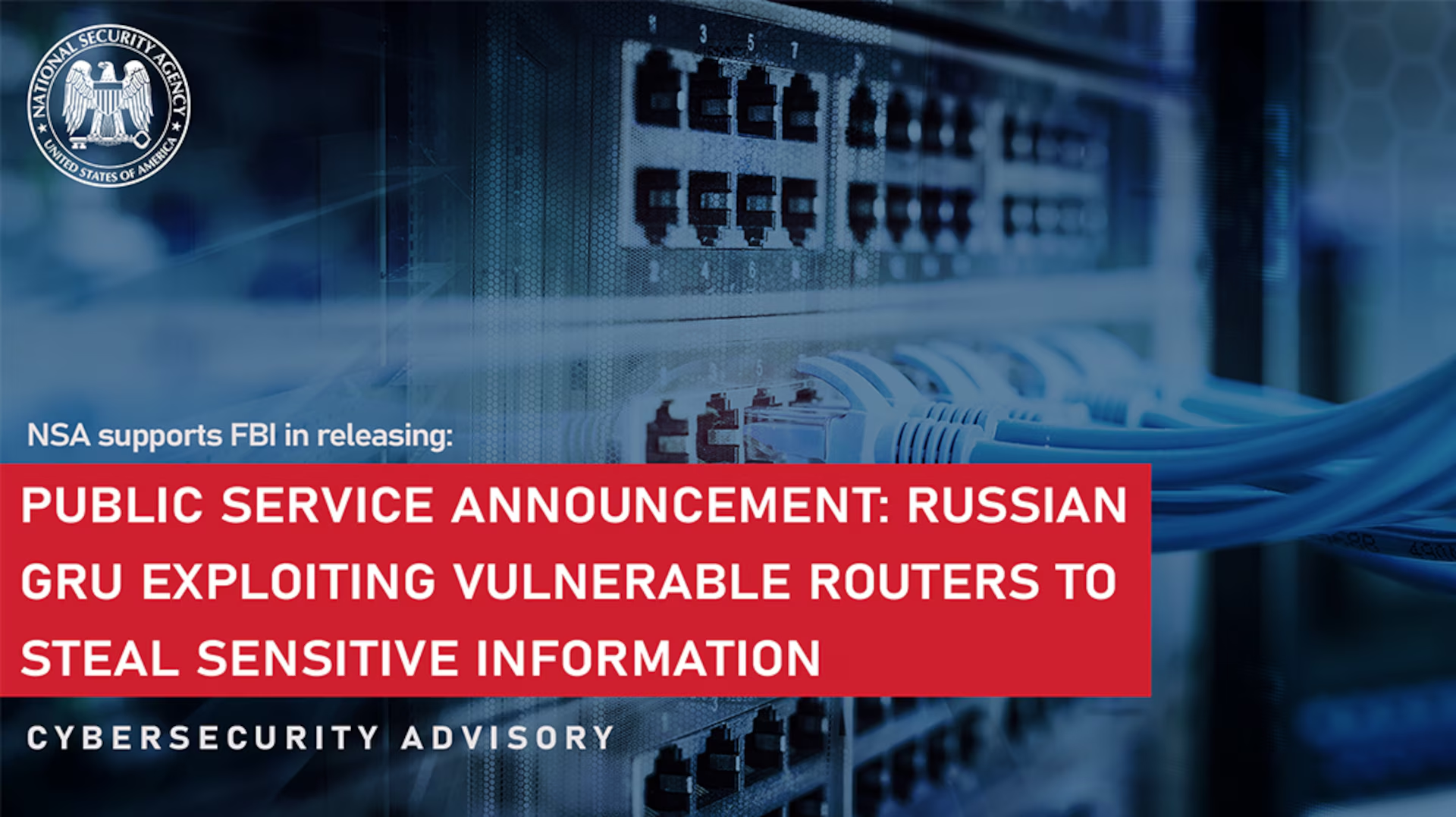
An international investigation revealed how Russia’s GRU cyber unit, known as “Fancy Bear,” managed to steal sensitive information from governments and the military using badly protected routers.
Russian military hackers stole sensitive information from governments, militaries and critical infrastructure, “exploiting vulnerable routers worldwide,” the FBI said Wednesday following a major international investigation.
The FBI and the following partners are releasing this announcement to warn the public and encourage network defenders and device owners to take actions to remediate and reduce the attack surface of similar edge devices: U.S. National Security Agency (NSA) and international partners from Canada, Czech Republic, Denmark, Estonia, Finland, Germany, Italy, Latvia, Lithuania, Norway, Poland, Portugal, Romania, Slovakia, and Ukraine,” a pres release said.
Romania, which participated in the operation, said the GRU cyber operatives “were collecting military, governmental, and critical infrastructure-related information,” President Nicușor Dan said.
“Russia therefore continues its hybrid war against Western countries – only those acting in bad faith could fail to see this,” Dan said in a post on X.
Understanding the DNS Hijacking Operations
Since at least 2024, Russian GRU 85th Main Special Service Center (85th GTsSS) cyber actors — also known as APT28, Fancy Bear, and Forest Blizzard — have been collecting credentials and exploiting vulnerable routers worldwide, including compromising TP-Link routers using CVE-2023-50224.
The GRU actors changed the devices’ dynamic host configuration protocol (DHCP) / domain name system (DNS) settings to introduce actor-controlled DNS resolvers. Connected devices, including laptops and phones, inherit these modified settings. The actor-controlled infrastructure resolves and captures lookups for all domain names. The GRU provides fraudulent DNS answers for specific domains and services — including Microsoft Outlook Web Access — enabling adversary-in-the-middle (AitM) attacks against encrypted traffic if users navigate through a certificate error warning. These AitM attacks would allow the actors to see the traffic unencrypted.
The GRU has harvested passwords, authentication tokens, and sensitive information including emails and web browsing information normally protected by secure socket layer (SSL) and transport layer security (TLS) encryption. The GRU has indiscriminately compromised a wide pool of U.S. and global victims and then filtered down impacted users, especially targeting information related to military, government, and critical infrastructure.
The hackers, part of Russia’s GRU military intelligence agency and known as GRU Unit 26165, redirected internet traffic through ill-protected routers to steal passwords and encrypted data, according to a joint statement.
Ukraine’s security service SBU, which also participated in the investigation, explained that after “compromising” vulnerable internet devices, the Russian hackers redirected their traffic through a pre-deployed network of DNS servers
Tips to Protect Yourself
The FBI and partners have released relevant guidance and technical indicators, including NCSC-UK cybersecurity advisory “APT28 exploit routers to enable DNS hijacking operations” on 7 April 2026 and CISA’s Edge Device Security webpage.
Users of SOHO routers are encouraged to upgrade end-of-support devices, update to latest firmware versions, change default usernames and passwords, and disable remote management interfaces from the Internet. All users should carefully consider certificate warnings in web browsers and email clients.
Organizations that allow remote work should review relevant policies regarding how employees access sensitive data, such as using VPNs and hardened application configurations. Additionally, organizations may consider incentivizing employees to upgrade outdated personal devices involved in remote access.
Report It
If you suspect you have been targeted or compromised by a Russian GRU cyber intrusion, report the activity to your local FBI field office or file a complaint with the IC3. Be sure to provide details about your router, including device type and DHCP configurations.
