













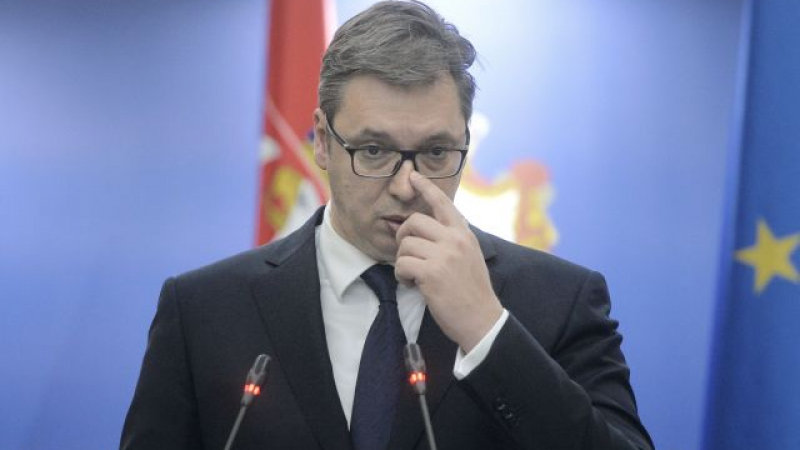
Serbian President Aleksandar Vucic, and Bulgarian and Azeri presidents Rumen Radev and Ilham Aliyev attended an opening ceremony for the pipeline on Sunday.
“With this interconnector we are securing alternative gas supplies, apart from the Russian gas,” Serbian Energy Minister Dubravka Djedovic Handanovic, said.
The development means that Serbia and other countries in central and southeastern Europe will now have access to Azerbaijani exports.
The pipeline runs from the Bulgarian town of Novi Iskar to the Serbian city of Nis. Serbia now has access to gas from Azerbaijan and to the LNG terminal in the Greek port of Alexandroupolis.
Serbia signed a deal with Azerbaijan last month to purchase 400 million cubic metres of natural gas per year from 2024.
The pipeline will be able to deliver about 60% of the country’s annual gas demand.
The European Union supported the project with grants of just under 50 million euros and a loan of 25 million euros. Serbia has been negotiating to join the EU since 2014.
In recent decades, Serbia has relied almost exclusively on Russia for its gas supplies. Last year it signed a long-term contract to continue importing Russian gas.
Bulgarian pipeline rupture disrupts gas shipments to Romania, Serbia, Hungary
