














Israel could give amnesty to those holding hostages, rebuild Gaza and form a national unity government
The Israeli military’s killing of Hsmsd leader Yahya Sinwar is a critical opportunity for Prime Minister Benjamin Netanyahu to declare victory in Gaza and pivot to a wiser strategic approach thnat the one he has pursued to date.
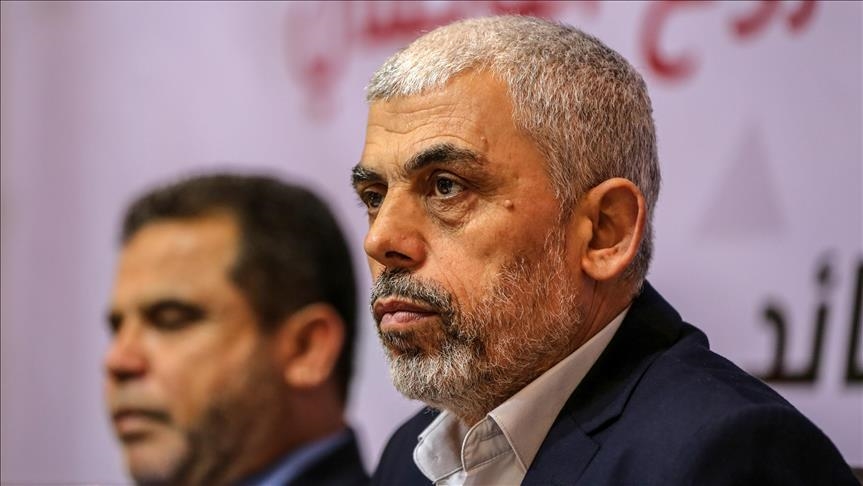
As the mastermind behind countless attacks on Israelis and the main orchestrator of the Oct. 7 Hamas massacre, Sinwar was an arch-terrorist who seems to have gotten what he deserved. But his death would mark much more than the removal of a single evil leader; it’s a chance for Israel to redefine the trajectory of the conflict.
Israeli officials said Thursday that they believed Sinwar, the 62-year-old head of Hamas, was one of three militants killed in a firefight in Gaza the day before. The military was conducting DNA tests on the bodies to confirm their identities; they have Sinwar’s DNA from his time in Israeli prison.
For far too long, Israel has been mired in what seems like a forever war: a cycle of retaliation and defense without a clear endgame, partly because Netanyahu’s governing coalition is dependent on far-right parties that want to reoccupy Gaza. That has prevented Israel from establishing reasonable long-term goals, and has caused the steady evaporation of global support for its actions.
Changing this terrible trajectory requires a major event, and Sinwar’s elimination could be just such a thing. Not every terrorist is replaceable; the charismatic and wily Sinwar, the leader since August of both the political and military wings of Hamas, may be a singularity.
He learned excellent Hebrew in two decades in Israeli prison (see above video) and was released in 2011 as part of a deal freeing about 1,000 prisoners in exchange for the captured Israeli soldier Gilad Shalit. Known for charm and cruelty in equal measure, he was an icon in Gaza.
Sinwar was widely seen as the source of Hamas’ obstinacy over the past year, and of the group’s determination to project indifference to the tremendous damage caused to Palestinians in Gaza, where more than 40,000 people have been killed, and many more injured or displaced, during the war.
His departure from the scene would be a milestone Netanyahu could use to transition to a new strategic phase.
Israel must now finally focus on crafting a comprehensive “day after” plan for Gaza, with the help of a revamped Palestinian Authority and moderate Arab nations, and with the financial and diplomatic backing of the United States and European Union.
Israel and its allies must take the lead in rebuilding Gaza, which has been largely reduced to rubble. A reconstruction plan — focused on providing humanitarian aid, restoring infrastructure, and fostering local leadership untainted by Hamas — should be at the forefront of Israel’s strategy.
There are, of course, risks as well. With the elimination not only of Sinwar, but also the Hamas leader-in-exile, Ismail Haniyeh, and military chief, Mohammed Deif, the group’s leadership structure is in disarray. That makes it unclear who can negotiate release of the 101 hostages still in Gaza, a necessary condition for Israel ending the fighting.
Hamas fighters or rogue families holding hostages might resort to executing them in retaliation for the loss of their leaders. It is essential that Israel immediately projects a message of amnesty, offering whoever is holding captives an incentive to release them unharmed.This message must be delivered clearly and reinforced at every level. The alternative — an uncontrolled, chaotic response — could lead to unnecessary bloodshed.
A new strategic phase may also offer the chance for political change in Israel, enabling an alternative to a government that is widely despised locally and has little credibility internationally.
The best immediate option would be a national unity government, in which opposition leaders Yair Lapid, Benny Gantz, Yair Golan and Avigdor Liberman all agree to serve under Netanyahu in exchange for a set election date within one year.
Such a move would show the world that Israel is capable of both decisive military action and responsible governance. It would offer reassurance to allies that Israel’s leadership is stable, thoughtful and capable of navigating the complex aftermath of Sinwar’s killing.
There could also be implications at the International Criminal Court, which has been expected to issue arrest warrants relating to the Gaza war for Sinwar, Deif and Hanieyh as well as Netanyahu and Israel’s defense minister Yoav Gallant. With the Hamas leaders gone, the ICC would risk further undermining its credibility if it moves against the Israelis alone.
If handled wisely, the killing of Sinwar could mark the end of an era of endless war and the beginning of a new phase in Israeli and Palestinian relations. Ironically, a man responsible for so much death could have as part of his legacy a breakthrough that actually spares the lives of countless Palestinians and Israelis.

