












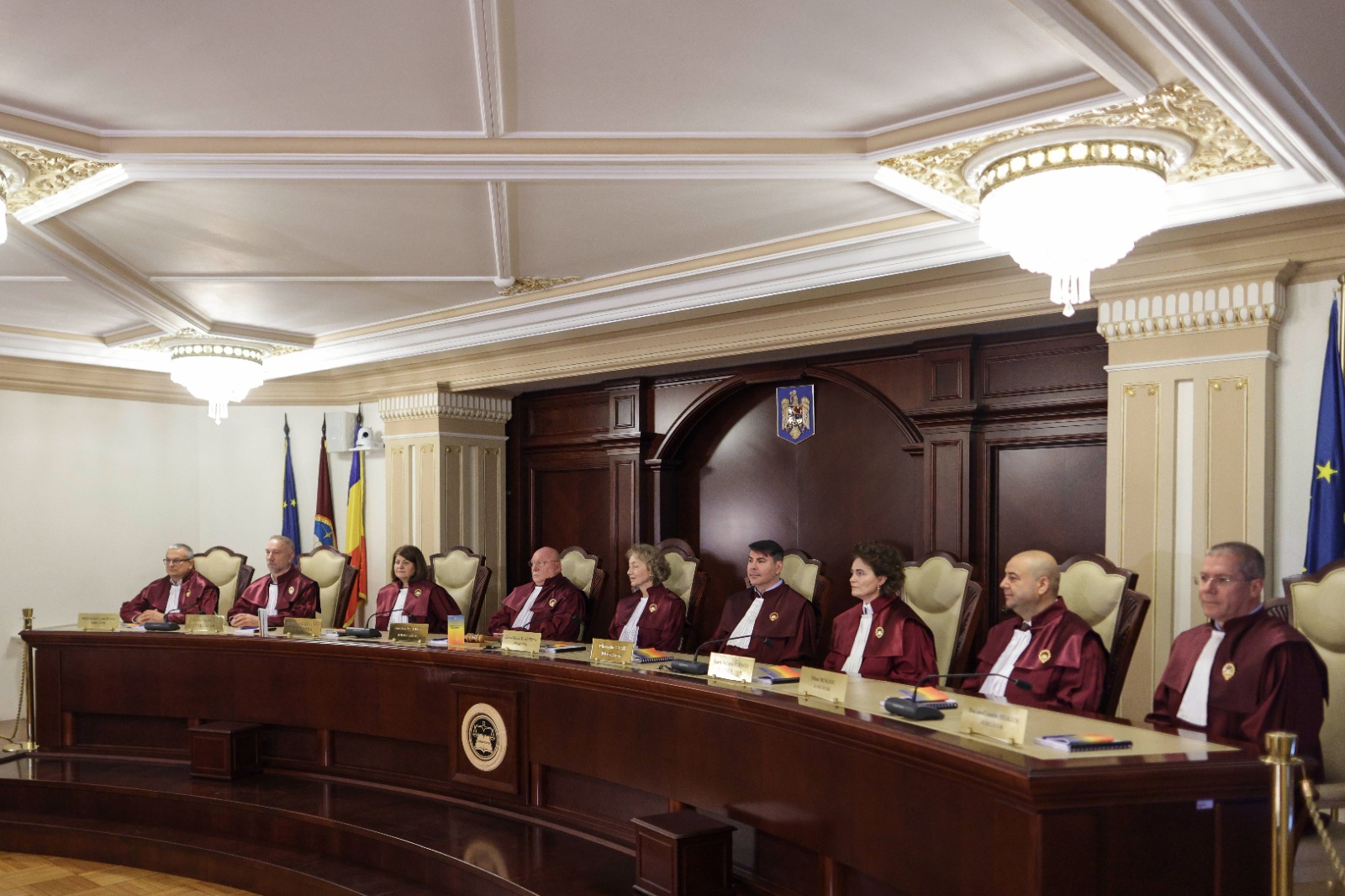
Endless postponements the Constitutional Court made on ruling on the government draft law for magistrates’ special pensions is undoubtedly likely to harm the court’s credibility and, in general, to cast a fresh shadow on the entire institutional fabric in Romania.
This is all the more evident as the previous court decision on the government’s initial draft, had aimed at the form, rather than the substance of the reform.
In the meantime, the government also resolved the formal aspect of the new draft, to obtain purely an advisory opinion of the Superior Council of Magistrates, so the nine CCR judges no longer had solid reasons to postpone making a decision, one way or another. been.
As, however, the postponements keep happening even under these dubious conditions, it becomes obvious even without having inside information that the blocking and sabotage by a minority of four judges, has a completely different agenda than the legitimate, institutional and constitutional one.
An onerous agenda, of course, because as it stands there’s no other way of looking at it.
“By chance”, the four judges were proposed by Romania’s biggest party, the Social Democratic Party or PSD. It is the one single party that in over 35 years of democracy has been the most opposed to substantial reforms – whether in the economy, politics or, as in the current case, justice.
“Coincidentally”, the PSD also had a suspicious attitude on reforming magistrates’ pensions.
“By chance”, all four judges who make fun of an entire country, have had their careers stained by controversies even before they were appointed the elite Constitutional Court of Romania.
From this point of view, the sabotage the four are now executing is not random, rather they are showing a coherence that could be admired and made an example of were not dedicated to a malignant approach.
The fr judges: Cristian Deliorga, Gheorghe Stan, Bogdan Licu and Mihai Busuioc have abused their temporary positions, not do it out of principle, but out of a special duty. They have a debt and they know precisely to whom, over what period it extends and how they came to this position. To a large extent, thanks to the press revelations of recent years, public opinion still has a pretty good idea about the nature of their debt and who they owe.
And yet, in all this ocean of bad news – the fact that the CCR postponements keep on flowing, that their legitimacy and legal soundness are zero, and the the court is looking more and more like a Potemkin edifice – there are still encouraging indications.
One indication, truly good news, is precisely the fact that the anti-reform party, in politics and in the judiciary, has reached the profoundly uncomfortable and dead-end point of resorting to nuclear weapons: sabotage openly, from within.
This means that all the other levers that the party has been able to use for years on end and particularly in the last three months, are either no longer available to them or are no longer effective.
The simple absence of the four judges from a court session followed by their non-appearance at another meeting, suggests that the anti-reform party is facing a systemic crisis in its attempt to bury the reform of magistrates special pensions.
They resorted to this method and, one which produces immediate visible effects. But it is equally true that this extreme emergency exit is their last. They look desperate, stupid even. In the end, through this blockage and sabotage, they did not solve the problem, but at most postponed the outcome.
The nuclear weapon exists, somehow by definition, not to be used properly – because even the one who resorts to it first risks perishing – but it exists to function as an instrument of pressure and persuasion.
The very fact that nuclear power is used now also suggests, in addition to the crisis of solutions, panic has engulfed politics and the justice apparatus. Until recently, it would have been difficult if not impossible to imagine such a scenario.
As far as special pensions are concerned, the anti-reform party is on the verge of losing any anchor of resistance in the legal field. What he has left – and it is indeed no small thing – is to move insurgent hostilities to purely political terrain.
But once this step is done, the game becomes much riskier, the variables will be more and they will certainly become more difficult to control.
The escape, in this case, was shameful, but not necessarily healthy.
