











ALSO ON DAY SIX OF IRAN WAR: Conflict widens, oil prices spike, Lebanon ditches Iran, and Trump tries to leverage the war to get Bibi off the hook in his bribery trial
On Day Six, the war’s center of gravity remains the air campaign: Israel says it is systematically degrading Iran’s ballistic missile array and command-and-control, while Washington signals an open-ended posture—somewhere between coercing Tehran into a “deal” and pursuing regime change without saying it too loudly. But something very interesting is happening on ths ground, with Kurdish forces.
Iran’s top leadership has taken severe blows; its air defenses and missile forces are under relentless pressure. Yet the conflict is widening geographically, and now appears to include not only the Gulf countries but Azerbaijan, as European powers are stepping up to protect Red Sea navigation and Cyprus.
In this update, we will focus on the following interesting developments:
- The Kurdish gambit: The CIA may be dusting off an old playbook: arm Iranian Kurds, force Tehran to fight on land, and create space for revolt. It could work — or hand the regime nationalism.
- Hezbollah and Lebanon: Lebanon’s leaders are suddenly talking like a sovereign state — arresting IRGC operatives, ending visa-free entry, blaming Hezbollah == which attacked Israel again, handing it license to finish the job.
- Oil and Hormuz: Iran can’t win in the air, so it may try to win in the global economy — harassing ships, threatening mines, rattling the Strait of Hormuz.
- Trump to Bibi’s rescue: Trump is reportedly pressuring Israel to pardon Netanyahu “even today” — an outrageous interventions in another country’s legal system which hands a win to cynics who argue the war is political.
UPGRADE TO ASK QUESTIONS LATER
The Kurdish gambit: ground pressure without an invasion
One of the most intriguing—and dangerous—developments in this war is the emerging Kurdish gambit, which was a massive exclusive on I24 (see above video).
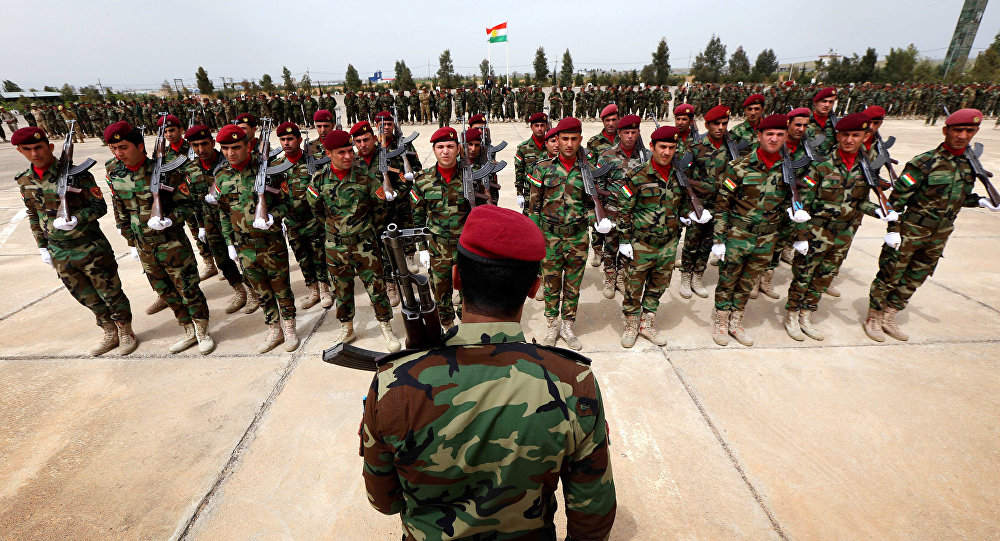
Thousands of Kurdish fighters based in Iraq have reportedly begun moving into western Iran, opening what could become a new ground front in the war against the Islamic Republic. Officials from the Coalition of Political Forces of Iranian Kurdistan say fighters from the Kurdistan Free Life Party (PJAK) crossed into Iranian territory around March 2 and have taken positions in the mountainous Zagros region near the border city of Mariwan.
Iranian forces reportedly withdrew from parts of the area and established defensive positions nearby. PJAK fields several thousand fighters, including both male and female units modeled on Kurdish formations that fought ISIS in Iraq and Syria. Other Iranian Kurdish groups—the KDPI, Komala factions, and the Freedom Party of Kurdistan — have signaled willingness to cooperate as well.
Kurdish forces are experienced, battle-hardened, and intensely hostile to Tehran— and the spectacle of armed resistance could embolden others.
On the I24 panel, I noted that the most plausible goal is not a Kurdish march on Tehran — dramatic but geographically and logistically implausible — but strategic distraction: occupy the energies of the IRGC, the army, and paramilitary forces so they cannot freely massacre protesters in major cities the way they have during past uprisings. The Kurdish gambit is designed to catalyze something larger: a cascade of pressure inside Iran.
But it’s a double-edged sword. Authoritarian regimes often deploy the nationalist reflex, which in Iran is strong. The regime will try to frame this as proof that the war is an attack on Iran itself. If the conflict is perceived not just as Israeli or US meddling but as a Kurdish assault on Iranian sovereignty, the regime’s propaganda becomes easier. There’s another risk: Iran is not ethnically homogeneous. Persians are a slim majority; the rest includes Azeris, Kurds, Baluch and others. Kurdish insurgency could trigger fears of fragmentation — which can push a cautious middle class back toward a regime they despise.
The Kurdish side itself is fractured. Kurdish factions have rivalries, differing ideologies, and competing agendas. Iraqi Kurdish leaders, who spent decades building their semi-autonomous region, are understandably wary of anything that could jeopardize stability. They remember that Kurdish alliances with great powers have often ended in betrayal. Recall that the US is fresh off a Trumpy betrayal of the Kurds in Syria.
Turkey adds another complication. Ankara views any expansion of Kurdish autonomy as a direct threat. A scenario in which Iraqi and Iranian Kurdish regions begin aligning could spooks Turkey and turn a useful quasi-partner into an active spoiler.
All this might serve to clarify the war’s fuzziness. If the intention is merely to compel a “deal,” then lifting sanctions in exchange for promises from an untrustworthy, ideologically driven regime looks like buying time for the very apparatus that crushes its own people and exports violence abroad. Last month’s protests—by many credible accounts reflecting a majority yearning for freedom—were not about a nuclear bargain. Trump told protesters “help is on its way,” then watched a brutal crackdown believed to have killed many thousands. If Washington now settles for a deal and sanctions relief, it risks a particularly bleak outcome: Iran survives, the opposition is demoralized, and the region gets another decade of proxy warfare—after paying in blood.
But if the goal is more than deterrent strikes — if the objective is to genuinely weaken or topple the Islamic Republic —ground pressure is the missing ingredient, and the Kurds may be the only available force that can plausibly provide it. THis may be a clue to the real strategy.
Trump didn’t ask Congress for the war. Congress just let him have it.
For days, critics of the war have hammered Trump for launching military operations against Iran without seeking authorization from Congress. Under the US Constitution, the power to declare war formally rests with the legislative branch, and many lawmakers argued that such a consequential military campaign required explicit congressional approval. Yet in an important political sense, Trump has now effectively received that approval.
On Wednesday, the U.S. Senate voted 53–47 to reject a War Powers resolution that would have required American forces to withdraw from the conflict unless Congress explicitly authorized the operation. The measure was designed to force a vote on the legality of the war and potentially compel the administration to halt military activity against Iran. Instead, the Senate declined to do so.
Only two senators broke with their parties in the vote: John Fetterman (D-PA) supported the administration’s position, while Rand Paul (R-KY) sided with critics calling for congressional authorization. The rest of the chamber largely voted along predictable partisan lines, but the result nonetheless carried an unmistakable implication: a majority of senators were unwilling to block the ongoing military campaign. That does not amount to a formal declaration of war. But politically, it sends a powerful signal. Congress had the opportunity to restrain the president’s use of force—and chose not to exercise it.
The House of Representatives is expected to vote on a similar resolution on Thursday. If it too fails, the practical outcome will be clear: whatever the constitutional debates, the president’s military action against Iran will have survived a direct congressional challenge.
Lebanon breaks with Iran and Hezbollah
A striking development in the widening war is unfolding in Lebanon, where the government appears to be moving — at least rhetorically — toward a decisive break with Tehran. It’s over yet still courageous, yet not as courageous as it might have been when Iran’s regime was stronger and less isolated.
Lebanon’s information minister has said IRGC members in Lebanon will be arrested and deported, Iranian military activity banned, and visa-free entry for Iranians potentially ended. Prime Minister Nawaf Salam denounced the “adventures” Lebanon was dragged into for external interests — thinly veiled language for Hezbollah’s role as Iran’s forward operating base.
This is extraordinary, and it only makes sense in context.
Immediately after Hamas’ Oct. 7 massacre in Israel, Hezbollah opened a northern front for Israe;: rockets, anti-tank missiles, drones — “solidarity” with Hamas. Israel, already consumed by Gaza, put up with it for months, even as about 80,000 Israelis were displaced from the north. Eventually Israel concluded the status quo was intolerable. By late 2024, Israel began systematically degrading Hezbollah—targeting commanders, infrastructure, depots, and the “ecosystem” that made southern Lebanon a launchpad.
That pressure culminated in a November 2025 ceasefire in which Lebanon formally committed to disarming Hezbollah south of the Litani River. The moment looked like it might open a path for the Lebanese state to reassert authority — something Lebanon has not really had for decades. Then came the political symbol of that hoped-for shift: Joseph Aoun, widely respected as the former commander of the Lebanese Armed Forces, became president. In theory, this was Lebanon’s chance to recover some sovereignty.
But the disarmament commitment failed. Hezbollah remained entrenched and heavily armed; the Lebanese state was too weak to impose anything like monopoly control over violence. Now Hezbollah has resumed firing, and the confrontation is reigniting. Israel is responding hard, issuing evacuations and pushing the fight back into the zones from which Hezbollah claims to have “withdrawn” before. The humanitarian consequences are already severe: tens of thousands displaced, the country again paying the price for a militia’s decision to “join the war.”
Here’s the key strategic reality: Israel has now been attacked again, and therefore has the excuse to finish the job. And in a quiet irony, many Lebanese — outside Hezbollah’s Shiite constituency and even within parts of it — are privately relieved. After years of collapse and humiliation, there is rage at Hezbollah.
That does not mean Lebanon can disarm Hezbollah on its own. But its official leadership is trying to signal to the US, Europe, and the Arab states that Lebanon would like to be an independent country again.
Dire Strait: The oil aspect
Even as Iran’s military position deteriorates, Tehran retains one powerful lever: the global energy system. Iran has taken heavy punishment, and it is seeking to make the war painful enough for everyone else that external pressure mounts to stop it before Iran’s system collapses.
That strategy is now playing out around the Strait of Hormuz, the chokepoint through which roughly a fifth of globally traded oil flows. Tehran has been testing disruption: attacks on Saudi and Qatari energy infrastructure have forced cuts; shipping has come under pressure; one container ship reportedly took a strike above the waterline and crews evacuated.
How can this happen if Iran’s navy has been smashed? Because not all maritime coercion depends on blue-water ships. Iran retains shore-based anti-ship missiles. Commercial vessels are soft targets. The IRGC can also deploy fast attack craft—small boats that complicate detection and interception in crowded waters. The most dangerous escalation would be mines. A mining campaign wouldn’t permanently “close” Hormuz, but it could halt traffic until mines are cleared—weeks, not hours. That’s enough to spike prices, roil markets, and raise political pressure in capitals far from the Gulf.
Iran’s objective likely isn’t to shut the world’s oil supply entirely; it’s to inject uncertainty—enough to lift prices, threaten inflation, and create a sense that the war is spinning out into a global economic crisis.
There are constraints. China, one of Iran’s few geopolitical friends, depends on Gulf energy too. Beijing does not want Hormuz chaos. But regimes facing existential threat sometimes escalate anyway, reasoning that if they’re going down, they might as well take the global economy on a rough ride.
So far, prices are up, but not in apocalyptic territory — about 10 percent.

Still, the point is not today’s benchmark; it’s the strategic vulnerability. As long as Iran can credibly threaten Hormuz, it retains leverage even while losing conventional ground.
Trump tries to get Bibi off the bribery hook
A remarkable political drama is now unfolding alongside the war — one that touches Israel’s legal system and the integrity of its democratic institutions.
Trump has been pressing Israel’s president, Isaac Herzog, to pardon Netanyahu for some month. According to Barak Ravid of Israel’s Chennel 12, Trump upped the ante Thursday by telling him this was necessary because “I don’t want Bibi bothered by anything but Iran.” Ravid also reported Trump claiming Herzog promised such a pardon multiple times (Herzog’s office denied it) and calling Herzog “A disgrace” for resisting his pressure.
Even by the fever standards of US–Israel politics, the episode is extraordinary: an American president urging the head of state of a democratic ally to intervene in an ongoing criminal proceeding.
It’s also legally incoherent. In Israel, pardons are generally issued after conviction (or a plea), as mitigation — not as a way to cancel an ongoing trial. The one historical episode that’s sometimes cited, the Bus 300 affair, was fundamentally different: the Shin Bet officials admitted wrongdoing and were forced out. Netanyahu has not admitted wrongdoing and has built his political identity around insisting the charges are a “deep state” plot.
The Netanyahu cases are well-known: bribery, fraud, breach of trust — allegations involving hundreds of thousands of dollars in gifts and alleged quid pro quo with powerful media and business figures. Many analysts believe even if bribery is hard to prove, breach-of-trust exposure is serious, and a conviction would end his career.
The trial has dragged on for years, slowed by procedural battles and — more recently — war. The judges, in their weaselly weakness, has often accepted Netanyahu’s argument that national emergencies complicate attendance. The result is a saga that feels endless and politically combustible.
Remember the core irony: the judiciary took an extraordinary step by allowing Netanyahu to serve while on trial, a legal gray area conditioned on his promise not to interfere. But his coalition launched a sweeping judicial overhaul that many Israelis saw as transparently aimed at weakening the very system judging him — an effort that triggered mass protests by millions of Israelis. Security chiefs tried to warn Netanyahu that this projected such a schism that it invited attack — and that attack came, on Oct. 7, 2023. Which brought us to today.
