












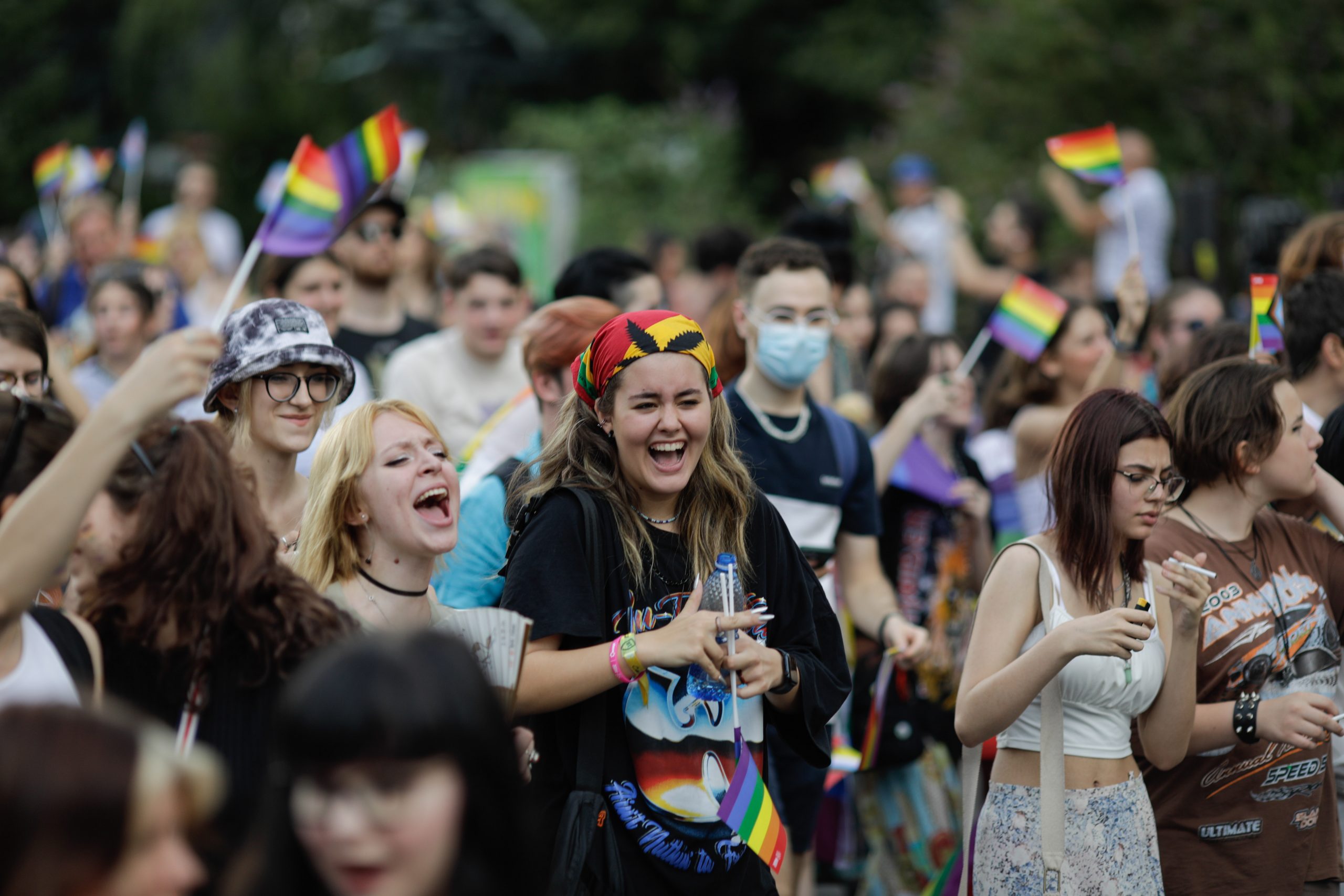
Thousands of Romanians joined an LGBTQ pride march in Bucharest ahead of planned legislation that could potentially jeopardize future parades and stoke discrimination.
Gay ‘propaganda’
Parliament’s lower house is expected to start discussing a bill already approved by the Senate which bans youngsters from being exposed to so-called gay ‘propaganda’ in schools and elsewhere, similar to laws in Hungary and Russia.
LGBTQ rights groups have warned the bill discriminates against the minority and could lead to the censorship of movies and news about the community, as well as impose restrictions on marches and public events.
An estimated 10,000 people joined the march on Saturday, dancing and waving rainbow flags. Organizers put the number at 15,000.
Inclusive society
They shouted their demands for a more inclusive society and marriage rights.
Romania does not give any legal recognition to same-sex couples in the country, and it is consistently ranked among the lowest places in the European Union for LGBT protection which face widespread discrimination and homophobia.
British Ambassador to Romania Andrew Noble, one of the diplomats who participated in the march addressed widespread homophobia and reluctance to accept the community.
Rights
“Protecting the rights of one community does not endanger the rights of another,” he said.
A counter-march was organised by far-right and Orthodox groups to protest again same-sex partnership, marriage and adoption, as well as sexual education in schools.
They chanted and carried banners with anti-gay slogans. Leader Tudor Ionecu, gave a speech about the importance of fighting “the homosexual mafia”.
According to the Romanian gendarmerie, only 70 people attended the march, much lower than in previous years.
Homosexuality
Socially conservative Romania decriminalised homosexuality in 2001 as it prepared to join the European Union. It bars marriage and civil partnerships for same sex couples.
A blanket ban on gender identity studies in 2020 was ultimately struck down. The last person jailed for being gay in Romania was freed in 1998.
Romania only decriminalized homosexuality three years after that, in 2001, as it reformed its laws to qualify for membership in the European Union.
Yet many members of the country’s LGBT community remain frustrated by the country’s failure so far to go further and pass laws that would legalize same-sex unions or marriage.
Backlash
There are also fears of a conservative backlash to the gains achieved so far by LGBT people, as some in Romania, influenced by the Orthodox church, reject the growing acceptance of sexual minorities, particularly among young people.