









Consult the Tenth Commandment, O piggish gluttons: Thou shalt not covet!
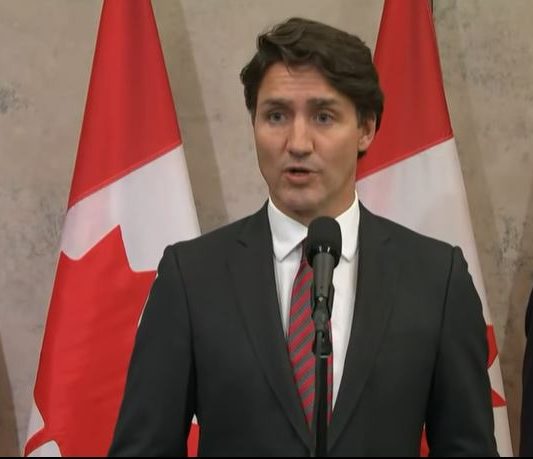
Justin Trudeau’s resignation as Canada’s prime minister, while politically forced, is nonetheless a rare demonstration of a leader stepping back and – whether intentionally or not – serving the good of a country. Many other leaders, past their sell-by date and perhaps actively causing damage, should take careful note and consider following suit.
Much can be said about how Trudeau squandered his position as the handsome face of global liberalism when he came to power in Ottawa in 2015. He limps away as an avatar of progressive overreach, with Canada mired in scandals over crazy levels of immigration and every manner of wokeness – and that was his doing, because he truly seems naïve.
Consider, for example, the 471,808 new permanent residents admitted in 2023. This influx has contributed to immigrants comprising 23% of Canada’s total population, the highest proportion in over 150 years. This has led to concerns over housing affordability and social services – but there is something else: Like their neighbors to the south Canadians are a nation of nations and a mix of peoples, but they have also become a people of their own, in a way, to enough of a degree that a vast change in the culture is unwanted. Especially is so much of the influx is from illiberal societies.
Trudeau seems not to appreciate this, perhaps because of his roots in French-speaking Quebec, which itself is different from the rest of English-speaking Canada. He took multi-culturalism, a good idea initially, too far. So his Liberals lost their majority years ago, being forced to rule in a coalition that has now fallen apart – partly, perhaps, compelled by the coming conflicts with the incoming administration of Donald Trump in Washington.
If Trudeau was, say, Israel’s Benjamin Netanyahu, there would have been no end to the schemes and manipulations and gaslighting and legal maneuvers and dirty tricks. Anything for another second in power. Corruption trials, four recent inconclusive elections, poor health, his wife’s conviction, the catastrophic failure of October 7, the ongoing hostage crisis, and the majority of the Israeli public’s demand for an official inquiry commission – nothing matters.
In contrast to that indignity, Trudeau chose to walk away, saying, “This country deserves a real choice,” acknowledging that internal battles within his party would make him ineffective in fixing challenges like inflation, anger over immigration, and fractious politics.
This willingness to go quietly is rooted in a democratic instinct to preserve stability and offer renewal (and perhaps in a human instinct to not look like an idiot or a maniac). As a consequence Trudeau has a shot at being remembered for useful reforms, from cannabis legalization to childcare programs, even though his later years were marred by public discontent.
Netanyahu is currently the elected official causing the most damage to a country – for reasons I’ve described at length in this publication. But he is far from the only mulish insister – elected, autocratic or dictatorial – on eternal rule.
A partial list might include Vladimir Putin, who has clung to power in Russia since 1999, destroying a nascent democracy, invading Ukraine, and isolating his country economically and politically. Xi Jinping in China, with no term limits since 2018, has cracked down on freedoms in Hong Kong and Xinjiang, undone capitalist reforms and heightened tensions over Taiwan, risking global instability. Recep Tayyip Erdogan in Turkey, in power two decades, has thrashed democratic institutions, implemented disastrous economic policies, and polarized his society. Alexander Lukashenko in Belarus and Nicolas Maduro in Venezuela have transformed their nations into pariah states through repression, corruption, and economic ruin. Meanwhile, long-term African rulers like Paul Biya in Cameroon (premier or president since 1975) and Yoweri Museveni in Uganda (president since 1986) have perpetuated stagnation, corruption, and conflict. Daniel Ortega in Nicaragua has been befouling the landscape since the early 1980s.
The reasons for all of them to go are clear. Prolonged rule often leads to institutional decay, fostering corruption and inefficiency while stifling fresh leadership. These leaders erode public trust, polarize their nations, and provoke unrest or even violence. Their prolonged dominance frequently isolates their countries internationally, while undermining stability and economic growth.
Leaving at the right time might instead preserve both personal legacies and national resilience. Voluntary exits by the worst of miscreants might offer nations the chance to heal, rebuild, and move forward. There are two impediments to this: A piggish gluttony and megalomania.
On the first front, consider an interesting trio. Vladimir Putin, ruling the largest country in the world by territory, invaded Ukraine to seize more territory. Xi Jinping, competing with India for the world’s most populous nation, covets Taiwan’s population of 25 million people more, and may court disaster to achieve it. Netanyahu, who has served more time than anyone else as Israel’s prime minister, will burn the place to the ground to buy himself a little but more time.
Netanyahu may be the most fascinating. Putin is an inhuman ghoul obsessed with a twisted nationalism while Xi is a heartless and scheming communist robot. Netanyahu is a U.S.-educated historian’s son who is erudite and worldly; he’s complex and tragic, which is written on his face. Perhaps, as leader of Israel’s most religious-ever coalition, he should consult the Ten Commandments, indeed, specifically, the tenth: “Thou shalt not covet.”
As for the megalomania, Exhibit A in recent history is France’s King Louis XIV, who famously declared, “L’État, c’est moi” (“I am the state”). It is a widespread delusion, this laughable idea. Louis XIV died in 1715, France’s monarchy soon followed; France survived just fine and the world kept spinning on its axis.
The King is dead! long live the State!

