











If you put together seemingly disparate events and messages over the past few days, there is an interesting picture: US President Donald Trump seems to be under a well-orchestrated assault from the Kremlin.
Let’s review them:
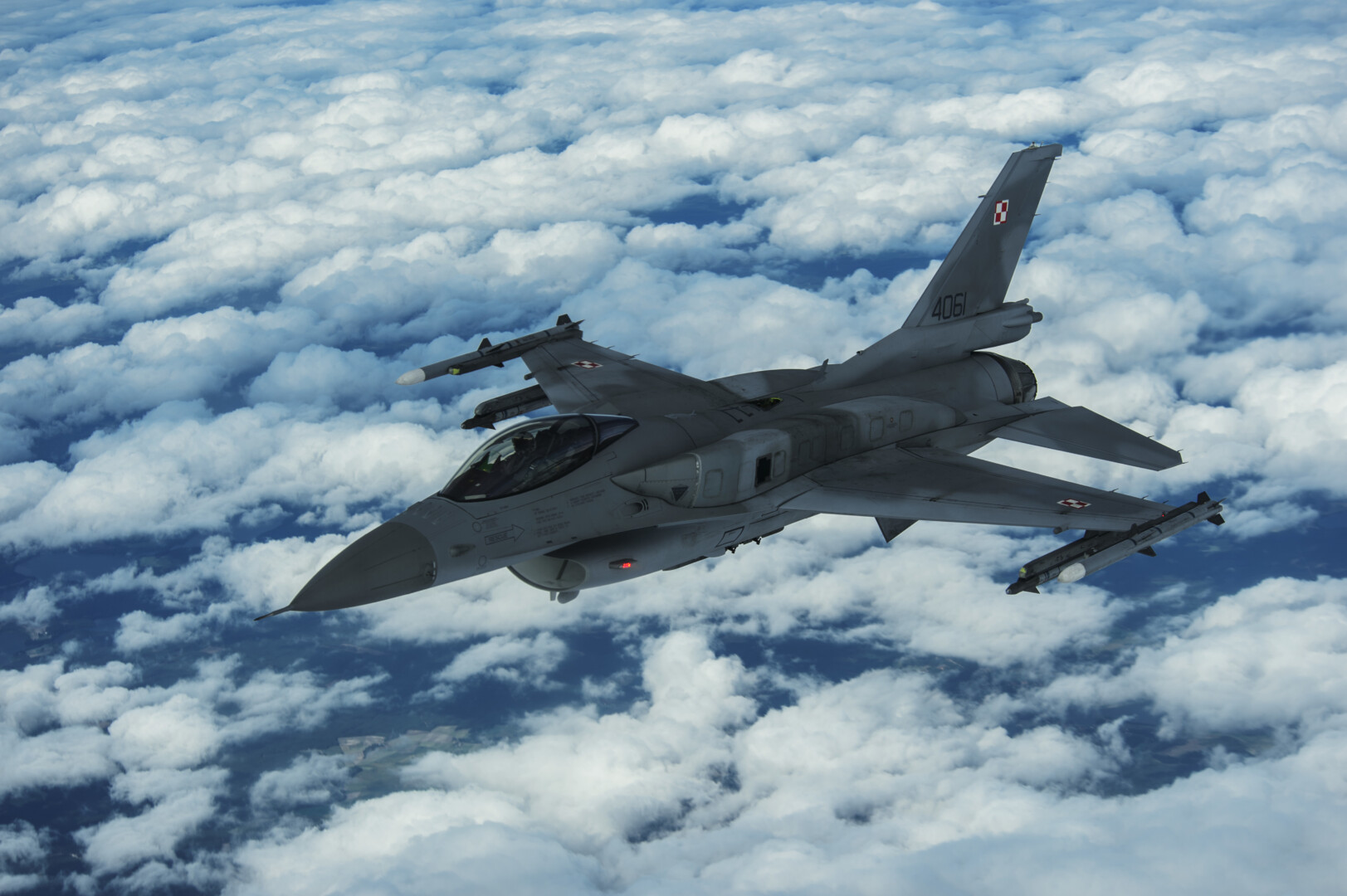
- The incursion of numerous Russian drones into Polish airspace.
- The incursion of a drone into Romania, immediately after the Polish violation.
- Moscow’s decree there should be a “pause in negotiations between Russia and Ukraine”.
- The Kremlin’s less than diplomatic move contradicting Trump, with Dmitry Peskov saying that “there is no progress” in organizing a peace summit between Russia, Ukraine and the US after Donald Trump had said that it could take place “relatively soon”.
- Finally: “NATO is at war with Russia” – this is the next, very recent statement by Putin’s spokesman, Dmitry Peskov, sounds. And lest there be any doubts, the Russian official immediately underlined the idea: “It is obvious and there is no need for additional evidence.
Combined, all these elements look like an operation to psychologically overwhelm the American president. And if you want an analogy with common practices today on the battlefield, I don’t think it would be an exaggeration to take as a benchmark the tactic of overwhelming the enemy’s anti-aircraft with provocative drones.
Points 1, 2 and 5 put pressure on Trump from the perspective of America’s status as NATO’s leader, its main ally and riving force.
Putting the spotlight on the alliance as an irritant for Trump and Trumpism is not such an unusual idea, given that breaking NATO cohesion has been a historical objective for Moscow since the days of the Soviet Union, also considering the fact that Trump himself has uttered some eccentric ideas about the present and the future, ranging from the functioning and “profitability”, to the meaning and relevance of the alliance.
Points 3 and 4 put pressure on Trump from the perspective of his (overdue) goal of making peace between Russians and Ukrainians.
Basically, with these statements, Russia pushes even further down the line chances of an end to the conflict by a magic wand waved by the wizard in the White House. At the same time, Russia virulently signals to Trump that it risks being drawn into a confrontation (with NATO) that would not go down well at all with the MAGA crowd; a crowd that Trump himself trained to see the world through the lens of “simple” truths, quick successes, maximum triumph, and instant peace.
Therefore, linking the five points above, it is worth remembering that when it comes to Russians, nobody should believe in is coincidences.
Why is the Kremlin doing this and why is now? Of course, the relevant answer lies with the dictator Putin, not the commentators.
However, the commentators can juggle the clues, no small feat in itself.
For example, I can see that the Russian assault on Trump cannot be dissociated from the increasingly good understanding that Moscow has gained about how the American president functions.
From observation at least, it has become clear to many, not just Russians, that Trump’s over-excitement and over-stimulation by positive (praise, flattery, creating fanciful expectations) elements, or by elements that don’t sit well with him, confuse him or simply destabilize him, can often produce results.
In recent months, depending on what the moment requires, the Kremlin has alternated Trump’s positive and negative over-stimulation and over-excitement. Sometimes, the Russians overwhelmed him with praise and promises, at other times they overwhelmed him by changing their minds, delaying tactics, and even threats (as is the case now).
Each time, Moscow got something from Trump – of course, never everything, never something concrete enough for them.
Evidence of this is the very fact that the war in Ukraine continues, that it continues at an intensity set by Russia, as well as the simple fact that American sanctions have not yet reached the level to match the threats made at one point by Trump himself, or the simple fact that American support for Ukraine is not at the level dictated by the realities of the war and the historical commitments of the U.S. to its European allies.
There it is worth remembering the moment when the Kremlin approaches Trump directly. .
For Putin, the course of the war in Ukraine so far has created, both internally and externally, a situation with no way out (of course, with the notable exception of the Putin regime collapsing). Therefore, the only almost rational way, for the Russian dictator, would be a future not only with even more war, but with an extension of the conflicts beyond the current front lines.
More chaos – and a “more” regional or even global conflict– could create at some point the right conditions for Putin and his regime. It would be naïve not to consider this a potential development, if you put yourself in the Russian dictator’s boots for a moment.
At the same time, we are going in a period in which many European countries have duly taken note of Russia’s imperialist appetite and are accelerating their defense programs and strategies in the face of the Russian threat.
It is also worth noting that the Europeans, uneasy about the situation, are putting their own pressure on Trump to make him shoulder unprecedented sanctions on Russia, designed to cripple his economy and strengthen Ukraine’s defense and Europe’s collective defense.
Last but not least, a series of Russia’s offensive operations on the Ukraine front have reached a black deadline in recent days – the president has just announced land regains by Ukrainian forces in the border area, and corroborated by the ISW (Institute for the Study of War), highlighting that Moscow’s attacks on the Sumy, Kharkiv, Zaporozhye regions, which, although a reality, have not resulted in tangible results.
Finally, a truly extraordinary fact, given the context, there is a contingent of Indian army soldiers who are joining the ZAPAD 2025 maneuvers, organized by Russia.
Putin staged a testosterone-fueled show against the West and especially Donald Trump at and after the Tianjin summit, one of the reasons related to India joining the Xi-Putin-Kim club.
By co-opting Indian military personnel to ZAPAD exercises, Moscow’s increasingly aggressive message is more clearly addressed to the American president, since the US leader has pushed India into Russia and China’s arms – through his attitude towards Pakistan and the crazy tariffs he imposed on India.
This being the context, the five points made at the beginning of the piece, through which the Kremlin psychologically besieges the White House, outline new realities, open up new geopolitical perspectives, and create a generous potential for Moscow (and Beijing) to exploit the American leader’s weaknesses.
The misfortune is not so much that, from the Kremlin, the dictator approaches the game with the US in an “integrated” way, but that in the White House today sits a guy who looks at and understands the world in an exclusively fragmented way.
There is a bonus: both Putin and Trump seem incorrigible, each in their own way.
