









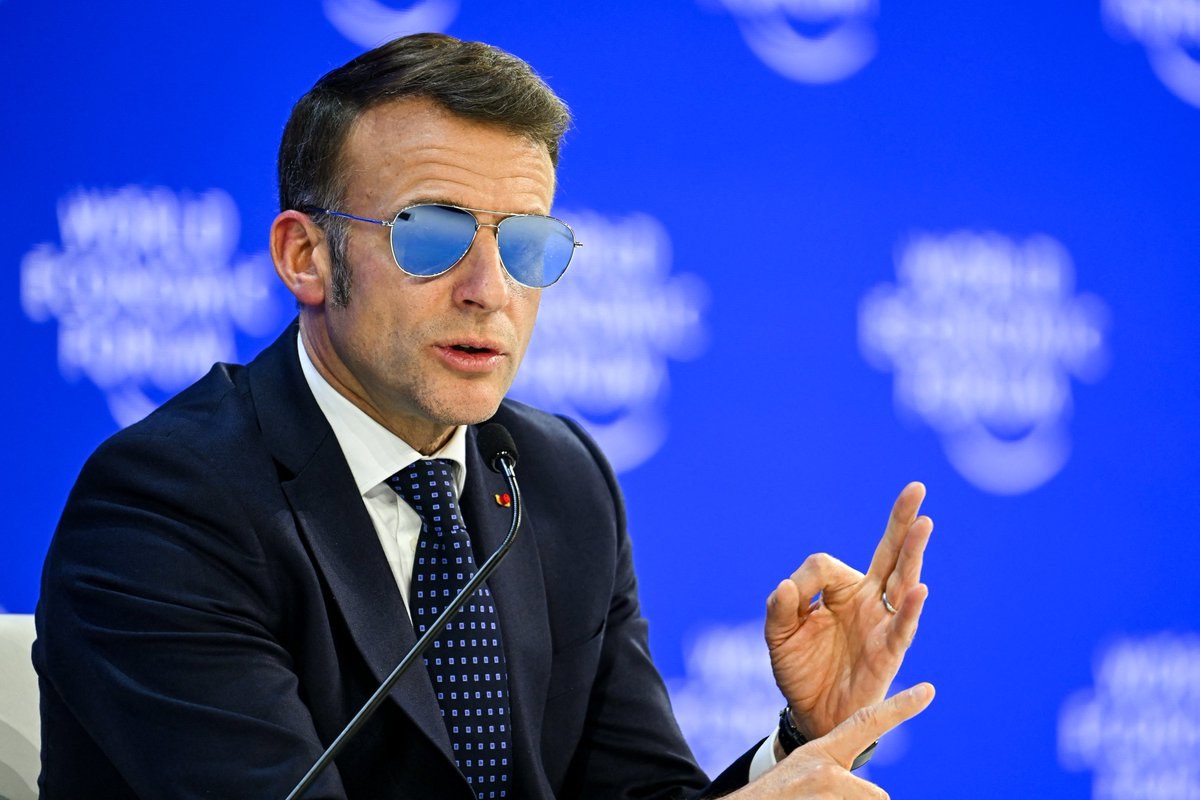
In an interview published on 9 February in Le Monde, French President Emmanuel Macron reinforced his call for a new joint borrowing initiative by the European Union.
The proposal is intended to finance strategic investments and strengthen the EU’s ability to compete in an increasingly fragmented global economy.
It echoes the common debt issued during the Coronavirus pandemic.
In the interview, Macron also argued that such a mechanism could help the EU reduce its dependence on the US dollar, in light of relations between the US and the EU growing frostier and frostier.
The intervention precedes a meeting of EU heads of state and government in Bruxelles, where competitiveness and industrial strategy are set to be central topics. European leaders are under growing pressure to respond to rising geopolitical tensions and aggressive industrial policies pursued by global competitors such as the United States and China.
Macron’s proposal is rooted in a broader argument that Europe has failed to invest sufficiently in key sectors that are critical to long-term economic power. He has repeatedly warned that without collective financial tools, the EU risks falling behind in areas such as green technologies, artificial intelligence, and critical infrastructure.
Macron thinks that national budgets alone are no longer adequate to meet these challenges. The French president has framed joint borrowing as a matter of economic sovereignty. He argues that Europe remains structurally disadvantaged by its reliance on the dollar, which is used in the majority of global trade and financial transactions. He believes that this dependence exposes European economies to external shocks and limits the EU’s strategic autonomy.
Macron’s remarks also reflected concerns over recent geopolitical developments, including what he described as the “Greenland crisis.” Macron portrayed the episode as a reminder of how very quickly strategic tensions can re-emerge.
He cautioned Europeans against what he called a “false sense of relief,” arguing that temporary de-escalation should not obscure deeper structural risks — like economic vulnerability brought on by geopolitical weakness.
That being said, it might be surprising to hear that the proposal remains controversial within the EU. While some member states support deeper fiscal integration, others remain firmly opposed. Countries such as Germany, the Netherlands, and several northern and eastern European states have historically resisted permanent joint debt mechanisms, fearing that they could encourage fiscal irresponsibility or lead to long-term financial transfers between member states. For these governments, national responsibility and strict budgetary discipline remain central principles of EU economic governance.
The European Commission itself has adopted a more cautious but actually increasingly aligned tone. Ursula von der Leyen has repeatedly warned that global economic competition is becoming more strategic and less rules-based. In recent speeches, she has called for regulatory simplification and stronger industrial coordination at the EU level, which would hopefully speed things up — no that this is a formal endorsement of Macron’s arguments.
The truth is that the European bloc possesses one of the world’s largest single markets but lacks the fiscal instruments typically associated with major global powers. The Covid-19 recovery fund, financed through joint borrowing, marked a historic step in this direction, but it was explicitly framed as temporary. The variables of the problem have changed: the debate over joint borrowing is no longer limited to crisis management but is increasingly tied to the EU’s long-term position in the global economic order.
