




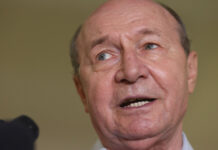

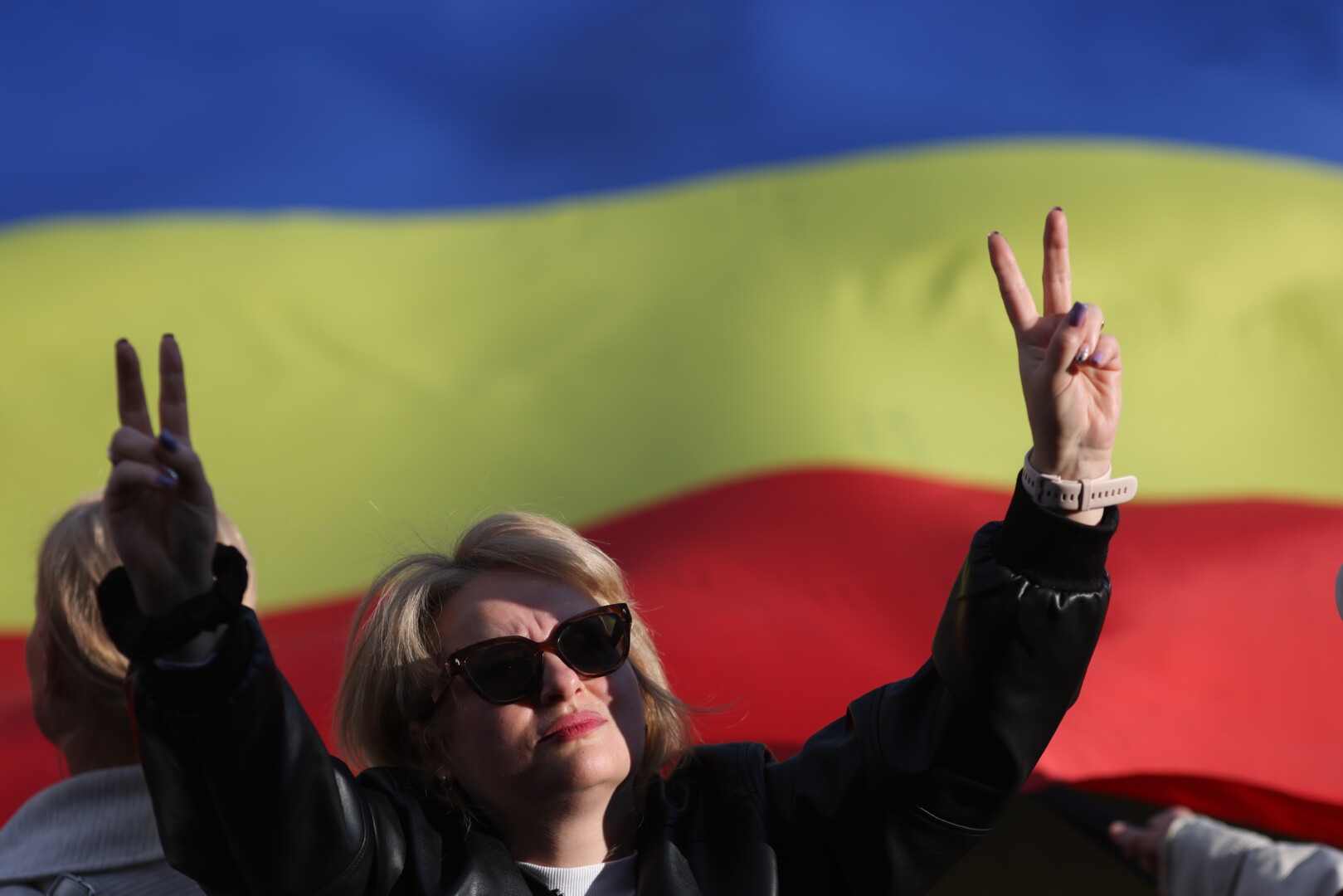
Andreea Gudin was an adviser to ex-President Klaus Iohannis, the Romanian leader who resigned in February 2025 amid political crisis over elections canceled the previous December.
Using open sources, the strategic communications expert has written a report on what happened in Romania before the Constitutional Court annulled presidential elections over reports of Russia meddling to skew the result in favor of a populist anti-NATO candidate. Moscow has denied interference.
Key excerpts from the interview:
- When we speak of state interference, we cannot speak of a singular action or an impulse based on a single element. I think (the interference) it was just part of a well-played plan.
- Brad Parscale, Donald Trump’s former campaign manager in 2016, visited Romania several times, starting in 2018, to a conference at the Romanian Academy, followed by private meetings. […] Let’s show you what PR tools we use, he said.
-
- We are talking about a political coalition (Eds: the Social Democrats and
- junior Liberal Party) that has been in government for a very long time (Eds: from 2021-2024). It’s like a marriage in which, even if the two partners no longer love each other, they have done a lot of business together and have a lot of dirty laundry to wash.
- The international press coverage was negative, pointing out a weak and complicit Romanian state. I haven’t found anyone who says that we, Romanians, weren’t to blame for the annulled elections.
Why did you making this report? Why did you consider it necessary?
Andreea Gudin: It seemed to me that there were a lot of things left unsaid and the way in which the last report of the Prosecutor General was presented seemed simplistic to me. I felt the need to make this issue public.
There was a need for a general framework … to provide a coherent story and also show what we should do next. From the prosecutor’s office report, we are at a dead end.
Do you think that the Prosecutor General’s Office could have done more in this indictment?
Andreea Gudin: Yes, I think they could have done much more. If people in the public space, can build a chronology of these events, because experienced them and they affected us, I don’t see why the prosecutors couldn’t have done the same.
Your report refers to the period before November 24, the first round of presidential elections. You document a series of relationships, contacts, political positions that were in the public domain. By providing open sources, you create a broader context in which we see connections between people suspected of promoting Russian narratives and propaganda in Romania, but also links to people in the US who worked on Donald Trump’s 2016 campaign and who revolve around the Trump family.
On the other hand, the report published by the Prosecutor General’s Office analyzes what happened after November 24.
Why is the period prior to November 24 important?
Andreea Gudin: The Prosecutor’s Office report is superficial. It only looks at the public steps. An analysis of a state’s interference cannot be done by a single action alone. It’s not an isolated episode. All this needs to be put in a broader context to understand the outcome.
From my point of view, what happened doesn’t make sense if you don’t look at the whole picture. I think it was just part of a plan. And you can’t understand that from inside the paradigm — you have to go outside and connect up the dots. That’s what I tried to do, following the narrative thread from 2019 to the present day.
In your report, you publish a letter of support, signed by Donald Trump, addressed to Cosmin Gușă (former politician and pro-Russian journalist). When was this letter dated?
Andreea Gudin: June 2024.
So, in June 2024, Donald Trump announced his public support for Cozmin Gușă, who considered himself a possible presidential candidate. On the other hand, four months ago, Cosmin Gușă publicly announced that he is a supporter of Vladimir Putin. How do you explain this association?
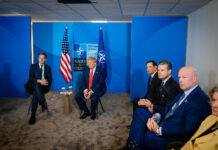
Andreea Gudin: I noticed this attitude in several of those documented in the material. Let’s give an example: Victor Ponta (Eds: former Romanian PM and presidential candidate). At the Dec. 18 meeting at Mar-a-Lago, asked by a New York Times reporter if Russia had any involvement in the 2024 election process, he said “No, never.”
Romania’s Supreme Defense Council report had already been released (regarding Russian meddling in the presidential elections), which was confirmed by Antony Blinken and two US senators, one Democrat and one Republican, who had paid a visit to Bucharest. So, when things were starting to become clearer, Victor Ponta adopted a position that surprising to say the least.
Likewise, Marcel Ciolacu (Eds: ex-PM) had a similar position. He didn’t directly support Putin, but said he considered that Russia was not a danger for Romania. I can’t explain it entirely, but I think it’s part of an organized plan.
Was the strategy organized here in Romania or is there a broader understanding, a kind of triangle between people in Trump’s circle, Russia and Romania?
Andreea Gudin: It is very clear there is something that doesn’t add up. You have people (in Romania) who were anti-American, and they suddenly become pro-American after Trump returned to the White House, but they are also pro-Russian. I don’t think it’s just a coincidence. We had a governing coalition that had been in government for a very long time. It’s like a marriage of convenience: the partners have many secrets and common interests. I can’t believe that the leaders of the two big parties (Eds: the Social Democrats and the Liberals) were passive.
I think that the Liberals played a sacrificial role which transferred votes to Calin Georgescu (anti-NATO, radical candidate whose surprise win led to elections being canceled). The Social Democrats through their leader, the PM Marcel Ciolacu, always seemed to be in a position of strength. The American press only conveyed the Social Democrats’ messages, never the Liberals, something which was clearly observed during my time as presidential adviser.
Brad Parscale, Donald Trump’s 2016 campaign manager, also appears in your report
Andreea Gudin: Parscale is a very interesting character. He became campaign manager through a dumping offer, 1,500 dollars, through which he pledged to coordinate Donald Trump’s digital communication. He was involved in the 2016 campaign, one in which US authorities proved Russian interference. The Mueller report has over a million pages, including additional documents. A coincidence or not, Parscale comes to Romania exactly around the date when the Mueller report in the US is released, April 2018. He was presented as the great guru of the American campaign, but it seemed to me that those were the first contacts of ‘the let’s show you what public relations tools we use in the US.’ Parscale himself said that we will see the effects of these instruments in the upcoming electoral cycles in Romania. So I don’t see why we shouldn’t believe him. He is a man with experience in online manipulation.
Do you think anyone will take a serious look at what happened before the November 24th first round of elections?
Andreea Gudin: I don’t think so. These are too sensitive questions. It’s not just about information, but about who endorses it. If that had been wanted, it would have already happened. In addition, the partnership between Parscale and a part of the Romanian press has deep roots. It comprises almost half of the mainstream media. It’s like in the governing coalition — you can’t easily tear it down.
How did we come out as a country from these cancelled elections? Have we learned anything?
Andreea Gudin: I don’t think so. Nothing has changed in tactics, action or vision. We have the same people in office the same fight for power. The political system has remained the same.
Here is a link to the report.
International scrutiny on MEP Diana Șoșoacă could boost Romania’s fight against extremism
