










The kindly old fellow gave me my first major interview with The AP
In March 1990 I had one of my first experiences of the journalist’s indignity. Waiting in the corridor of the King David Hotel for way too long, being hustling by communications handlers into the room where a dignitary awaited, observing disheveled “snappers” and cameramen jostling unhappily for space, hearing the “pencils” barking questions that would know no reply.
The dignitary was offering a photo op and little more than a statement. Quotes were dutifully jotted down, also by me. As we were being hustled right back out, an instinct kicked in: As some readers will recall, during my high school journalism days I snuck into the Philadelphia Phillies dugout in the middle of a game. I needed some quotes that were exclusive, which would enable me to claim that this was an interview with the Associated Press.
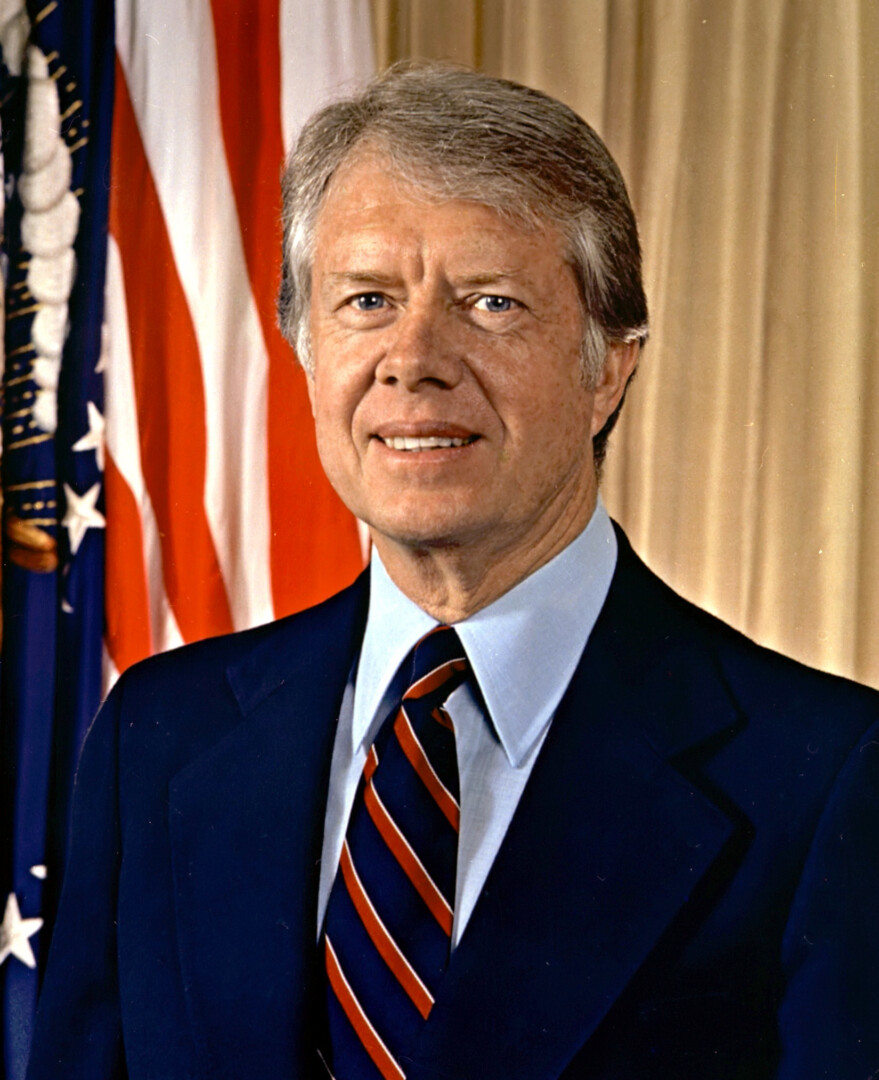
I walked up to the guest, an white-haired old man whose kindly eyes sparkled at the rookie chutzpah of my approach. “Let’s have a word out on the balcony,” he said. Looking horrified but resigned, as if she’d seen this many times before, was Rosalynn Carter.
What was I doing on this terrace? To this day, frankly, I’m not exactly sure.
I had applied for a job with the Associated Press in New York, horrifying my parents who had spent good money to get me advanced degrees in computer science. In February 1990, I had been sent to Romania as a trial because I spoke the language. The country had just shaken off decades of communism, and The AP, to the further horror of my Romanian-born parents, was considering hiring me to reopen its Romania bureau.
While awaiting their decision, I freelanced in Jerusalem under Nick Tatro, the AP’s iconic bureau chief. Back then, the AP bureau chief in Jerusalem was a towering figure in journalism, which I understand very well will be hard to believe for readers in 2024. Nick was out of central casting: gruff in a studied way, somehow brilliant, unfailingly cynical and vaguely kindhearted. He had graded my AP test, a grueling rite of passage; after hours of painstaking efforts on my part, he glanced at it for a few seconds and offhandedly declared: “Well, you can spell.”
This was not a man one wished to disappoint, and it was he who had dispatched me to cover Jimmy Carter’s little hotel press event.
Carter, who died Sunday, was a one-term president who, for some, would be mostly remembered for the debacle of the Iran hostage crisis. It began on November 4, 1979, when Iranian militants seized the U.S. Embassy in Tehran and took 52 Americans hostage. The standoff lasted 444 days, marked by failed rescue attempts and intense diplomatic efforts, which ultimately led to the hostages’ release on January 20, 1981, the day Ronald Reagan was inaugurated as president. The crisis deeply damaged Jimmy Carter’s presidency, showcasing U.S. vulnerability and contributing significantly to his 1980 electoral defeat.
He’s also remembered for his controversial “crisis of confidence” speech on July 15, 1979, which I remember hearing in the car on the way to visit cousins in Baltimore. Addressing the nation during a time of economic stagnation and political disillusionment, Carter described a deeper malaise afflicting the American spirit. “The erosion of our confidence in the future is threatening to destroy the social and political fabric of America,” he said. Carter lamented that materialism and selfishness were undermining the nation’s character, warning that America’s identity as a hopeful, united people was at risk. The speech was immediately panned as defeatist, with critics dubbing it the “Malaise Speech” — but I think it prescient, just four decades before its time.
Carter, who was president from 1977 to 1981, certainly also had achievements. He negotiated the Panama Canal Treaties, transferring control of the canal to Panama. He normalized relations with China, paving the way for a new era in U.S.-China diplomacy. And he made human rights the cornerstone of American foreign policy, supporting dissidents in the Soviet bloc and challenging regimes that oppressed their people. But the main thing, the signature thing, was his brokering of the 1978 Camp David Accords which secured peace between Egypt and Israel a year later.
So back on that terrace, I decided to focus on the prospects of extending the circle of peace to Syria. Carter had mentioned something about it in his comments, and I asked how it would work. Carter said he had met with Syria’s president (read: dictator) Hafez Assad, and found him “ready to make peace, under the framework of an international conference.
That was interesting! Assad needed the excuse of others in the room. I pressed further, asking if Assad might agree to demilitarize the Golan Heights, which Israel had occupied in the 1967 war and had annexed. Israel returned the Sinai Peninsula, also occupied in that war, in exchange for peace with Egypt, and it had been demilitarized, a major Egyptian gesture. Then again Israel never annexed the Sinai – complicated stuff. Carter hesitated: “I really can’t say.”
I began to ask more things, and Carter was ready to reply. He really was a gentleman. But Rosalynn finally stepped in, waving a notebook at him for some reason. I didn’t know much about the world at 26, but it was clear to me that this was a spouse accustomed to the thankless roll of preventing her husband from spending all day with fools. “Jimmy, we really ought to go,” she snapped. Carter tried to carry on, but under her glowering gaze seemed to consider his options briefly, and then dutifully complied.
I found myself reflecting upon the controversy stemming from Carter’s 1976 interview with Playboy magazine in which he candidly admitted to having experienced “lust in my heart” for women other than his wife. I did not consider this a mystery and was glad I had refrained from investigating the matter in what was my first major interview in what was to becoming a 28-year career running around the world for the Associated Press. It counted as one, I say.
Over the years, Assad did negotiate with Israeli prime ministers Yitzhak Rabin, Benjamin Netanyahu (in his first term), and Ehud Barak, but a deal was never reached. Assad died in 2000 and was succeeded by a doltish-seeming son, who has indeed recently been in the news.
Much has happened in the Middle East since that day, and peace remains, shall we say, elusive. Carter lived to see all of it—the dashed hopes, the shifting alliances, the moments of progress that always seemed to slip away. Remarkably, he also lived to see Donald Trump occupy his former seat in the Oval Office—a surreal turn of events for a man whose moral compass defined his public life. Carter’s longevity is astonishing; he lived to 100, becoming the longest-living former president in U.S. history. It is equally astonishing that this supremely decent man did not succumb earlier, to a broken heart.
