





The overwhelming success of the extremist George Simion on Sunday, May 4, would not have been possible if turnout had been higher.
On the other hand, at a time when the stakes are higher than ever for Romania –and its very existence as a democratic state firmly committed to the Western path and all that entails: access to European funds and attractiveness for foreign investments and capital, only half the eligible voters went to the polls.
The fact that the result of the first round of the presidential elections scared the West was obvious to everyone: the stock market went into the red, the leu devalued, capital outflows increased, and the National Bank of Romania had to make colossal efforts to keep the drift in check.
And the hard part hasn’t even started yet, but is only days away.
If the situation is repeated on May 18, and George Simion will be voted president with his program, with his domestic and foreign policy ideas, with the perception created by his political activity, the economic shock will be overwhelming for Romanians.
I am convinced that, regardless of their personal preferences in terms of candidates and regardless of their personal perspective in terms of going to vote or not, no one wants to personally experience what it would mean for Romania to overnight go from a pillar of security for the European allies into an element of insecurity for them. Even less, would anyone want to feel in their own pockets what the transformation from a reasonable destination for foreign capital into the pariah of international markets would mea.
Paper and slogans are one thing, but it comes down to what’s in the pocket!
In order for this shock not to happen (a shock that will be most savage for the most vulnerable – because objective reality is always fiercely ironic), George Simion must not win the May 18 election.
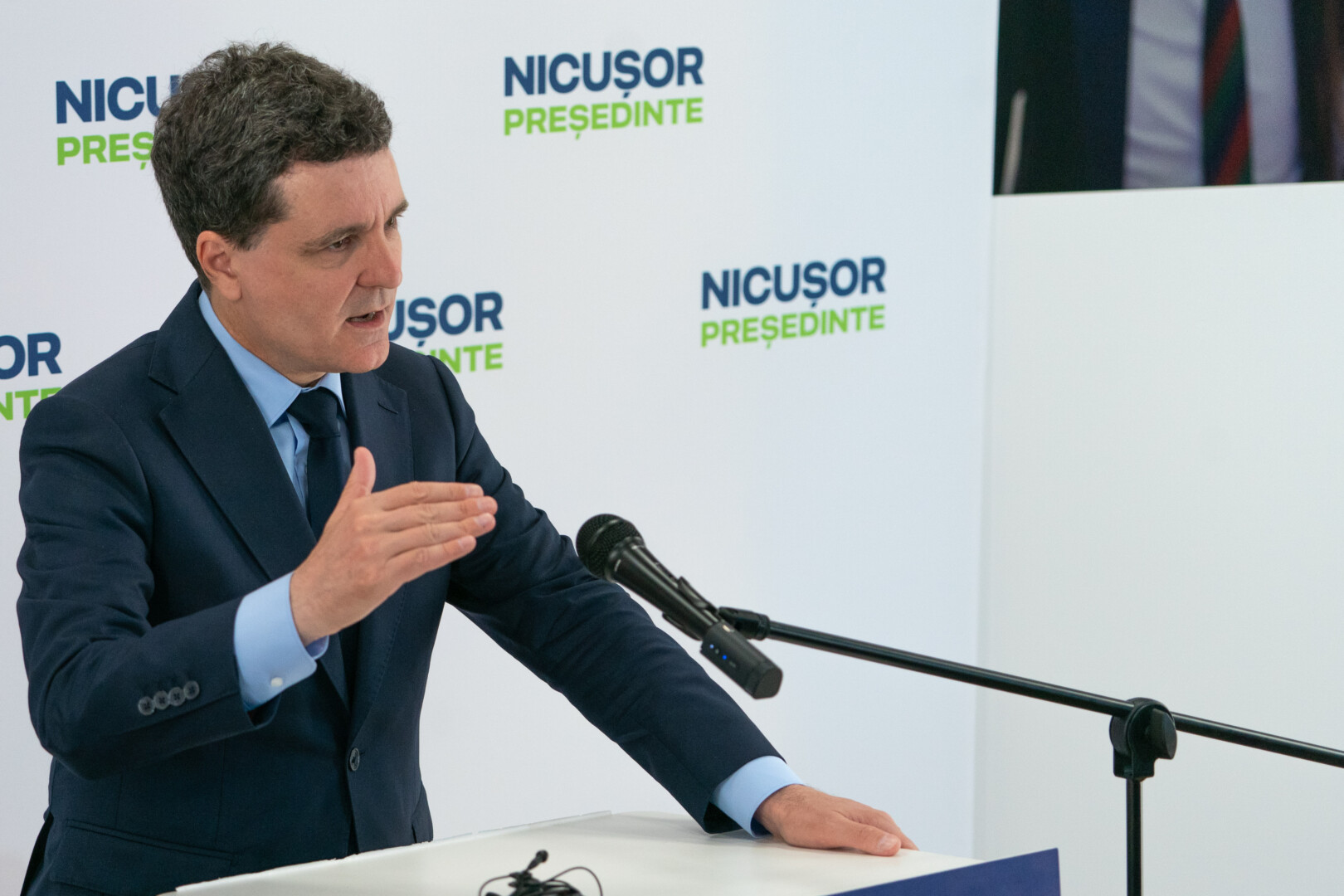
But in order for Nicușor Dan to win, it will take much more than for him to convince the electorate of the candidates he faced in the first round.
It will be necessary for Nicușor Dan to convince a significant nucleus of absentees like no one before him. And the approach means this: one he needs to get the absentees to go to the polls, and next he needs to get them to give him their vote.
Despite the Sisyphean appearance of this work that falls to the Nicușor Dan, it’s not impossible, but it is extremely ambitious, enough to inject a note of pessimism from the start.
But Nicușor Dan proved that he can move mountains, and this both during his involvement in public life from the position of civic activist, as well as during the political battles he fought and won for the most part (invariably, despite numerous and enormous obstacles).
It is Nicușor Dan’s job to find the solutions he needs for this complicated equation that he as a mathematician-turned-politician faces. It is also the job of the parties that have announced that they support him to do as much as possible to help him solve the complicated problem.
As far as I am concerned, I can only remind those who read these lines how horrific the years were when turnout was appallingly low.
An electoral exercise carried out almost four and a half years ago – the 2020 parliamentary elections was an electoral exercise whose voter turnout altered the composition of the Parliament. It allowed the accession of AUR, an electoral exercise where voter turnout limited the possibility of government coalitions in the years that followed. It was an electoral exercise where the pitifully low voter turnout produced shocks whose echoes are felt to this day.
On December 23, 2020, we analyzed the short-term implications and long-term impact of the unspeakable absenteeism recorded in the parliamentary elections of December 6, 2020 (more than two-thirds stayed at home).
Since collective memory is vital in moments with an existential charge, I will reproduce below the key passages written then somehow still hot. The full text is available HERE.
- The imperfections of the new government are first of all the fruit of the imperfections of the electorate.
- On December 6, many of the dissatisfied yesterday and today preferred not to show up to vote. There were two large and broad beneficiaries of such an attitude: PSD and the new star, AUR. But the costs didn’t just stop there. Their other dimension was felt in the need to co-opt the same UDMR to the government which, when we were sitting in the street, played as a parliamentary prop for Dragnea, Tariceanu, the ciraci and their projects. I knew, for example, even then what the UDMR thought about the election of mayors in two rounds, as well as about the right of criminals to enjoy influential positions in the state apparatus, or to flee to Budapest, to enjoy the protective umbrella of the Viktor Orban regime.
- Not enough people went out to vote, so the UDMR is, again, a central piece in the parliamentary and governmental architecture.
- The turnout at the December 6 vote partially tied the hands of the other poles of the new governing power – from the president to the leaders of USR PLUS. Neither Iohannis, nor Barna nor Ciolos were left with the result of the parliamentary elections decent room for maneuver to press, during the negotiations, for maximalist solutions in the crystallization of the new cabinet and the drafting of the governing program.
- Staying at home, in the parliamentary elections, shifted the center of gravity from quality to quantity, prioritizing the more modest objective of generating a majority and a government rather than the much bolder one, of obtaining the most reformist majority possible and the most angelic government that could be imagined.
- It is human to want more, especially from those who are often tempted to put less on the table, but it is unrealistic to automatically convert the ideal into the real in the context in which, however, the opportunity to act concretely in that direction was dramatically wasted, when it really existed – on December 6.
- It is not a pure bad habit for politicians to get into the situation of delivering much more only when they feel the pressure on their skin increasing from the bottom up. This has been happening for decades in democracies much more experienced than the one in Romania and, let’s not be hypocritical, the situation is replicated 24/24 in all areas of activity.
- You can’t achieve optimal results with sub-optimal involvement and you rarely give your all, non-stop, in the absence of a matching demand. Any entrepreneur, manager, teacher, pedagogue knows it.
- Politicians know it all too well. And, I know it hurts, all of us who wanted change should have been aware of this (because, it must be said, of those who have wanted another Romania for so long, not all of them turned out to vote, but all accuse or pull their hair out that those “at the top” do not do more than them…)
