













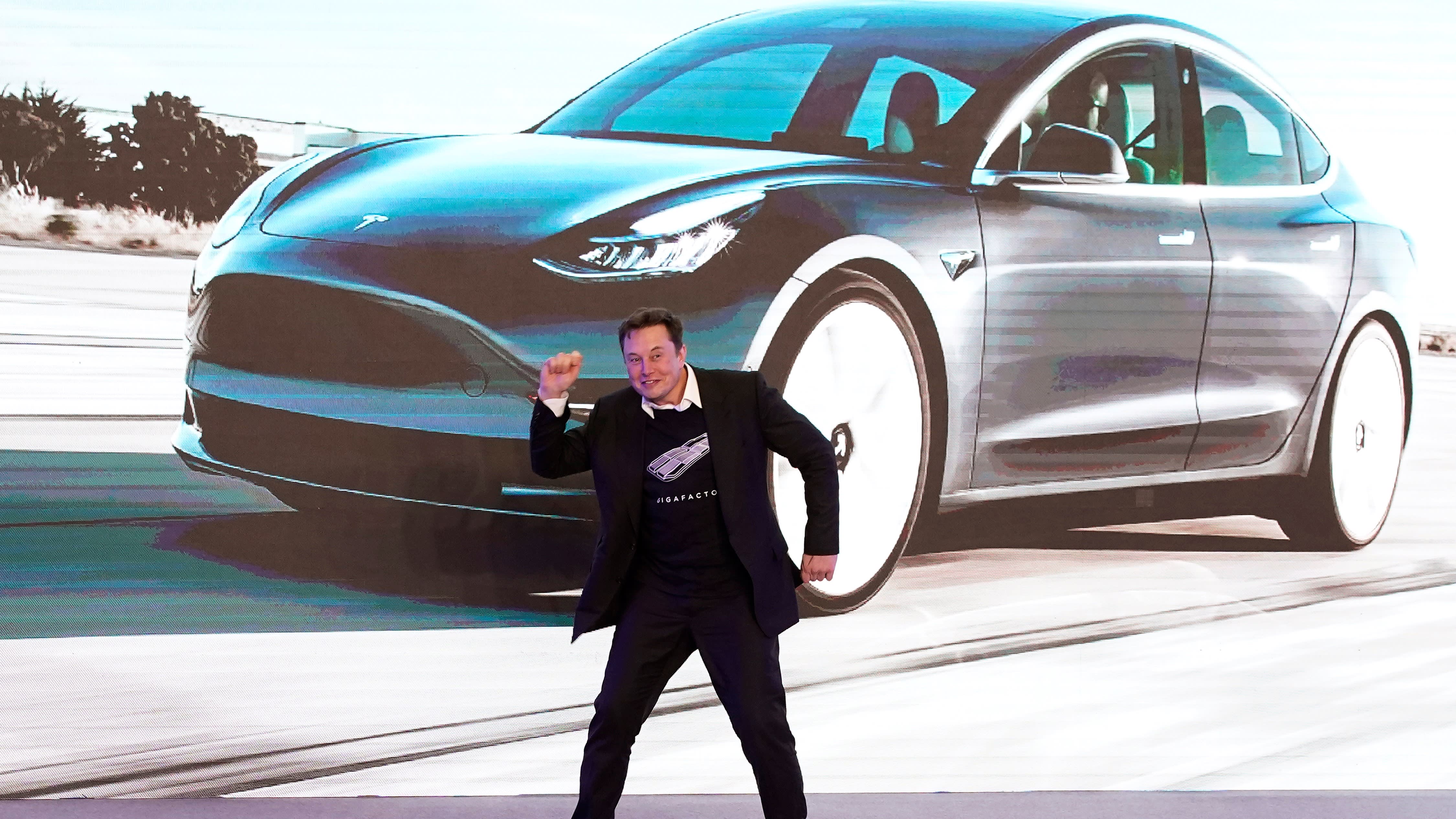
The electric vehicle (EV) sector has become a battleground for dominance between Tesla and its Chinese rival, BYD, with NIO trying to compete in a niche of its own. Each company is leveraging distinct strategies that are reshaping the automotive industry and pressuring legacy manufacturers to adapt or risk obsolescence, writes eToro analyst for Romania, Bogdan Maioreanu.
The world’s largest carmaker, Toyota, took on the challenge and is also entering the fray, offering a low-cost SUV on the Chinese market.
BYD has overtaken Tesla in revenue, sending a strong signal to the electric mobility industry. In 2024, the Chinese company reported annual revenue exceeding $100 billion for the first time – a major milestone. By comparison, Tesla generated $97.7 billion during the same period. For context, in 2018, BYD’s revenue was only about one-fifth of its current level. BYD also impressed financially with a stable and profitable performance. The year has started strong. In January and February 2025 alone, BYD sold 623,300 vehicles, marking a 93% increase compared to the same period last year. For 2025, the company has set ambitious targets: it aims to sell 5.5 million vehicles, including 800,000 units abroad – a clear sign of its push toward global expansion. Some of them will be sold in Romania, where the company recently announced plans to start its operations.
Last month, BYD introduced God’s Eye, a new software package developed in-house to enable autonomous driving. Last week, it announced the ability to charge cars in just five minutes for a range of 400 kilometres. To top it off, the company unveiled the new Qin L model, a direct competitor to the Tesla Model 3, but at half the price, including the self-driving software.
Tesla retained its lead in pure EV sales with 1.79 million deliveries in 2024, though this marked its first annual decline (-1.1%). Its strengths lie in software innovation, brand loyalty and the world’s largest fast-charging network, now adopted by competitors like Ford and GM. But Tesla faces some serious hurdles ahead.
Musk’s growing political involvement in Trump’s second administration and his controversial actions have sparked global calls to boycott Tesla, with sales dropping sharply on traditional export markets such as Australia, Canada and Europe. This wave of negativity has clearly weighed on investor sentiment. However, Tesla faced serious challenges in key markets even before the current political theater. In China, rival automaker BYD beat Tesla’s revenue by nearly $10 billion last year. In Europe, Tesla’s year-on-year sales fell by 42.6%, and its share of the EV market dropped from over 20% to just 10.3%. ACEA has released February registration numbers confirming that Tesla’s drop is on the background of new EV registrations growing by almost 30% in the first two months of 2025. On top of that, the company could be hit hard by new tariffs — a concern Tesla itself raised in a letter to the U.S. Trade Representative.
While Tesla remains firmly at the top of the automotive industry in terms of market capitalization, competitors – especially BYD – are catching up noticeably. Although the gap is still significant, shifts in investor perception are becoming apparent. With a market capitalization of $875 billion, Tesla continues to be the clear number one despite share price declines since the December peak, which temporarily cut its market value in half. However, Tesla shares have rebounded, providing a significant boost to its valuation. Meanwhile, BYD has a market cap of $161 billion, now ranking 4th behind Toyota and Xiaomi. While Tesla’s valuation is still around six times higher, BYD continues to close the gap. NIO is in 36th place as an automotive manufacturer, with a market cap of almost 9 billion dollars, but 7th as an EV manufacturer, behind Li auto, Xpeng and Rivian.
Tesla is the most held stock by Romanian investors on the eToro platform, closely followed by NIO, which differentiates itself through premium positioning and its fast battery-swapping service (BaaS), which reduces upfront costs for consumers. With over 1,000 swap stations and 10 million swaps completed in China, NIO targets tech-savvy buyers willing to pay a premium for convenience. While its sales volume lags behind Tesla and BYD, its focus on autonomous driving and luxury EVs positions it as a niche innovator with its own investor base.
Investors did not leave BYD unnoticed, as the company’s stock price rose by over 51% from the beginning of the year. Tesla, on the other hand, after a spectacular rise at the end of 2024 to a maximum of about 480 dollars, lost 33% from the beginning of this year. NIO is almost flat for the year, with a slight decrease of about 2%.
Global EV sales are expected to grow 30% in 2025, reaching 15.1 million units, according to S&P Global Mobility. This would represent a significant increase in market share, rising from 13.2% in 2024 to 16.7% in 2025. The 25% tariffs on imports of cars in the US, signed last night by Donald Trump and due to come into effect on April 2nd, can throw a wrench in the automotive industry production plans, including Tesla’s – who sees a ”significant impact” of those in company’s activity, because most companies, even with factories in the US, are importing components from overseas.
BYD seems keen to conquer new markets, while Tesla is hoping to get past its current slump and capitalize on its new Model Y sales. Investors are also watching Toyota’s new, aggressive approach to the EV market, after the launch earlier this month of its 13,000 euro electric SUV in China. The 5-seat bZ3X is developed by GAC Toyota, the company’s Chinese joint venture, and uses a lithium iron phosphate (LFP) battery, which is cheaper than the standard lithium-ion.
