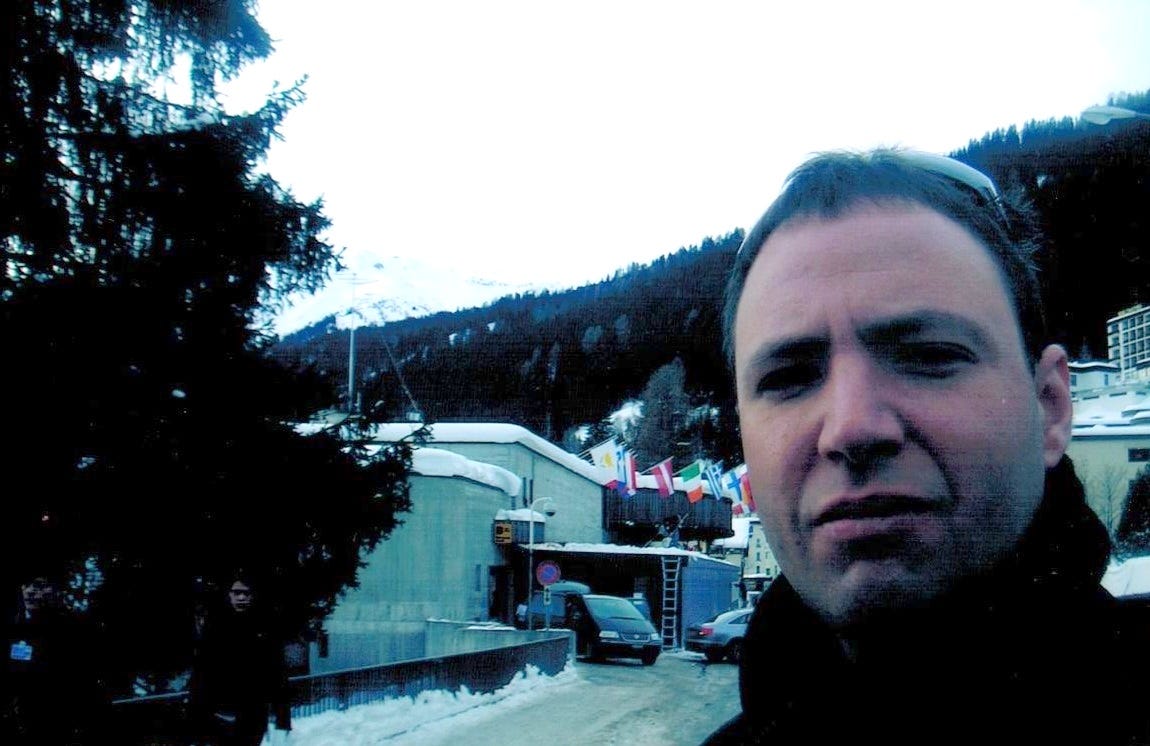








Each year the world’s machinators trek to a remote mountaintop where they slip and slide along icy alleys in search of parties and panels. But it isn’t all absurd.
This weekend wraps up the annual World Economic Forum in Davos, Switzerland, where participants like Antony Blinken and Tom Friedman were preoccupied with Israel’s war against Hamas. It got me thinking of the 2006 meeting, which was my first rodeo and where we were … preoccupied with Hamas.
There was no discernable confusion back then about the jihadi terrorist group. Everyone knew they had spent years staging suicide bombings to move Israelis to the right and kill the peace process, since they were fanatics. Now, of course, there is — yet more evidence that not all change should be embraced.
It was during “Davos” that we learned Hamas had won an election (the last to be held by the Palestinian Authority). The group took 44%, but splits among the others enabled it to outscore the moderate Fatah, win over half the seats and establish the popular false narrative that it was “elected” (the vote was for the legislature only).
There was a flurry of despair among the world’s assembled machinators, soon to be drowned in much booze and big ideas. These were present in equal measure: Davos has been for about a half century the marquee event of the WEF think-tank, and the legions of very important, somewhat important and merely self-important (it’s such a fine line) are briefly conjoined in a wobbly marathon of parties and panels. The haul themselves up the remote mountain by bus and train and taxi, and together they slip and slide on the treacherously icy alleys that crisscross an un-quaint town.
I was based in London for AP back then, and the city was on a global high; so was I, as I recall, and so I felt at home at Davos. More precisely: I knew I was a pretender, but soon realized that so was almost everyone. Attending Davos almost yearly for a time, I always managed to scheme a coveted “white pass” – which means one is an actual delegate and not an assistant, a hanger-on or (heaven forfend) a journalist.
In 2007 this enabled me to be part of a ceremonious dinner discussion on how to make the world “a better place.” There were about 100 tables, and mine – which included a man who circumnavigated the globe by balloon – chose me to lead the discussion on what was the biggest need in the world. We decided that this was freeing humanity from its dependence on fossil fuels. Such decisions at every table bubbled up to the panel on the podium, chaired by WEF supremo Klaus Schwab (who sports the most outrageous Germanic accent and says things like “my advice is to embrace change”).
On this night, it turned out almost everyone had advised the same thing – the fossil fuels business. And while I was later enjoying drinks and being useless, two Israelis met in a nearby hotel to breathe life into the recommendation. I had interviewed one of them, businessman Shai Agassi: he wanted to make electric cars ubiquitous with a scheme based on stations not charging but rather swapping batteries.
The other Israeli, octogenarian former PM and soon-to-be-president Shimon Peres, resolved to help him, and in short order the company to be known as “Better Place” had raised hundreds of millions, making it one of the biggest startups of all time (this Davos story essentially kicks off the book “Startup Nation”). By the time it collapsed about a decade ago, Shai and I were both parents at the American School in Israel, and he had even let me motor about in one of his ill-fated French-made cars.
The world has not been weaned off fossil fuels, which is one data point that helps explain why people mock Davos as a hypocritical “talking shop” and a business networking event with a messiah complex masquerading as something else. But on the other hand, we actually are somewhat on the way, and the effort has helped make a different machinator the richest man on earth. Elon Musk, who generally gives Davos a miss, did not overcomplicate things with battery-swapping paradigms.
One can be as cynical as it pleases one to be, but I can report that at the altitude in question it is tempting to succumb to the intoxicating illusion that plutocrats and top political figures aided by celebrated academics and quixotic celebrities and well-connected journalists can make a difference. Alcohol fuels much of it, and also makes it float away; what happens in Davos stays in Davos, including the good intentions.
As for me, I certainly got to meet and occasionally even interview an incredible array of interesting and amusing people. There were politicians like Tony Blair (preparing his globalist post-premiership) and South Africa’s Jacob Zuma (battling corruption charges, sporting absurd beliefs about HIV and inclined to speak of himself in the third person, but oddly personable).
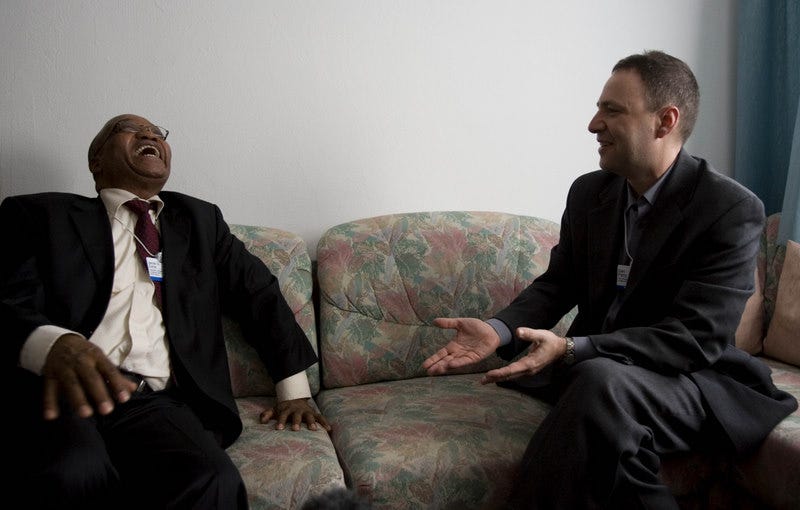
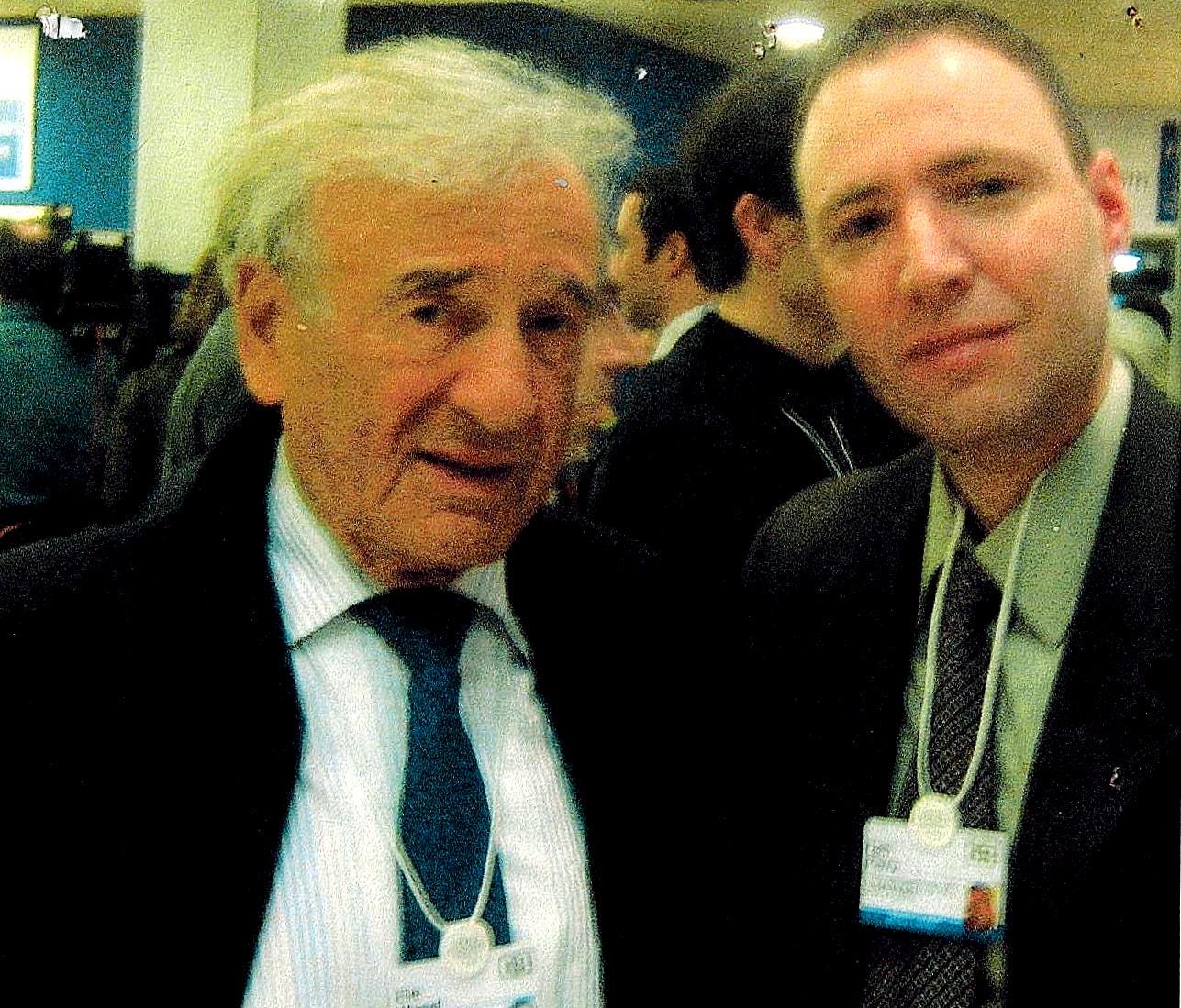
There was the billionaire philanthropist George Soros (before the populist right brainwashed many Americans into hating him) and Elie Wiesel (who bemoaned a world where Hamas can win elections, not knowing how much worse would come).
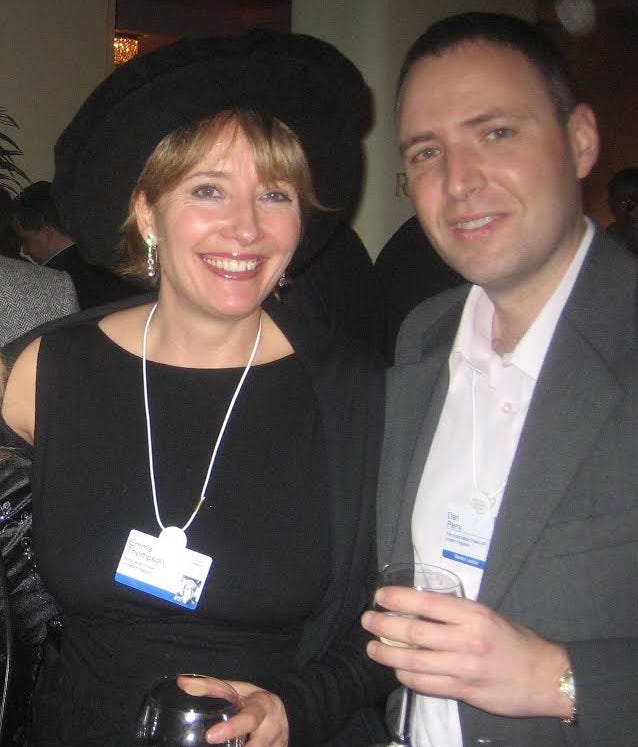
There was Bill Gates and tech superwoman Marissa Meyer and then-IMF chief Christine Lagarde (who kept calling me “young man,” which is basically all I need). There were very pleasant actors like Michael Douglas and Emma Thompson, quite willing to have a chat with a wine glass in their hand.

The bottom line though, and I mean no disrespect, is that events like Davos have left me concerned about our prospects for making the world a better place. If anyone had a clue, it should be the people here. But they seemed as confused as anyone else.
One of the top economists in the world – whom I shall not identify – assured me in 2008 in an off-the-record chat that the so-called “credit crunch” was no big deal, would not spread and would cause no great recession. A perennially doomsaying rival whom I also got to know at these events, Nouriel Roubini, made much more accurate predictions. Was it a broken clock just being right twice a day? No one can really say.
My favorite Davos moment was with U2 frontman Bono. He had arrived to hawk the “Red” initiative for raising money to fighting HIV in Africa with the help of brands like Armani, the Gap and American Express, and with Africa-sourced products. He agreed to be interviewed by AP, on TV and in print, and I found myself across a table.
All’s fair in love, war and media interviews – including sycophancy, if it will get you what you need. Yet I cannot claim this as the reason for my fawning; I just was and remain a fan who has attended multiple U2 concerts and knows the canon cold. I was about to ask him if I could call him “Paul” – the real given name of Mr. Hewson – but luckily caught myself in time and asked instead whether I could call him “Bono.” He stared blankly and I phrased my first question roughly in the following way:
“Bono, it can seem paradoxical to see you here in Davos, with your jeans jacket and your wraparound sunglasses, sharing a stage with a bunch of suits. However, close inspection suggests that your lyrics often indeed celebrate paradox. For example: If you want to kiss the sky, better learn how to kneel. And: “Believing in yourself almost as much as you doubt. Or: Running to stand still. Is this the reason you thrive in such a contradictory situation? Is it your love of paradox?”
Bono eyed me quizzically and stuck pretty close to his script about AIDS and Africa, which in fact projected more of an disposition toward metaphor than paradox: “We’re fighting a fire. The house is burning down. Let’s get the water.”
I wasn’t confident that any of this had gone very well at all until the cameras shut down and Bono went dramatically off script. “You’re the most relaxed man in Davos,” he asserted. “Everyone else is all manic – I should know, I’m one of them!”
I tried to disguise the fact that I was fumbling with my tape recorder (these existed then) to recommence documentation, and Bono turned to his associate Richard Feachem, who headed the Global Fund to Fight Aids, Tuberculosis and Malaria. “What are we doing the rest of the day?” he asked. “Can we just hang out with this man?” Sir Richard mumbled something about the schedule, but Bono was undeterred.
He leaned over and explained: “Cause there’s a bit of a zen thing going on here, isn’t there? A bit of a zen thing?”
“Any zen of mine is surely a function of your own, which is infectious,” I replied. Bono blinked, appearing now to have some doubts. By the time we met later at the Google party, the superstar singer had seemed to have fully reconsidered his position, although he did agree to be photographed with me.
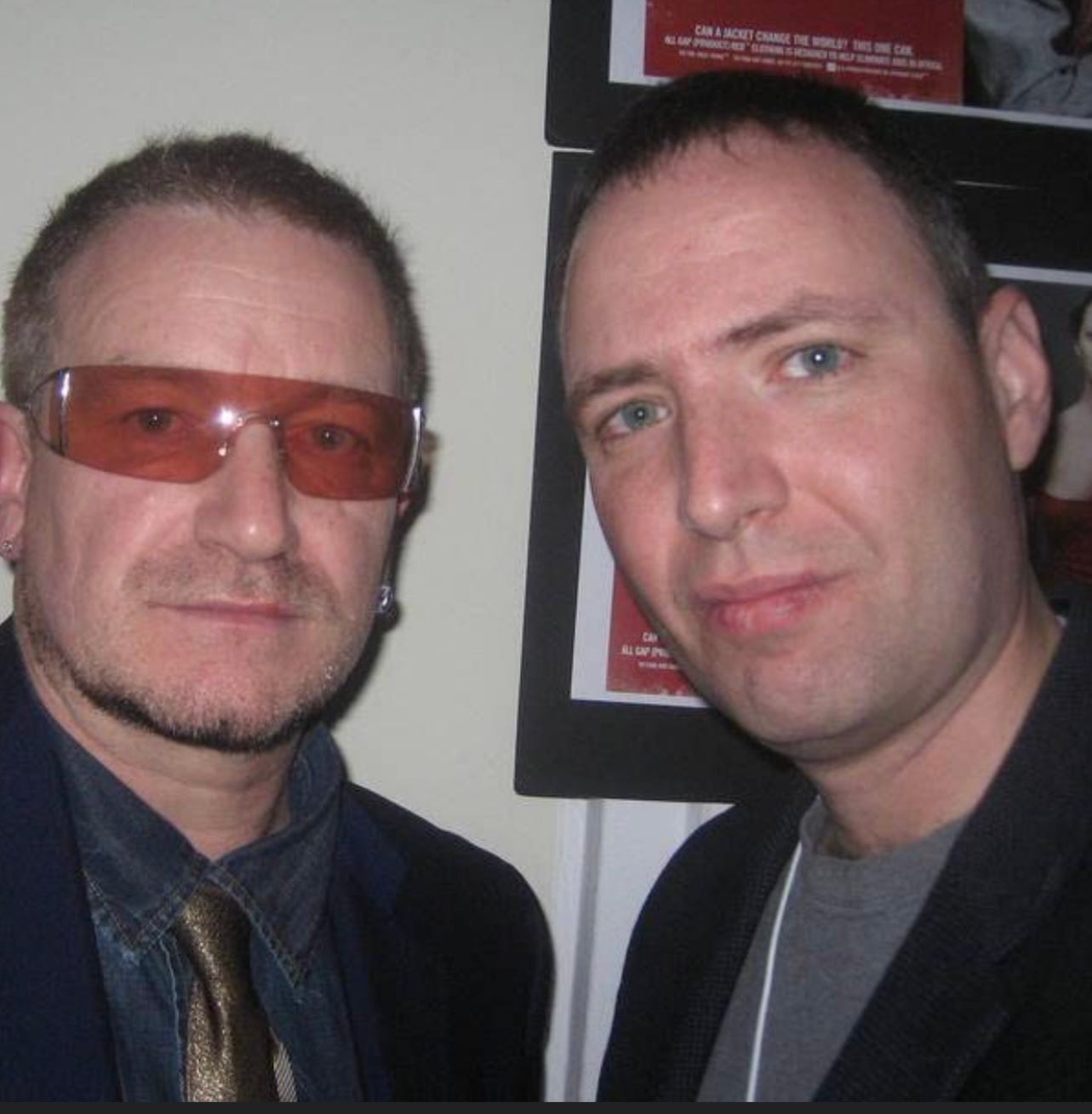
The actual outcome mattered little: Bono had called me zen, and so my work appeared complete. Some weeks after that, sitting back in my London office, I received an email invitation to hang out with Bono in the city that Friday night. Briefly I felt elation; but it soon turned out to be a well-executed practical joke by an especially cruel colleague.
Years have passed, and I am no longer with AP. Likewise, U2 is no longer making useful music. But Bono is still socially concerned, Davos still tries to save the world, and the world obviously still needs saving, in a clear and present way. Sure, it’s kind of laughable. But perhaps it isn’t all absurd.