







Roads, railways, hospitals, farming, Europe’s third largest bridge, and land registry. These are all areas that have received billions of euros of European money in recent years.
In fact, every village in Romania has benefited from European funds since it joined the EU in 2007, former European Commissioner, Corina Cretu said on Monday.
Last year, Romania received more money from the bloc than any other member in terms of its population size, she said, on Facebook. Romania is one of the countries that has received billions more European money than it has put in to the bloc.
Her comments come two weeks after parliamentary elections where three EU skeptic nationalist parties made historic gains, winning more than 30% of seats in the two-chamber Parliament.
The parties have downplayed the importance of Romania’s membership of the EU and NATO, an echo of Kremlin narratives which seeks to foster dissatisfaction with the two Western organizations.
Mrs. Cretu said that EU membership had been so beneficial to impoverished Romanian rural areas that: “There is no locality in Romania that has not benefited from European funds…As European Commissioner for Regional Policy (2014-2019), I did everything I could, working with all governments and mayors in the country, to improve people’s lives, ” she said.
Euronews published an analysis that showed that in 2023, Romania received more funds than any other member of the 27-member bloc in terms of population size.
Since joining the European Union in 2007, Romania has received over 95 billion euros in non-reimbursable funds, and contributed less than 30 billion euros.
Corina Cretu outlined the projects she approved funding for as European Commissioner for Regional Policy.
Among them are approval for the initial funding for the Regional Hospitals in Craiova, Iasi and Cluj-Napoca, the approval of the Transport Master Plan, the Câmpia Turzii – Târgu Mureş highway, with a European co-financing of almost 250 million euros or the rehabilitation of the Radna-Gurasada-Simeria railway section, with 1.3 billion euros of European financial support.
Mrs. Cretu also mentioned the M6 metro line (Gara de Nord – Otopeni Airport), which received almost 520 million euros of European funding for the construction of the 1 Mai – Tokyo section, the extension of the national land registry, a project worth over 310 million euros, projects to modernize the water infrastructure in almost all Romanian counties.
Other major projects are the modernization of the Agigea, Cernavoda, Ovidiu, Navodari locks, the modernization and extension of the Bucharest bypass, with one billion euros of European co-financing, or the line 5 of the Bucharest Metro, for which she allocated 250 million euros in 2017 and also the 100 million euros modernization of the metro line 2 which runs from Berceni to Pipera.
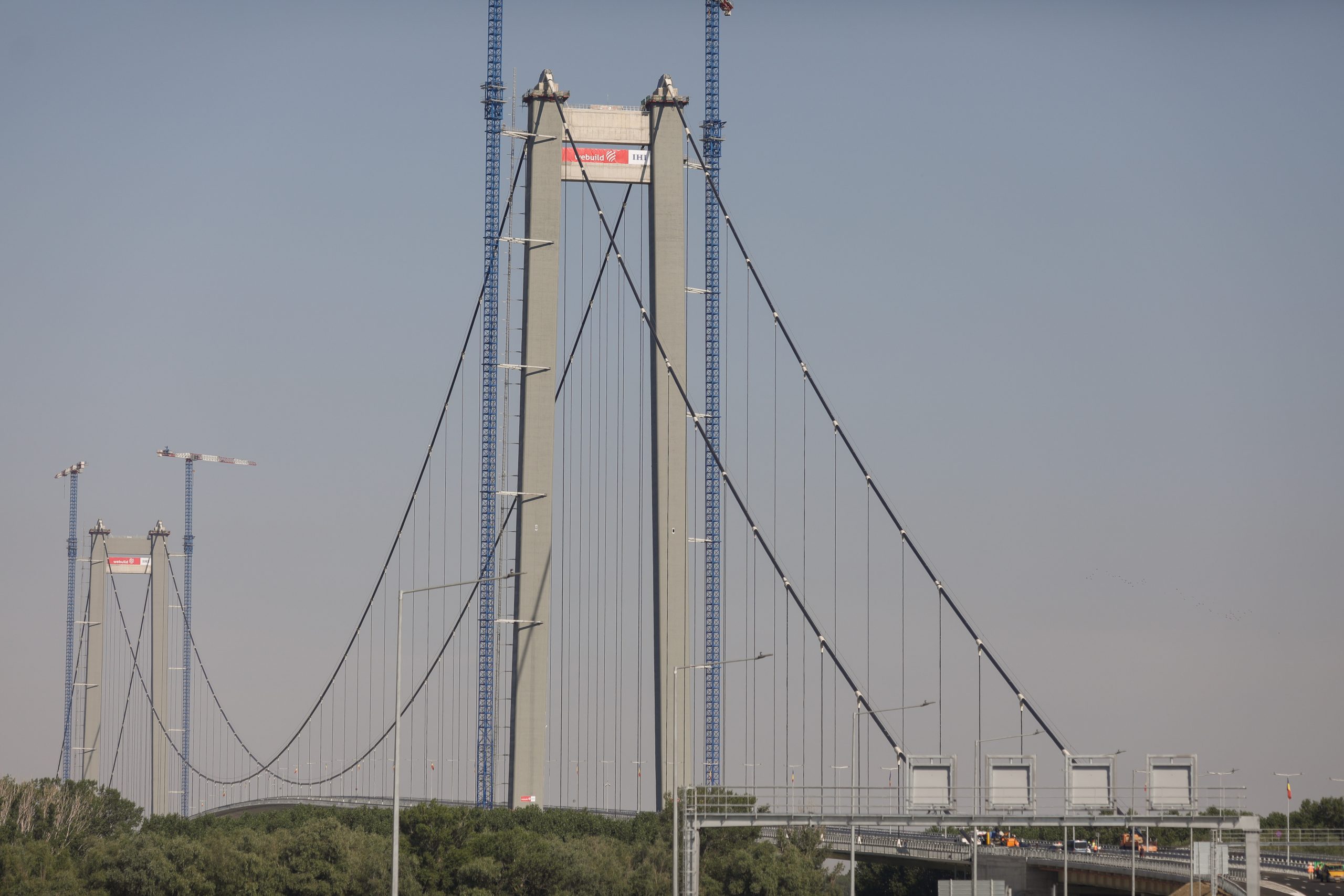
“The inauguration of the Suspension Bridge in Braila was an event of great significance for me, as one of the supporters of this project from the get-go. I was involved in the follow-up and had discussions with the Prime Ministers with whom I worked as European Commissioner, regular meetings with European Commission experts, but also field visits, in 2019, together with former Prime Minister Mihai Tudose.”
“I am proud of the fact that I approved the funding as European Commissioner for Regional Policy. It is the third largest bridge in Europe and one of the most important infrastructure projects in Romania in the last 30 years.”
“The contract for the execution of the suspension bridge over the Danube benefited from financing worth 540 million euros, of which almost 400 million euros were European funds from the Operational Program for Infrastructure intended for Romania for the period 2014-2020,” she said.
The former European Commissioner also said that, in 2018, on behalf of the European Commission, she submitted to the European Parliament and the Council an “ambitious and flexible” formula for the 2021-2027 Budget, in which cohesion policy had the largest allocation, 373 billion euros for the post-2020 period.
“Romania – along with Bulgaria, Greece, Spain, Italy and Finland – have higher allocations … 8% more than in the 2014-2020 period.”
“In December 16, 2021, the European Parliament voted on 2021-2027 European Union budget, to allow member states to end the health crisis and manage the economic crisis. ”
Since then, Romania has benefited from almost 50 billion euros – 28 billion for the Cohesion Policy, about 20 billion for agriculture, plus the Just Transition Fund, intended for five counties of the country. To these amounts are added those from the National Recovery and Resilience Plan (PNRR), worth over 30 billion euros,” she said.
Romanian nationalist MP questioned by police after calling for government offices to be ‘blown up’
