














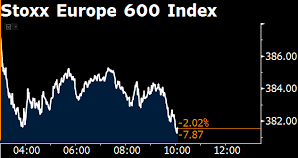
 On Monday, August 5, global financial markets were deeply rattled, in a day that was almost as drastic as the one in 1987, in terms of stock market crashes: the NASDAQ 100 index lost 6.45% and the S&P 500 fell 12.4%. On the same day, the VIX index, also known as the “smeal index” on Wall Street, rose to 41.8%, reflecting volatility and anxiety in financial markets. The recessionary estimates for the U.S. economy, spread forward, have amplified turbulence, but their root seems linked to the shock wave in Japan, showing how interconnected and vulnerable current financial markets are, however.
Japan is the world’s fourth largest economy, but marked by prolonged stagnation, in contrast to other developed economies. Over time, Japan’s monetary policy has been an unconventional one, marked by interest rates close to zero in response to low inflation and anemic economic growth. Thus, monetary policy favored a phenomenon of “repeal trade”: investors lent yen at low interest rates and invested in assets with increased yields, and the depreciation of the yen amplified the attractiveness of this financial strategy.
But the recent change in monetary policy direction in Japan in response to the unexpected rise in inflation has disturbed the economic and investment landscape. On August 1, the Bank of Japan decided to increase the benchmark interest rate to 0.25%, from 0.1% – level set in March this year, from 0% previously. This move has led to the yen’s rapid appreciation of the yen against the US dollar, which has attracted the redesign of financial strategies, through large-scale portfolio adjustments, hence the increased tensions in global markets.
Japan, with a public debt of more than 260% of GDP, faces fiscal constraints that severely limit the government’s capacity for economic growth without the risk of a severe sovereign debt crisis. In addition, geopolitical tensions and ongoing conflicts in the Middle East amplify market volatility, affecting global supply chains and increasing inflationary pressures.
On Tuesday, August 6, financial markets began partially stabilizing, indicating a slight improvement over severe turmoil earlier in the week. Tokyo Stock Exchange reported a significant increase, with the NIKKEI 225 and TOPIX increasing by 9.09% and 9.75%, respectively. In Europe, stock indexes recorded a partial recovery, with STOXX Europe 600 and EUROTTOXX 50 increasing 0.17% and 0.13%. However, volatility remains high and this climate obviously underscores the profound impact of some shocks and changes in monetary policy.
In this context of persistent volatility, dependence on unconventional monetary policies and “leverage” is becoming increasingly apparent. The global economic system, already exposed to shocks, faces sharp counterparty risks, currency volatility and increased liquidity pressure. These problems affect not just investors but also put pressure on financial bodies, highlighting the global financial system’s exposure to stock market turmoil.
Japanese banks, once the pillars of “carry trade” strategies, are now caught up in a storm of extreme volatility. In the “black Monday” 2024, Sumitomo Mitsui Trust Holdings, Japan’s second-largest bank, suffered a 15.5% collapse and Mitsubishi UFJ Financial Group, the sector’s leader, fell 12.2 percent. Then, Tuesday’s stock exchange recorded returns with +8.43% and +5.82% respectively.
The rapid losses and rebounds of these stock market quotes reflect the depth of the risks associated with investment strategies based on low “artificial” interest rates and rapid fluctuations in monetary policy. In an era where banks are no longer just spectators, but active players in global financial markets, the volatility of these securities underscores the fragility of a deeply interconnected and vulnerable economic system.
Current stock market turmoil and the echoes of previous crises can be perceived as manifestations of the same “butterfly effect” in the market sphere, indicating intense links between seemingly disparate phenomena in the global financial system.
Regardless of how we interpret, it is obvious the need for a deep review of investment strategies and the implications of global monetary policies, as demonstrated by the strong inflationary context in recent years, amid the “ whatever it & quot” relaxation of monetary policies.
On Wednesday, August 7, global financial markets began to recover significantly, though signs of instability still linger. In the United States, stock indexes saw modest increases: NYSE rose 1.11%, NASDAQ Composite by 1.03% and S&P 500 by 1.04%. In Europe, the recovery was somewhat more anemic, with STOXX Europe 600 climbing by 1.02% and FTSE 250 by 0.82%. Asia saw a more significant recovery, with NIKKEI 225 increasing by 4.29% and TOPIX by 2.26% (see table at the end of the text, with variations in the main global stock indexes for August 5-7).
After the “black Monday” at the beginning of the week, when most markets entered negative territory (with a few exceptions in Europe, where the selected indices managed to avoid severe declines), markets began to stabilize and return to positive territory. These developments capture the complexity of stock market systems and indicate the need for an in-depth analysis to fully understand the overall impact of fluctuations in recent days.
Asian markets have set the tone for the recovery, followed by recovery on European exchanges. The U.S. markets are still sending out volatility, perhaps in anticipation of an intervention by the EDF to bols monetary policy, to support economic growth and the creation of new jobs.
But although the stock markets seem to be calming down, the behind-year-old reality is complex and must be managed responsibly and cautiously. Monetary policy, with all its nuances and subtleties, remains a sophisticated instrumentation with profound effects and risks from one cycle to another. Certain decisions, even correct, can trigger global shockwaves, and the stock market stabilization these days must be treated with caution. That is why fine tuning exercises from central banks are imperative, in order to avoid both overstimulation, which fuels inflation, and excessive tightening, which is a brake on the economy.
In such an interconnected world where economic policies inherently abide by the law of unsentenced consequences, the accountability and prudence of policy decisions will support long-term economic stability. In the absence of perfect synchronizations, we must not underestimate the ability of markets to surprise, often unpleasantly.

Global stocks have plunged, but here’s why investors shouldn’t panic
