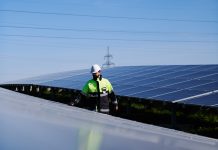
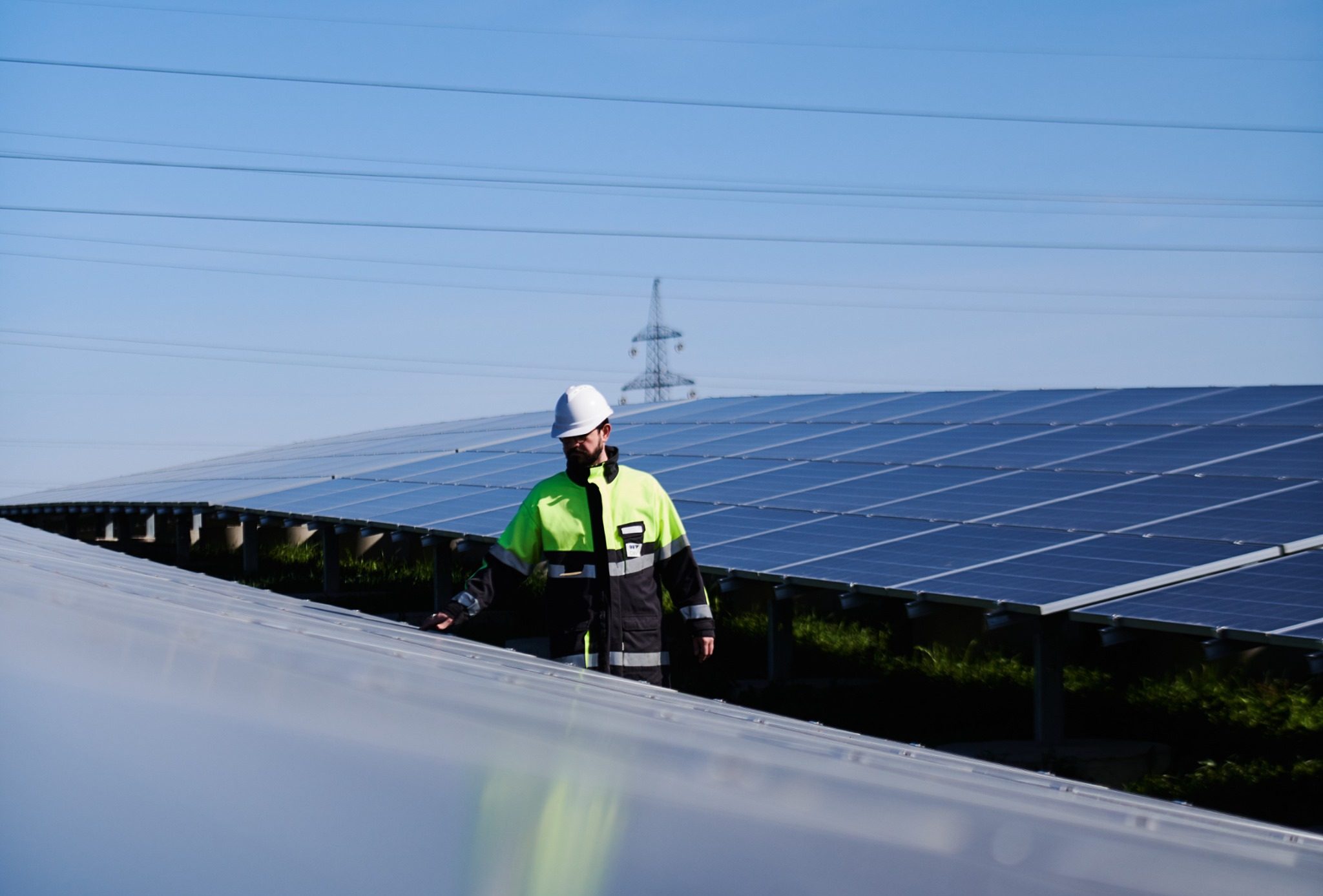
Romania’s energy sector is undergoing fundamental change, with more than 10,000 MW of new solar and wind capacities under development, while the extraction of gas from the Neptun Deep offshore project begins in 2027 will force strategic decisions to be made on how energy sovereignty is configured in Central Europe, a new analysis by Cornelius Granig, the Executive Director of the Romania Institute shows.
But he warns that “The missing link between Hungary and Austria is the single most critical infrastructure bottleneck for Romanian gas to reach Central Europe.” On the approximately 300 km corridor from Szeged to Baumgarten, “The existing Hungarian network capacity is insufficient for large-scale Romanian exports westward, and required infrastructure upgrades have not been deployed.”
Dr. Granig makes five recommendations:
1. Fast-Track the BRUA Pipeline Completion to Austria
The missing link between Hungary and Austria is the single most critical infrastructure bottleneck for Romanian gas to reach Central Europe. Three actions are required:
• Upgrade the approximately 300 km corridor from Szeged to Baumgarten
• Align political and commercial interests with MOL Group and Austrian operators (GasConnect Austria)
• Establish binding capacity commitments before the Neptun Deep production launch in 2027
Impact: Enables Neptun Deep gas to reach Central Europe at scale and reduces Austria’s import dependency.
2. Create a Romania–Austria Strategic Energy Partnership
A structured “gas-for-decarbonisation” deal should be understood as a strategic and political partnership — not merely a technical arrangement — aligning energy security with climate policy and EU-level regulatory influence:
• Romania provides long-term gas supply commitments post-2027
• Austria supports Romania in meeting CO₂ storage obligations under the Net-Zero Industry Act (NZIA)
• Joint investment in CCS infrastructure as the operational foundation of the partnership
• Austria actively advocates at EU level for a revision or flexibilisation of Romania’s disproportionate CO₂ storage obligations under the Net-Zero Industry Act — using its position in the Council and relevant EU bodies to push for a more equitable burden-sharing mechanism
• Where full revision is not achievable, Austria pursues flexibility mechanisms — such as cross-border CO₂ storage credits, target adjustments, or phased implementation timelines — that reduce Romania’s regulatory burden without undermining EU-wide decarbonisation goals
This is particularly relevant given that Romania — representing only around 3 percent of EU CO₂ emissions — bears over 20 percent of the EU’s mandated CO₂ storage obligations under the NZIA. Austria’s role should not be limited to supporting CCS investments at the operational level. A decisive contribution lies in wielding political and regulatory influence at EU level: lobbying for a revision or easing of Romania’s obligations, and championing a more equitable distribution of the storage burden across member states. In return, Romania provides Austria with long-term, competitive gas supply security — transforming a bilateral energy deal into a durable strategic alliance within the EU framework.
Impact: Transforms a bilateral energy transaction into a durable strategic alliance — aligning energy security, climate policy and EU-level regulatory influence, while resolving a key source of bilateral friction.
3. Position Austria as the Central European Energy Hub
Austria’s geographic position and existing Baumgarten infrastructure make it the natural distribution and trading gateway for Central Europe:
• Expand Baumgarten hub capabilities and storage capacity
• Integrate Romanian gas into broader EU trading markets
• Develop Austria as a pricing and balancing centre for Central and Eastern Europe
Impact: Transforms Austria from a bottleneck into a strategic enabler of European energy security.
4. Accelerate Electricity Grid Integration (West → East)
A key structural barrier remains the lack of cross-border electricity interconnections. Current gaps include the absence of strong interconnection between Slovakia and Austria, and limited capacity between Austria and Hungary. Meanwhile, lower electricity prices in France and Belgium cannot flow eastward due to grid constraints. Priority infrastructure investments:
• Build new interconnectors between Austria and Slovakia
• Upgrade existing capacity between Austria and Hungary
• Enable flow of competitively priced power from France and Belgium
Impact: Reduces regional price disparities and deepens EU electricity market integration.
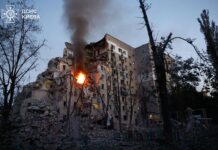
5. Integrate Ukraine as a Strategic Storage and Buffer Layer
Ukraine’s large underground gas storage facilities represent a significant strategic asset for the region. A structured approach would include:
• Store Romanian Black Sea gas in Ukrainian facilities
• Develop EU-backed security guarantees for storage usage during wartime
• Integrate Ukraine into EU gas balancing mechanisms post-conflict
Impact: Enhances regional energy resilience and supports Ukraine economically during and after the war.
The study also provides a comparative analysis of energy costs in Romania, Austria and Ukraine. The situation of electricity and gas for the population pose several problems of interest:
“Electricity prices for households show a striking divergence between the three countries – much more pronounced than the difference in diesel prices. Electricity in Ukraine remains heavily subsidized by the state and is, despite the ongoing war, among the cheapest in Europe. Romania, which for a long time recorded prices below the EU average, had in the second half of 2025 the highest increase in electricity prices for households in the EU (+58.6% compared to the previous year), after the expiry of the price cap and subsidy scheme, which led to prices rising above the EU average. Austria, which with +34.3% recorded the second highest growth, continues to pay some of the highest electricity prices for households in Central Europe, driven by high network costs, fees and taxes. As the price difference between Romania and Austria has now narrowed significantly, the cross-border electricity cooperation analyzed in this report is increasingly based on security of supply and grid integration, rather than simple price arbitrage.”
Unlike electricity, the exact opposite picture can be seen at gas prices for households: here, Romania is one of the cheapest locations in the entire EU. As the Union’s largest onshore gas producer, Romania has a considerable structural cost advantage and had in H2 of 2025, with around €0.057/kWh, the third lowest gas price for households in the EU – less than half of the EU average of €0.123/kWh. Austria is around €0.10/kWh below the EU average, but well above the Romanian level, reflecting its almost total dependence on imports, as well as higher network tariffs, duties and taxes. Ukraine’s gas price remains heavily subsidized by state-regulated war tariffs and is among the lowest in Europe. The marked advantage of Romania’s gas price over Austria reinforces the logic – analyzed in this report – of a west-oriented gas supply after 2027.”
The full study in English can be seen HERE and in Romanian HERE