














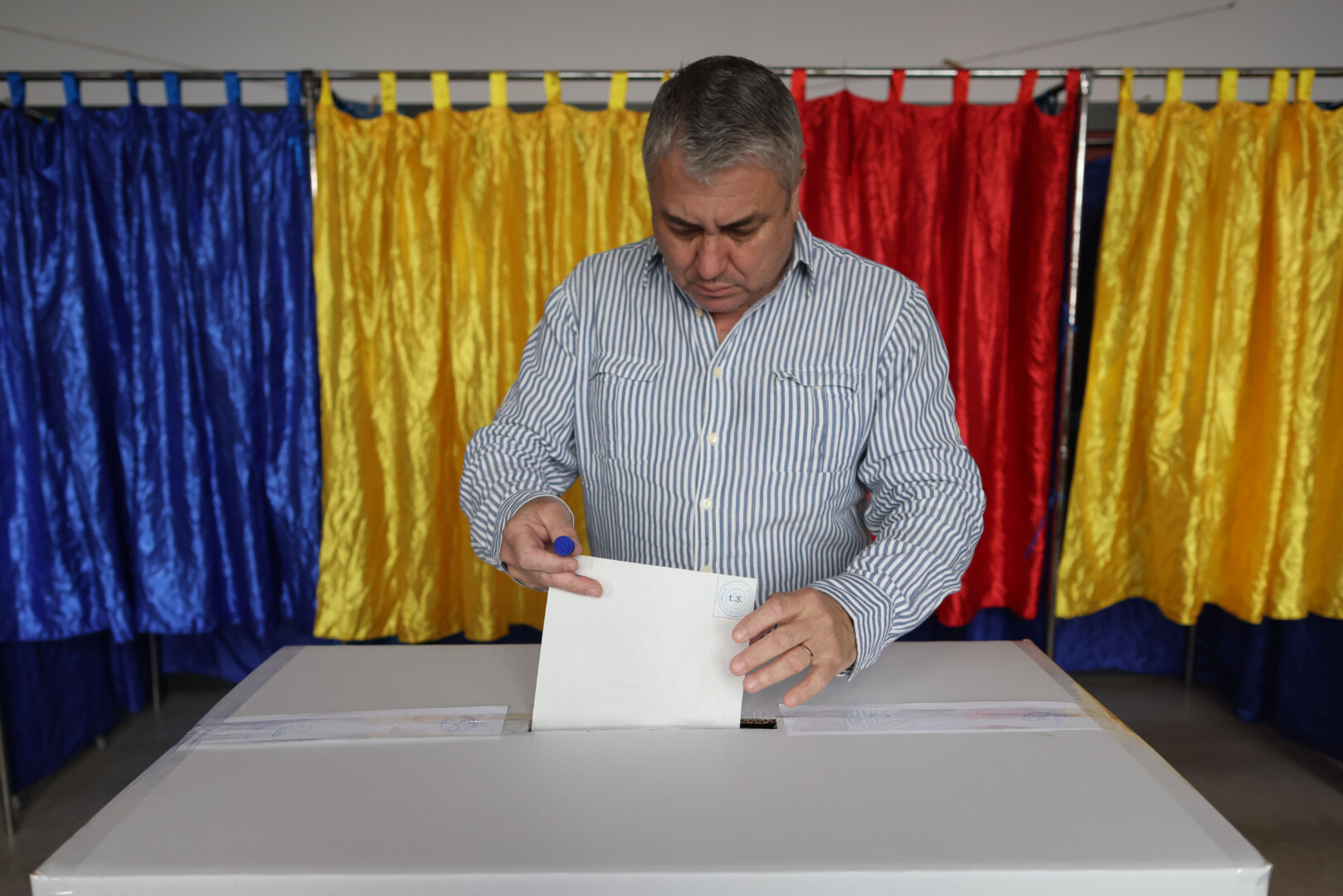
The ‘useful vote’ is neither a fad, nor a distortion of the democratic game nor an injustice done to the electorate. It is simply a method, one among many, in which politicians and voters between whom there are differences, but not irreconcilable ones, can maximize their chances of seeing their program and expectations implemented, at least to some extent.
Alliances of all kinds and short- or long-term coalitions, tactical withdrawals and the “trading” of political-electoral support are in reality elements that make up the binder that makes a national or local authority governable, in which visions of the world are diverse, competing and can be freely expressed.
Stories about “sacks of potatoes”, betrayal and the like have nothing in common with the reality of electoral competition in a democracy – they are just that: stories, fake justifications, spouted by unsophisticated sophists. I wrote about this topic a few days ago – HERE.
A curious detail is that this perfectly democratic game seems to be better mastered and practiced when the situation requires it, by the enemies of liberal democracy.
In America, Robert F. Kennedy Jr. withdrew from the presidential race in time so that his votes could be redirected to Donald Trump.
In Romania, the leader of the nationalists POT party, Anamaria Gavrilă, did not run for president campaign, in order for the leader of the AUR, George Simion, to maximize his chances.
Eugen Teodorivici, a former Social Democratic minister, recently withdrew, so as not to dent even modestly the potential result of the Social Democrat candiidate, Daniel Băluță.
Makaveli got out of the race so as not to harm Anca Alexandrescu’s chances for mayor.
In the other pro-Western camp, there was an example of “best practice”, when the Save Romanian Union, with no regrets, got rid of its own candidate, Elena Lasconi, in order to shift its support to the benefit of the independent Nicușor Dan.
And Vlad Gheorghe, withdrew for Ciprian Ciucu, of the National Liberal Party.
All of them judged correctly and acted accordingly. Democracy did not come out weaker from this, on the contrary, it benefited from these pragmatic choices. The electorate felt neither betrayed nor like a “potato” – nor did it need to because this is not what betrayal looks like and this is not what potatoes look like.
However, the situation is not the same in the camp of the “small-minded”, where the withdrawal is perceived not according to its strategic valences that serve the broader interest of a wider electorate, but simply according to the wind of personal and/or party interests.
This is the case, in these elections for Bucharest, for SENS, USR and PNL, for Ana Ciceală, Cătălin Drulă and Ciprian Ciucu.
Their lordships and their parties have an agenda that runs parallel to the agenda of the general interest. Judging by the polls (and there’s nothing else to judge by), the best placed should have been supported, and the lowest placed should have withdrawn.
If the election had been in two rounds, if Romania had not been under the edge of the rise of extremists, if Bucharest had not suffered so much because of the PSD administrations, of course the problem would not have been posed in these terms. But reality is relentless and makes approaching in such terms inevitable.
Let’s do one last exercise of imagination on what it would have meant if on the side of the “scrobits” (SENS, USR, PNL) there would have been the lucidity to exploit the game of tactical retreats for the good of the strategic objective.
There would be two scenarios:
- The first is the one in which two would retire (the “small” one – Ciceală – and one of the “big” ones – Ciucu or Drulă), thus leaving only one in the race. In such a scenario, the reformist and pro-Western pole would have had the certainty of victory at the polls even before the opening of the polling stations.
- The second is the one in which only one of the two “greats”, Drulă or Ciucu, would retire. The “small” one, Ciceală, would continue the race. In such a case, the chances would remain very good for the “big” one remaining in the competition, and the “small” one would suffer less from an eventual useful vote that would lead to the desertion of some voters from his camp to the “big” one left in the race. It would have been a two-time win: in the short term, the victory of a reformist and pro-Western candidate; and in the long run, a grandfather score of Ciceală could pull the small SENS party, because new and “washed” parties are needed, given that the Parliament is populated by AUR, SOS, POT.
But for things to have gone this way, it would have been necessary for the “small-minded” to relate to the elections in Bucharest, significantly more from the perspective of the pro-Western electorate and significantly less from the classical perspective of petty party and personal interests.
I am among those who consider voting a useful tool in the selection of elected representatives. I don’t hope for a perfect world – because it doesn’t exist – nor for perfect candidates – because there aren’t either, and we, the voters… Well, we’re not perfect either. As such, I seek through the useful vote to reach the least imperfect solution in the given context.
At the same time, I am probably among the most severe commentators, when it comes to voters, from the perspective of the great responsibility that falls to them, to inform themselves as correctly, with the relevant nuances and as much as they can about the electoral offer. At the same time, they are severe with the voter even when politicians do their job partially or not at all. Because the result of an election will ultimately affect the voter more than the politician.
But in the context of the elections for the Bucharest City Hall, I cannot help but notice the cynicism and lack of fairness in the camp of the “small-minded” (first USR, PNL, and only then SENS), towards the electorate on this corridor.
Because there are a lot of good reasons (I repeat: one-round elections, a crowded race, extremely close scores in the polls) that forced the politicians from USR and PNL to take from the shoulders of the voters part of the burden of doubts related to the useful vote.
Simply, this time, the pro-Western electorate could be helped by pro-Western politicians to make a decision more easily, and the decision to be effective. They could do it by tactically withdrawing at least one and strategically staying in the game of the other “big”.
They didn’t do it (at least until Friday evening, at the time of writing this text), and this can take brutal revenge on Romania.
Why Romania’s pro-Russian camp is suddenly hostile to France and Emmanuel Macron
