










The US war against Iran was, strategically, poorly thought out and will go down in history as one of Washington’s monumental foreign policy blunders.
The public interventions of the President of America on the subject of this war – whether posts on Truth Social, statements made on the Air Force One corridor or press conferences held at the opening of Cabinet meetings – are also invariably unhinged, absurd, incoherent, illogical, etc.
And the disaster is shaping up all the more harshly because at the end of four weeks of crazy US-Israeli bombings, the energy crisis envelops the wider world, and the specter of the US military’s ground intervention is becoming certain.
Moreover, a tacit alliance, made up of countries such as Russia, China, Iran, and even the White House’s ally Israel, is making efforts that are increasingly difficult to disguise to keep America involved in the conflict for as long as possible.
The first three aim to exhaust the U.S. firepower and its political-economic vitality, distract it and divert its resources.
The fourth tenaciously pursues its own agenda, but in order to achieve this, it is imperative that Washington does not leave the game, given the dependence of Israelis on the Americans.
With the serenity of a repeat offender accustomed to not learning his lesson, Donald Trump has repeatedly admitted that he did not wait a single moment for Iran to respond asymmetrically to the US-Israeli attacks, bombing US allies in the region, blocking the Strait of Hormuz and slaughtering its people.
These are the easiest elements to anticipate.
Since Trump has had difficulty in properly weighing the most intuitive aspects of Operation Epic Fury, it’s to be expected that things will get worse.
And one of them, the most urgent, is the situation he finds himself in at the moment: he would like to somehow get out of this war, but he observes he can’t.
Because, even in this case, the leader in the White House did not anticipate something about which books have been written in the last two or three decades: the exit from a war with Iran will not depend on the will of the aggressor, but on the will of the aggressed.
However, since Donald Trump is known for his lack of interest in reading and studying, he was inevitably caught on the wrong foot.
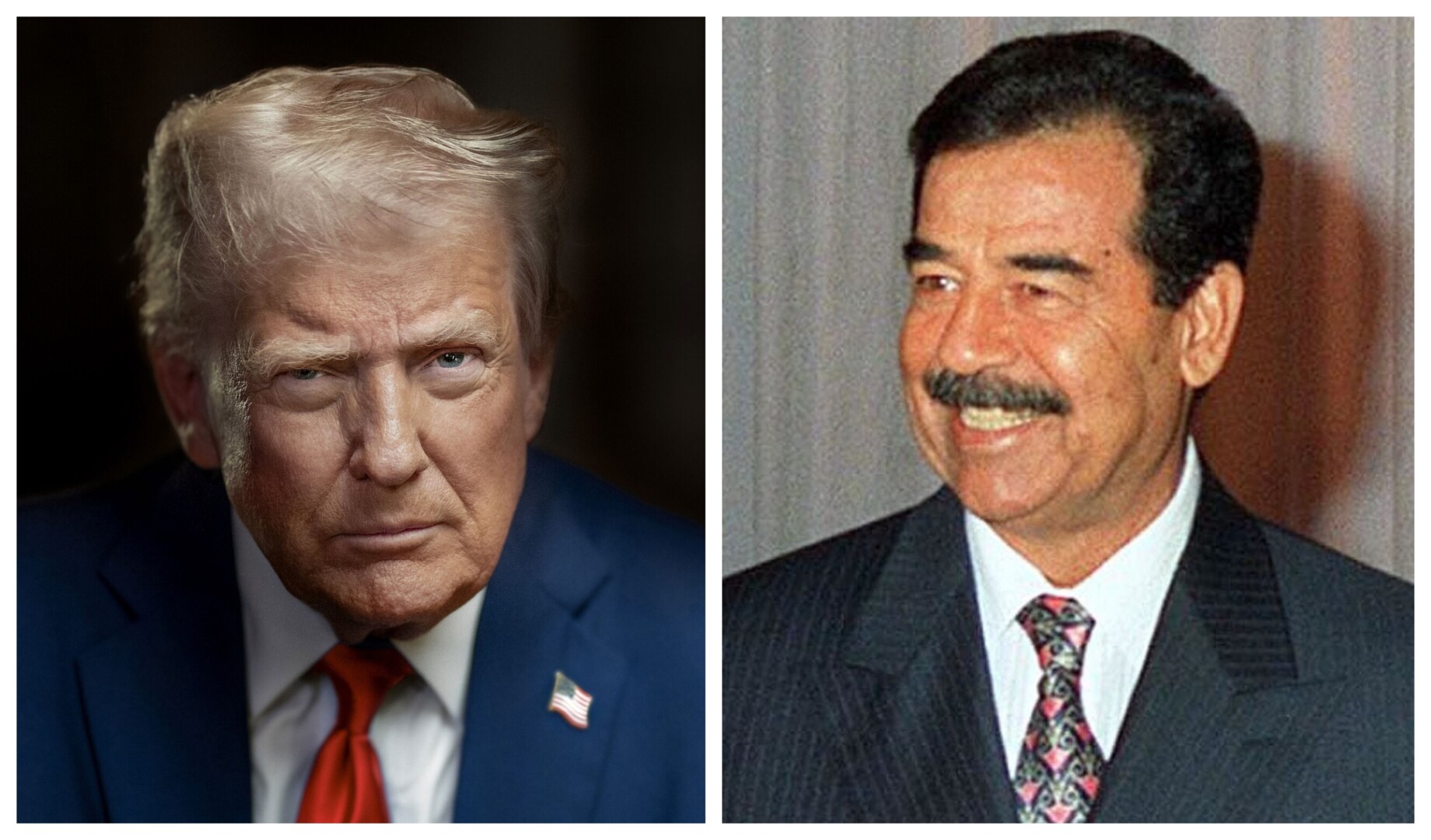
In short, Trump’s experience with the failure to exit the war in 2026 is broadly the same as that faced by Saddam Hussein in the 1980s.
Saddam’s story is therefore worth (re)telling – it can help us understand what slipped through Trump’s fingers.
In the autumn of 1980, the Iraqi dictator decided that the best deal for his regime was to attack Iran, the stake being classic: regional influence, revisionism by denouncing older agreements, land grabbing, border modification.
Like any self-respecting aggressor, Saddam also calculated that the war would be lightning quick and victory assured. In a few weeks, however, he found out that none of this would be true. The conflict began in 1980 and ended in 1988. And it was a horrific length – something between World War I and Russia’s current war in Ukraine.
The experience was so traumatic that the Iraqi dictator already spent his first three years trying to convince Iran to accept the ceasefire and at the same time trying to convince the international community to convince Iran to accept Iraq’s withdrawal.
The attempts were unsuccessful and the fighting ended only after eight years.
In order for the theocratic regime in Tehran (the same one that is still in power today) to do in those 80s what it set out to do – the continuation of the conflict – the leadership cruelly misinformed its own population about the situation on the front and at the same time turned it into cannon fodder. Pretty much what it is doing now, four decades later.
Moreover, one of the ideas that the theocratic regime articulated from the first two years of fighting was removing Saddam Hussein from power and asserting Iran’s influence over Iraq. I repeat: this, given that Iran was the one attacked. As it were, the Persians turned the carpet upside down.
- In parenthesis, what the Iranians tried then, the Americans (for the Iranians) succeeded two decades later, by eliminating Saddam and, in the chaos that followed, by the natural configuration of a strong influence of Tehran in Baghdad (which lasted for another two decades, up to this day).
Now, leaving behind the parenthesis, let’s go back to the concrete elements of Saddam’s parable for Donald.
In the summer of 1982, realizing that it could no longer advance on the front, Iraq offered a unilateral ceasefire and a withdrawal of its troops to the border.
Tehran, on the other hand, rejected the idea of giving up the war, despite the fact that Iraq had shown itself willing to withdraw, but also despite the fact that the UN Security Council had approved a resolution calling on the warring parties to stop the fighting (except that even then, as now, powers such as Russia and China in private were actually interested in prolonging the fighting).
Iran did not come to this decision easily.
Once Saddam’s offer was received, the following question arose within the Iranian regime: do we continue to stop the fighting or do we continue the war, while trying to push the conflict into Iraq?
In this debate, two camps formed.
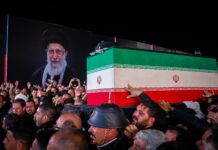
One was inclined to take advantage of the opportunity that arose, by giving up fighting (including a prominent figure, the recently deceased Ali Khamanei, later anointed Supreme Guide of the Islamic Revolution, until his liquidation by Trump, on February 28, 2026).
The other side campaigned for the continuation of the war at all costs, with the aim of overthrowing Saddam and expanding the Iranian Islamic revolution.
Unlike the first camp, this second camp consisted of only one man: Akbar Hashemi Rafsanjani – then the speaker of the Iranian Parliament.
At that time, in 1982, the Supreme Guide of the Islamic revolution was Ayatollah Ruhollah Khomeini, the predecessor of the recently liquidated Ali Khamenei.
Khomeini settled the dispute in favor of Akbar Hashemi Rafsanjani – which meant that the Iraqi-Iranian massacre continued for another six years, until its conclusion in 1988.
Now, another sequence, but the same story: 1983.
Only six months later, in January 1983, Saddam Hussein, still desperate to extricate himself from the war he himself had started, tried his luck once more. He proposed to be received in Tehran by Ayatollah Khomeini himself to negotiate a ceasefire with him.
For the Iraqi dictator, the surprise was big: the powerful Rafsanjani, once again, advised the Supreme Guide not to accept such a thing, because it is not appropriate to talk to such an individual. Rafsanjani proves to be unconvincing, and this time he has, from the start, his competitor in the race to succeed Kohomeini, Ali Khamenei.
The result?
Iran once again rejects Saddam’s idea of ending the war and does so by issuing maximalist claims, through Ali Khamenei (the one who would become, over the years, Donald Trump’s bad dream): “The withdrawal of Iraqi troops is no longer the main condition for stopping hostilities. It is now about punishing the Iraqi leaders” – said Ali Khamenei in January 1983.
Moreover, his announcement was doubled by the launch of an Iranian offensive (poorly thought out and harshly paid – but for the theocratic regime, the lives of the military were worth as much as the life of a desert rat just like today).
It is impressive how often Saddam’s Iraq tried to stop the war with Iran, and no less impressive its failure, despite its determination.
Because in the summer of 1983, there was another interesting sequence (including from the perspective of Trump’s situation today).
Even the fact of using Ramadan did not help the Iraqi dictator in his attempt to extract himself from the war.
In June 1983, Saddam Hussein again proposed a truce, for the sake of the great Muslim holiday. And again, Tehran rejected it, but not without saying that Iranians will soon pray in the “liberated” mosques in the Iraqi cities of Najaf and Karbala.
Let us now stop with the Iraq-Iran war after the first three years of Saddam’s struggles as he tried to extract himself from it. Because it already offers us insight into Trump’s “trip” to Iran.
- Like Trump, Saddam had also started the war being extremely sure of victory, given the technical and training superiority of the Iraqi army at the time.
- Like Trump, Saddam was sure that the Iranian regime was weak enough to collapse, so the timing of the attack was also opportune. Saddam was convinced of this because the mullahs’ regime was still cruel (it had been installed in 1979, the war began in 1980), it was still sufficiently contested internally and had few friends externally, and it was also insufficiently integrated into society. Four and a half decades later, Trump has also relied on the weakness and instability of the regime, this time derived not from his young age, but on the contrary, from the moral, economic and political wear and tear of the regime in Tehran. And yes, both – Saddam and Donald – were right to believe that the theocratic regime was not exactly one hundred percent fit when they planned the attack, but both confused the threshold of illness with the threshold of death.
- Like Trump, Saddam had envisaged a swift, destructive and brilliant incursion. They were both wrong.
- Another lesson that Saddam and Trump received was that, no matter how odious the main figures of the Tehran regime you are dealing with are, you can easily be surprised that, by the standards of the place, they are even moderates and that in theocratic Iran the tolerance for dealing with hardships is inexhaustible. Things were like this in the 1980s, and in 2025-2026. The irony of fate is that in both periods and for both aggressors (Saddam and Trump), the moderate, on duty, in Tehran, turned out to be the same – Ali Khamenei.
- It should also be noted that in the turning points of the summer of 1982 and the winter-summer of 1983, when the war between Iraq and Iran could have ceased instead of extending for another five or six years, the decisive word invariably belonged to the super hard wing, therefore to Rafsanjani. Now, in March 2026, when Trump is showing clear signs that he wants to get out of the current war, but also to appear to be doing it with his head held high, it is also a turning point. And at the current turning point, it is difficult to find moderates in Tehran, because they have been liquidated by the Americans and (especially) by the Israelis. So, as in the case of Saddam, as in the case of Donald, the attempt to get out of the war seems to have reached the hands of the hardliners. An additional irony: Akbar Hashemi Rafsanjani, the hardliner from Tehran, whose word weighed decisively in 1982 and 1983, for the continuation of the war with Iraq, held the position of speaker of the Parliament at the time. Why is it ironic? Because today, when Trump himself is struggling to somehow get out of the war, the interlocutor increasingly profiled as a key interlocutor is also the speaker of the Iranian Parliament. Someone else of course: Mohammad Bagher Ghalibaf. He is a pure product of the Islamic Revolutionary Guard Corps and, at the same time, a pure product of the war between Iraq and Iran in the 1980s, when he commanded the 5th Nasr Division of the Revolutionary Guards.
- The way in which Tehran greeted the ultimatum and the threats issued by Donald Trump in the last week was deeply defiant, both in substance (putting conditions unacceptable to the US and Israel from the start) and in form (irony, jokes, caricature). But on top of that, this way of the Iranian regime today in dealing with the American assailant is quite similar to the way the Iranian regime of yesterday related to the Iraqi attacker. With or without Khamenei, some things do not change in Iran, and Donald Trump seems to have been the last man on the planet aware of this and also the first who should not have been allowed to play the card of the ignorant boss.
Additional reading note (also good for White House use): Pierre Razoux, La guerre Iran-Irak 1980-1988, Perin, 2017
