














GLEN O’HARA WRITES: Not so fast with the eulogies
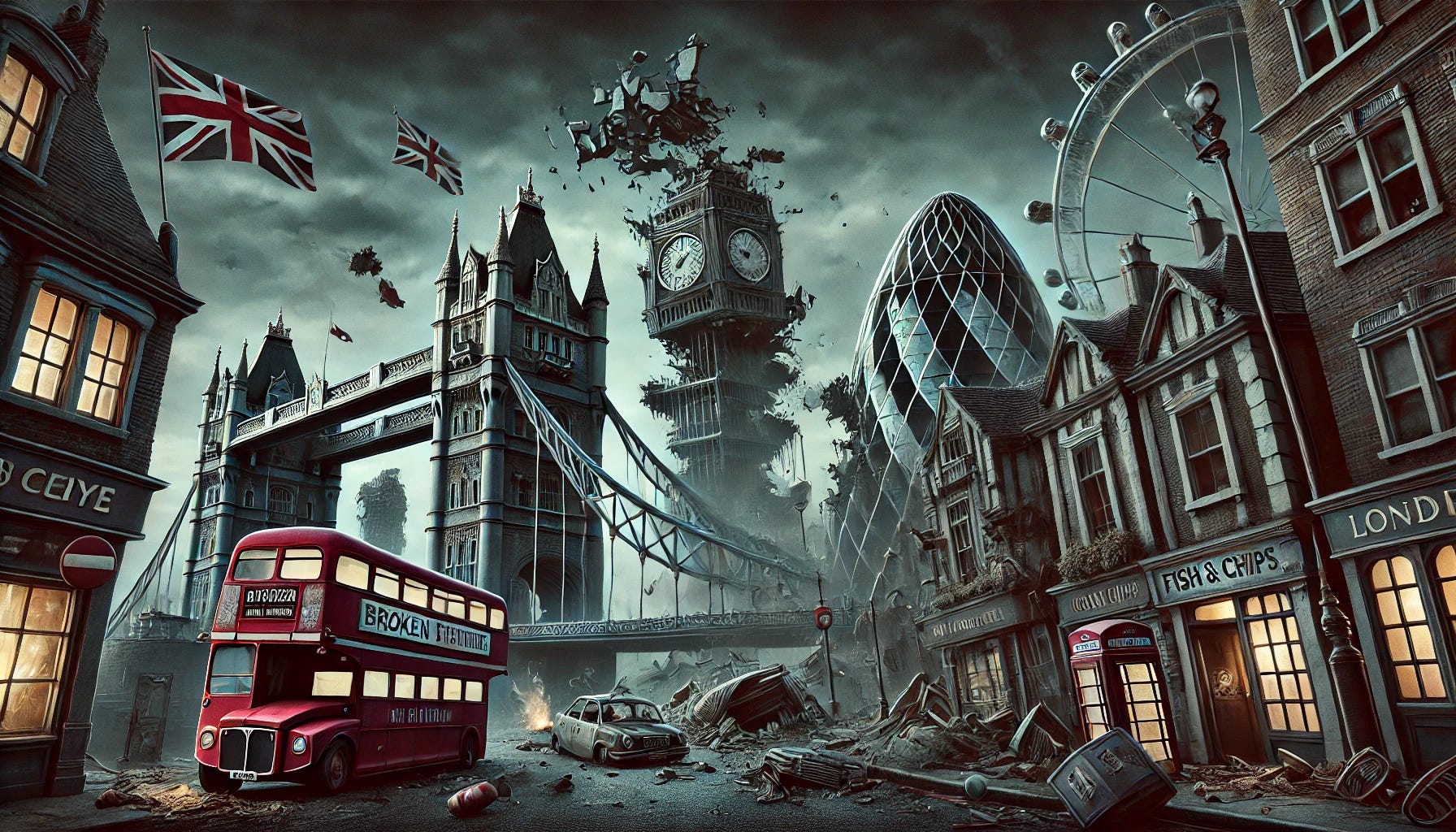
From the outside, Britain must seem shrouded in a great fog of gloom. Even when the clouds part, an angry and divided place comes into focus. Economic growth is slow, in part because of a Brexit from the European Union that the electorate now deeply regrets, and public services are crumbling. The headlines are full of “grooming gangs” organizing the rape of minors; last summer’s riots are echoing through state and society; the Government is unpopular while the Opposition, split and disliked, is hardly any better.
The great hallmarks of Britishness itself are more and more being called into question. The monarchy is led by an eccentric who is nowhere near as respected as his mother, while his sons are at loggerheads. The National Health Service – once the “secular myth” the British held on to even when everything else was in retreat – is struggling to survive, let alone thrive. The BBC’s audiences are in decline, and the Corporation has been dragged into scandal after scandal, usually managing to make itself look nearly as bad as its opponents and haters paint it.
Even the existence of the United Kingdom itself is in question. Northern Ireland is led by a “Republican” for the first time, in the shape of First Minister Michelle O’Neill, whose Sinn Fein party would like nothing better than the end of the union with Great Britain and unite with the Republic of Ireland, an independent country that is still in the EU. Meanwhile, Northern Ireland’s economy has been hived off from Britain’s and left for many purposes inside the EU’s Customs Union and Single Market (which Britain left).
In Scotland, the Scottish National Party, though far past the peak of its popularity, is still likely to win the next election to Scotland’s Parliament, and maintains its commitment to independence. Only in Wales, where the next election in 2026 is likely to produce a fractured Senedd (legislature) divided between the Right, the Left and the nationalist party Plaid Cymru, is true breakaway sentiment still the preserve of a minority. Yet even there, polls suggest that up to a third of Welsh people might vote for independence – a result that would have been unthinkable just a couple of decades ago.
But go beyond the headlines and you will find a different story.
In truth, the British are still sticking together, still chugging on, still just about at peace with each other. The optics look bad, and life is tough, but some of the fundamentals are holding. Self-laceration and constant dooming are to be expected from a country that has never quite come to terms with its relative decline from the days of empire, and which thinks it should still be more than it really is. Bad news is good for clicks, while social media and hyper-consumerism make for an impatient commentariat and bristling public. Just six months after Britain’s new center-left government took over, already they are asking “where is Labour’s turnaround?”
Somehow though, and despite everything, the economy is growing, and it is likely to speed up a little this year. The Organization for Economic Co-Operation and Development forecasts that its growth rate will easily outstrip the other large European economies in 2025. Systems are working, institutions are chugging on, the glue of affection and loyalty are holding. You don’t have to be a swivel-eyed nationalist booster or a Panglossian optimist to suspect that the bear market in British sentiment is ending, and that a bull run might soon begin.
The King may not be universally loved, but he is fairly popular: one recent poll gave him a positive net score of +34, with 63% of Britons holding a positive opinion of him. His subjects have mostly warmed up slightly to a man who mainly potters about the country laughing and encouraging people. NHS waiting lists have just about started to decline – only a little so far, but in a turning of the corner that will likely prove significant.
Cultural behemoths such as the BBC have indeed had their image shaken, but even if the number if viewers is falling, it’s far from dwindled entirely. The BBC “won” the battle of Christmas viewing figures this year, almost (but not quite) as if it was the 1970s again and Yes Minister was a major hit. The Gavin and Stacey finale that aired that night was seen by over 19 millions people within a week.
Another referendum on Scottish independence is many years away, and Scots remain closely divided on the subject: there is no settled will for separation. In Wales and Northern Ireland, the greater number of people want to remain within the Union. Polls suggest that the greater number of Northern Ireland’s voters would stick with the status quo in any vote, by 10 to 15 percentage points.
Britain is always supposed to be on a cliff’s edge. Angst about imperial retreat and economic stagnation meant that the late 1950s and early 1960s were a time of jeremiads. Bookshelves and TVs were full of pessimistic screeds and films predicting a type of national suicide. The right argued that we couldn’t afford the welfare state, or that mass immigration would make collective life impossible. The left thought that a tiny dilettante elite knew less than nothing about modern economics.
The result? By the late 1960s, and despite successive currency crises, economic growth had surged to an all-time high. Successive governments re-equipped public services a more demanding era; liberalizing laws made the public more at ease with itself. Britain suddenly burst forth on a colorful riot of fashionable, musical and visual experimentation that resonates to this day. The Beatles, the Rolling Stones, Pink Floyd, Led Zeppelin, Elton John, David Bowie – the mind boggles at the outside contribution to world culture.
In the 1970s, the country was supposedly finished. Amid a narrative of “decline” inflation ran amok and the unions were out of control, strikes were everywhere and governments seemed helpless. Journalists and political scientists speculated about whether Britain was “ungovernable”; even the endlessly resilient prime minister, Jim Callaghan, looked in his shaving mirror and admitted to himself that he would emigrate if he was younger.
Most of that was always a bit of a caricature of a country that was richer and more egalitarian than it had ever been, and after just a few years of Thatcherite shock therapy all those supposedly intractable problems were forgotten. Unemployment and poverty now dominated the headlines, only to be bulldozed again by a 1990s New Labour onslaught against poverty and a great big splurge of state spending that resuscitated schools and hospitals.
Now the economy is in the slow lane – but it stuttered in the early 1960s and then speeded up. Public services are on their knees – but they were in deep trouble in the mid-1990s and then recovered. No decline is inevitable, no retreat endless, no national malaise terminal. Many have written off Britain before. They were wrong then, and they are likely to be wrong again.
Glen O’Hara is Professor of Modern and Contemporary History at Oxford Brookes University in the UK. He is a regular commentator on British politics and public policy in the press and the author of a series of books about Britain in the twentieth century, including most recently The Politics of Water in Post-War Britain (2017). He is currently finishing work on a large-scale research project on the history of rights of way in the English and Welsh landscape, and a new book about Tony Blair’s governments in the 1990s and early 2000s, entitled New Labour, New Britain?
