










Many Israelis are convinced that their prime minister is deliberately delaying negotiations and prolonging the Gaza war for political advantage
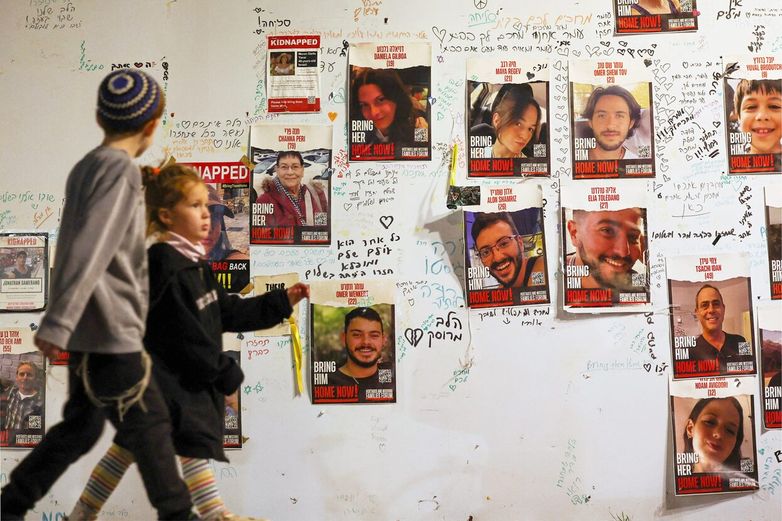
Israeli Prime Minister Benjamin Netanyahu told the US Congress last week that he’s doing everything in his power to bring home the hostages held by Hamas in Gaza. But at home, he’s widely believed to be doing everything in his power to scuttle any deal and to prolong the Gaza war. What’s going on?
People are rightly confused because on May 31 President Biden announced that Israel had offered Hamas a three-stage deal that largely amounted to an acceptance of the terrorist group’s bedrock demand: a full end to the war in exchange for all the hostages, alive and dead.
Biden said the first phase of the proposed deal would last six weeks and entail a “full and complete cease-fire” accompanied by a withdrawal of Israeli forces from all densely populated areas of Gaza – in exchange for which Hamas would release of a number of hostages, including women, the elderly and the wounded. Israel would also release hundreds of Hamas prisoners.
The second phase would include the release of all remaining living hostages, including male soldiers, and Israeli forces would withdraw from Gaza – fully, as Hamas demanded. Biden said that “as long as Hamas lives up to its commitments, the temporary cease-fire would become, in the words of the Israeli proposal, ‘the cessation of hostilities permanently.’”
I’d like to see this deal because the hostages are dying in captivity, and because Israel basically failed to completely destroy Hamas in a reasonable timeframe: over more than nine months of a devastating war it has killed tens of thousands and finds itself in something close to a pariah status. But that said, it is grim for Israel leave in place even a degraded Hamas. The group is a psychopathic mafia masquerading as a liberation movement, and one hopes the people of Gaza finally turn on their tormentors.
Indeed, it was almost incredible that Israel offered this deal, since it meant that the difficult-to-convince Netanyahu understood that he cannot concurrently achieve both war aims – the release of the hostages and the removal of Hamas from power in Gaza. Perhaps aiming to explain why Netanyahu would agree to – and indeed offer – such a thing, Biden noted that Hamas was by now sufficiently weakened that it is “no longer capable” of carrying out another large-scale attack on Israel.
Netanyahu did not deny Biden’s presentation of the proposal, whose third phase would involve a major reconstruction of Gaza.
Figuring out what happened next is not easy, because negotiations of this kind are always shrouded in secrecy and accompanied by leaks that are often self-serving disinformation. But what is clear is that Qatar, Egypt and the US applied pressure on Hamas to get it to agree – while Israel continued pounding away. There were details to be hammered out. Hamas wanted firmer guarantees – rather than the implicit logic of the phases – that the war would be over. There was haggling over the prisoner release. Not unreasonable.
Meanwhile, talks have been delayed as Netanyahu just spent a week in the US with his wife — a visit artificially and shamelessly extended at Israeli taxpayer expense so that they could celebrate their son Yair’s 33rd birthday in Miami. The ploy was to organize the meeting with Trump for Friday, close to the Jewish Sabbath. He had also meet with Biden and Vice President Kamala Harris, now in effect the Democratic nominee for president.
Trump attacked Harris for calling for a Gaza cease-fire after meeting Netanyahu, but that’s nonsense: He too said the same thing last week, calling for a quick end to the war. Netanyahu surely heard the same from Biden. He hears the same from his security team in Israel. Also from the public in Israel, as reflected in every poll.
So is an end to the war possible? By now, while no text of an agreement has been made public, the leaks out of the Israeli delegation suggest a deal is on the table and just needs to be accepted. On several occasions the heads of the security establishment, including IDF chief Lt. Gen. Herzi Halevy and Mossad director David Barnea, have found ways to make public that they see a political roadblock to a deal that is achievable.
Hamas has claimed Netanyahu is raising instead new demands – and this appears correct. Just as a broken clock is accurate twice a day, so it is possible for terrorists to speak the truth.
To wit, Netanyahu in his last appearance before Israeli journalists (which is rather rare) argued that Israel needs to hold on to Gaza’s Philadelphi Corridor. Netanyahu also insisted that he did not “add or subtract” anything from the offer passed on by Biden – which seems inexplicable. He did not explain the contradiction – and so profound is the expectation of gaslighting and mendacity that he was hardly even pressed on it.
The Philadelphi Corridor runs along the heavily guarded and fortified southern border with Egypt – about seven miles (11 kilometers), and controlling it also means controlling the Rafah Crossing into Sinai, the only official crossing point. Netanyahu argues this is needed to prevent Hamas rearming by smuggling in weapons. Like much of his modus operandi, it sounds right at first blush but in fact is somehow wrong, in a critical way.
The Rafah Crossing is heavily policed by Egypt on its side, and Egypt is at war with jihadi terrorism and quite aligned with Israel on this. The overland border is fortified. The smuggling occurs in tunnels going under the Philadelphi Corridor, from deep inside Sinai to deep inside Gaza. Israel controlled the corridor for years until 2005, and did not prevent smuggling.
Security officials have suggested sensors would now suffice. The chief negotiator, Maj. Gen. (res.) Nitzan Alon, is believed to be on the verge of a very frustrated resignation. In Ynet, Israel’s top news website, defense analyst Itamar Eichner wrote that “the assumption of the heads of the negotiating team is that the insistence on the Philadelphi Corridor is (intended) to blow up the deal.”
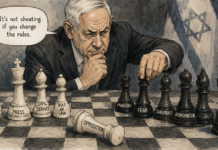
This is almost axiomatic in Israel. Not a day goes by without Netanyahu being accused somewhere by someone of sabotaging the talks. But why would Netanyahu, the leader of Israel, be doing everything in his power to scuttle a proposal he does not deny having proposed? What devilishly complex strategies are we witnessing?
It is actually rather simple.
The first issue is that two far-right parties have the ability to bring down his coalition and have said they would do so if the deal is signed. They want to continue the war and prefer a permanent Israeli occupation of Gaza, including Jewish settlement. They barely hide their glee at the situation.
The second is more circular. The Oct. 7 massacre that launched this nightmare happened on Netanyahu’s watch. Even without clear culpability, there would have been calls for the leadership to resign. That’s how it works in a normal parliamentary democracy, and that’s how it would have worked with any other Israeli prime minister. But here there is also culpability.
For starters, the security establishment had warned Netanyahu that his so-called “judicial reforms” – an effort to eviscerate the judiciary and turn Israel into a Turkey-like authoritarian semi-democracy – was creating such radical discord in the country that this projected weakness and invited attack. Netanyahu plowed ahead. Second, the government and military knowingly left the Gaza border almost unguarded because the military was sent to the West Bank to protect extremist settlers (a key Netanyahu constituency) as they sought to create mayhem with the Palestinians there.
For most of the time since then, polls have consistency shown that close to three-quarters of Israelis want him to resign and call new elections (72 percent in one poll this month). The polls show he would lose such elections, if he ran. Removing his hard-core automatic Haredi base, the proportion calling for his head is more like 90 percent.
Netanyahu’s argument against this has been that one cannot call elections in the middle of a war. Like much of what he says, it again sounds reasonable, such that unless you’re paying close attention you might be convinced. The little trick, the Netanyahu factor, is that it creates an interest for him to prolong the war. Specifically, his interest is to prolong and deepen the crisis until the issues around the war itself become so huge – say, dealing with threats for a global economic boycott – as to overshadow memories of Oct. 7.
Anyone who thinks this is too cynical even for Netanyahu simply does not know the man. I first interviewed him in 1988, and it was rather obvious even then.
Dan Perry: Israel’s main objective is to secure release of Israeli hostages, end Hamas rule of Gaza
