













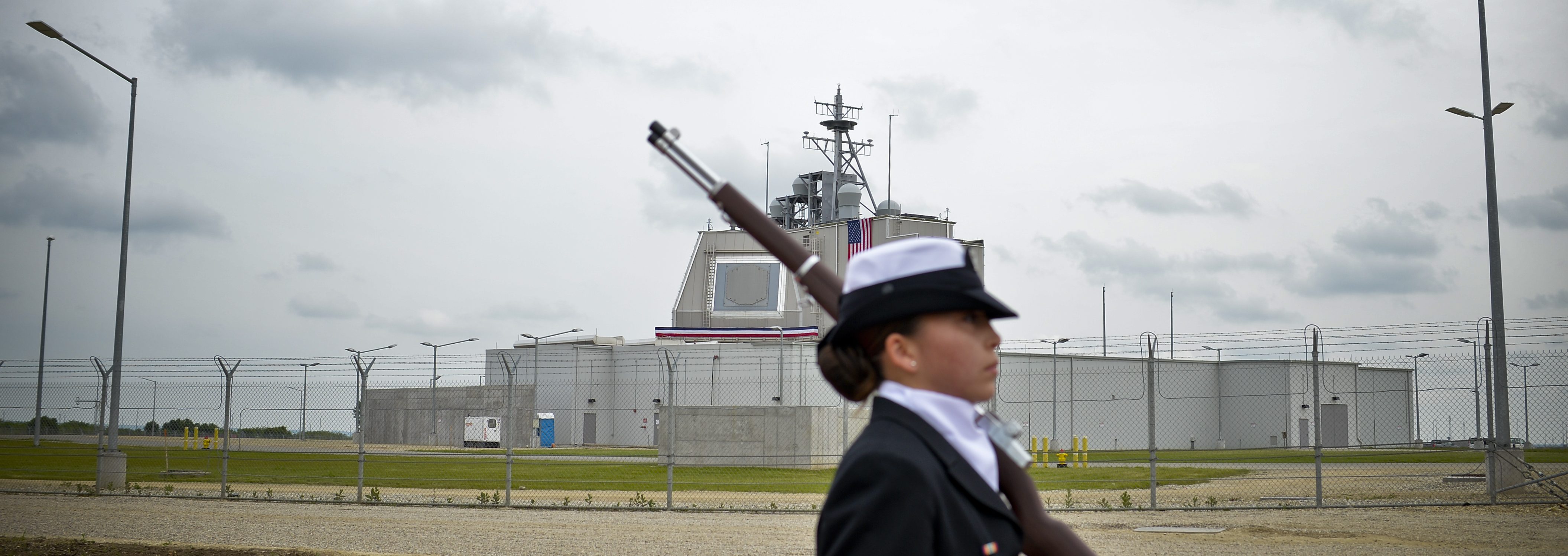
Romania has an anti-missile shield in Deveselu, Patriot batteries, anti-drone systems and radars integrated into the NATO network. But what does this actually mean in the face of a real threat, asks Libertatea.ro in an analysis.
Since the US-Israel launched air strikes on Iran on Feb. 28, Romania’s Deveselu defense shield has come under focus.
The U.S. missile shield site at Deveselu in southern Romania was built to intercept potential missile attacks from Iran. This week, military security was stepped up at the site, according to Romania’s defense minister, Radu Miruta.
Iran’s ballistic missile arsenal is known to include several medium-range systems that stretch to roughly 2,000 kilometers which is roughly how far Deveselu is from Iran.
The solid-fueled Sejjil and Khorramshahr missiles are both assessed to have about that range and could reach parts of reas of Greece, Bulgaria and Romania, depending on the launch location.
Romania facilities used by the US military are based on bilateral and NATO agreements. The most important are Deveselu, where the Aegis Ashore anti-missile system operates, and Mihail Kogălniceanu on the Black Sea which is the main base for the rotation of American troops on the eastern flank.
The Americans also use facilities in Câmpia Turzii in northwest Romania for exercises and temporary deployments.
The American Aegis Ashore system’s role is to detect and intercept ballistic missiles launched from outside Europe using SM-3 interceptors, before they reach their target.
It is not a “roof” put over Romania, but an element of NATO’s shield for allied protection.
The Deveselu shield does not specifically defend the country, according to retired general Virgil Bălăceanu. “The shield does not defend us, it is, in fact, exactly the opposite. We defend the Deveselu shield.” He explains that the base itself becomes a strategic objective, which must be protected with other anti-aircraft and anti-missile systems, while the direct defense of Romania’s territory against short- or medium-range missiles is mainly based on the Patriot and the other capabilities available.”
If the Deveselu shield is not Romania’s direct shield, then what protects us?
“The Patriot systems, respectively the French SAMP/T system, are intended for ballistic and cruise missiles, but now we are talking about short-range ballistic missiles, up to 1,000 kilometers, medium, up to 3,000 kilometers, and I think that also for intermediate ones, ranges between 3,000 and 5,000 kilometers, which the Iranians do not have,” the retired general told Adevărul.
He stresses that “these are enough to deal with a hypothetical attack.” Romania already has Patriot PAC-2 and PAC-3 batteries and other anti-aircraft and anti-drone defense means. “We have Gepard installations, we have Oerlikon 2×35 mm guns, we have anti-jamming and dejamming systems, we have OSA missiles… We have the anti-aircraft machine guns from the ships of the Danube flotilla.”
In addition, new acquisitions are coming: “We have Chiron anti-aircraft missiles, bought from the South Koreans, we are going to receive Mistral and we are going to receive the Israeli system on all ranges: Short Range, Very Short Range… of the Spyder type (…) Probably in the next 3 to 5 years we should have the operational systems.”
The Patriot system has a powerful radar that works continuously. It “scans” the sky and detects objects tens or even more than 100 kilometers away.
When an enemy missile appears, the radar detects it immediately, the system’s computer calculates the trajectory and, in just a few seconds, knows where it will fall if it is not stopped.
At that moment it is decided to launch the interceptor. The whole process is extremely quick, a question of seconds. How much time do we have? That depends on the type of missile. A ballistic missile can fly at speeds of over 3,000–5,000 km/h, which means that from the moment it enters radar range to impact it can only be a few minutes.
That’s why the system is automated. People supervise, but the calculation and reaction are done by the computer, in real time. Can it be missed? Yes, of course, no system guarantees 100%. And success depends on the speed of the attacking missile, the number of missiles launched simultaneously, a possible electronic jamming or a combined attack with drones and cruise missiles. That is why military specialists speak of “layered defense”.
