







A high-risk, high-stakes gamble in which a fed-up Israel said ” No mas, Hamas” – and could have alienated a key player in the region
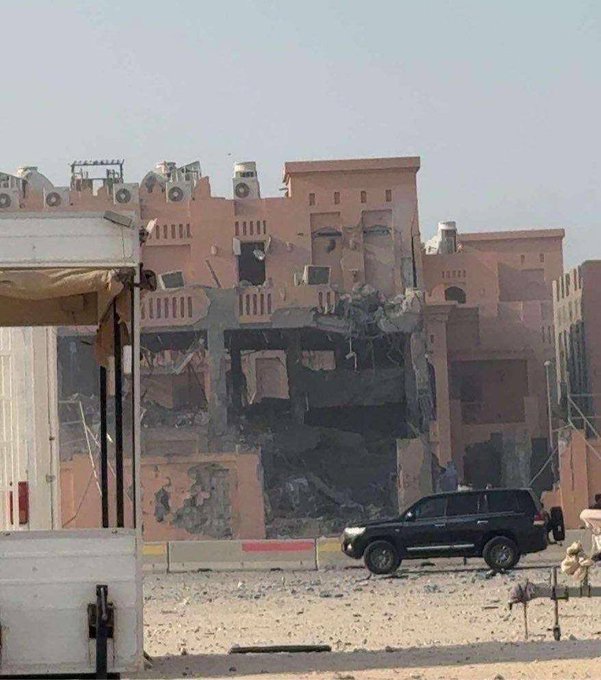
Israel’s strike in Doha on Tuesday, targeting the exiled Hamas leadership, is a moment of extraordinary drama in the Middle East. The results are not yet known, which is a critical variable. But either way the decision to send Israeli jets 1,800 kilometers across the Arabian peninsula into the heart of Qatar’s capital is potentially breathtaking in its implications.
The airstrike targeted senior figures including Khalil al-Hayya, Khaled Mashaal, Mohammed Darwish and Mousa Abu Marzouk, who were reportedly meeting to discuss the latest American-Israel proposal – essentially an ultimatum demanding the remaining hostages be released immediately. Given the decapitation of the Hamas leadership in Gaza, their collective elimination would leave the group rudderless, with no clear address for negotiating anything further.
The strike was condemned by a range of Arab countries, including Saudi Arabia and the United Arab Emirates – but that was mainly for show. It’s reasonable to assume that these moderate countries’ leaderships would celebrate the demise of jihadists who threaten them no less than Israel. But the picture is more complicated in Qatar itself.
The small, oil-rich Gulf country has long been a paradox. It is fabulously wealthy, home to the world’s third-largest reserves of natural gas, and boasts the most influential Arabic-language television network in Al Jazeera (where I sometimes appear on the English channel). It also hosts the largest American military base in the Middle East. Yet Qatar has long played a double game: a US ally in form, but also patron of Hamas, host to its political leadership, and benefactor to Islamist movements such as the Muslim Brotherhood. Unlike its Gulf neighbors, Qatar refused to ostracize Hamas or Hezbollah, positioning itself as a mediator but earning the suspicion of Saudi Arabia, the United Arab Emirates, and Egypt. For some years a while back, it was not on speaking terms with any of them.
Israel itself has had a more nuanced relationship with Doha than many realize.
Qatar has quietly kept channels open to Jerusalem, including permitting Israeli journalists and fans to enter for the 2022 World Cup. Its cash infusions to Gaza, while controversial, were for years coordinated with Israel in hopes of keeping the enclave calm. There is currently a scandal in Israel — “Qatargate” — in which several of Netanyahu’s top aides are suspected of having been on Qatar’s payroll. And just weeks ago, Qatar joined the Arab League in demanding that Hamas disarm — a remarkable departure from its traditional indulgence of the group.
That makes Israel’s strike on Qatari soil – a day after a terrorist shooting that killed 10 and was widely attributed to Hamas – an almost unthinkable move. If done without Qatari consent – which seems unlikely but also not inconceivable – it is tantamount to an act of war against a country that, while not an enemy, is certainly not an ally. Doha’s rulers cannot easily shrug this off. Their legitimacy across the Arab world already rests on balancing the contradictions of hosting American jets while tolerating Islamist factions. To be humiliated by an Israeli strike in their capital could force them into a harder line, both against Israel and perhaps against the US.
The logistical complexity of the attack underscores the scale of the gamble. Doha lies more than a thousand miles from Israel. The strike would have required extended-range aircraft, refueling capacity, and precise coordination to avoid mishaps. Israeli planes almost certainly had to traverse Saudi airspace —something Riyadh does not grant lightly. That implies either a stunning breach of regional defenses or some level of tacit cooperation. Either way, the risks were staggering: navigational errors, air defense confrontations, or an accidental strike on civilian targets could have turned this into a debacle.
Layered on top of this is the American dimension. Qatar is not just a host but a partner to the US military. The Al Udeid air base near Doha is central to American operations across the Gulf, and any Israeli strike in its shadow could not have happened without Washington’s knowledge.
Did the Trump administration greenlight this? That seems very likely. But could that have happened without clearing it with Qatar? That would mean dealing a major blow to America’s own delicate relationship with Qatar, undermining years of painstaking diplomatic positioning. Could Qatar have quietly agreed? One could envision that getting the Hamas leadership out of the way might put an end to a headache. But it would require a serious betrayal of people it has been hosting for years, and would anger many across the Arab world.
The strategic calculus for Israel is just as complicated. On the one hand, Hamas has been the implacable enemy, and its leaders are the architects of October 7 and the devastating war that followed. Eliminating them is a longstanding Israeli goal. Moreover, neutralizing the leadership abroad reduces Hamas’s ability to command, recruit, or fundraise.
On the other hand, there is a paradox. Israel has been pressing Hamas to release its hostages and to accept terms that amount to surrender: disarmament, exile for its leaders, and political eclipse. Killing those very leaders in Doha could kill off the ongoing negotiations – a point that hostage families are already making.
How might it impact Hamas? You could argue that it will focus the minds of its leadership and get them to accept Israel’s terms in order to gain a version of amnesty. But it could harden Hamas’s resolve (while also depriving Israel of the very interlocutors who might eventually sign off on a deal). Oddly, the hope for the former scenario is predicated on the problematic proposition that this bloodthirsty jihadist mafia is led by rational people.
(Consider that just 10 days ago Israel wiped out half the leadership of the Houthi militia that has hijacked Yemen, yet they were still the ones responding to today’s strike with yet another missile fired at Israel. So: Not deterred in the manner of rational people).
That’s the hope, though: That only something so brazen might finally break Hamas’s will, and if its leaders abroad realize that no place is safe, they may calculate that their only hope of survival is to cut a deal. Such an outcome would be transformative. It would deliver to the Palestinian people the single greatest favor anyone could bestow: liberation from a movement that has brought only suffering and ruin.
Ultimately, the raid on Doha encapsulates the dilemmas of Israel’s war with Hamas. Victory requires daring, but every bold stroke risks setting off chain reactions that could make matters worse.
Summing up:
- By sending jets across the Arabian Peninsula to target Hamas’s exiled leadership, Jerusalem struck at the very men who masterminded October 7. Their elimination would be a profound blow to the terror group, cutting its command structure and signaling to Arab capitals that no sanctuary exists for jihadists. In Riyadh, Abu Dhabi, and Cairo, rulers may quietly celebrate even as they issue ritual condemnations. If surviving Hamas figures conclude that they too are vulnerable, the path to a deal on the hostages — and with it the end of the war — could finally open.
- But the risks are immense. Killing the very leaders who were engaged in talks could collapse negotiations altogether. Families of hostages are already warning that their loved ones may now face revenge rather than release. A decapitated Hamas might be less capable of waging war, but it would also be less capable of cutting a deal. Qatar, humiliated by a strike on its soil, could harden its stance and complicate America’s delicate diplomacy in the Gulf. Saudi Arabia and the Emirates, caught between private satisfaction and public outrage, may be forced into harsher positions. And if Israeli jets crossed Saudi skies without permission, the blow to regional trust could be lasting.
Israel, about as fed up as fed up can be, has rolled the dice.
