










A BRIEFING FROM ARBANA XHARRA: US support built Kosovo; 26 years later, its populist leader risks destroying it all.
By Arbana Xharra
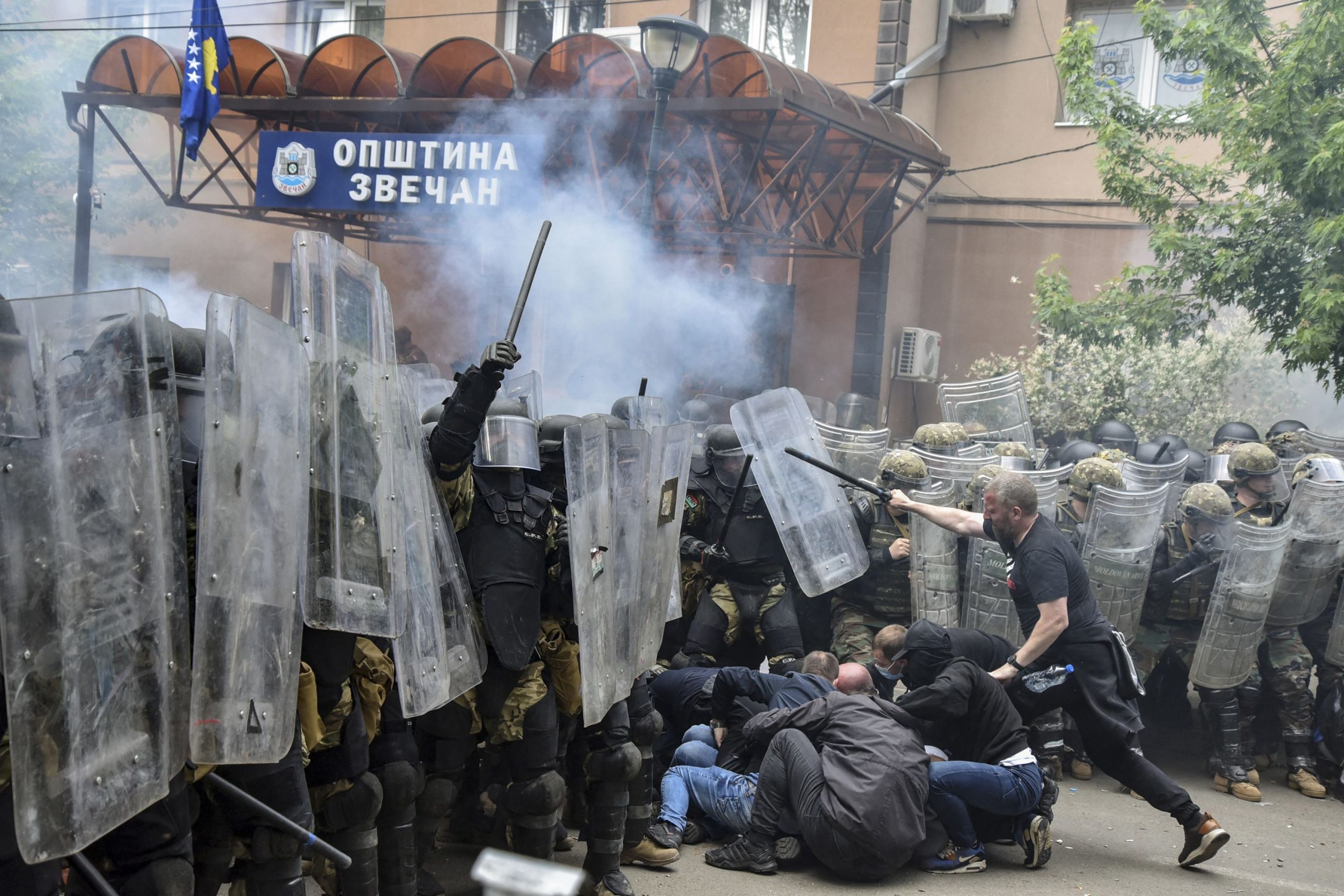
Populist ideology has brought Kosovo into its most serious diplomatic crisis with the United States since independence.
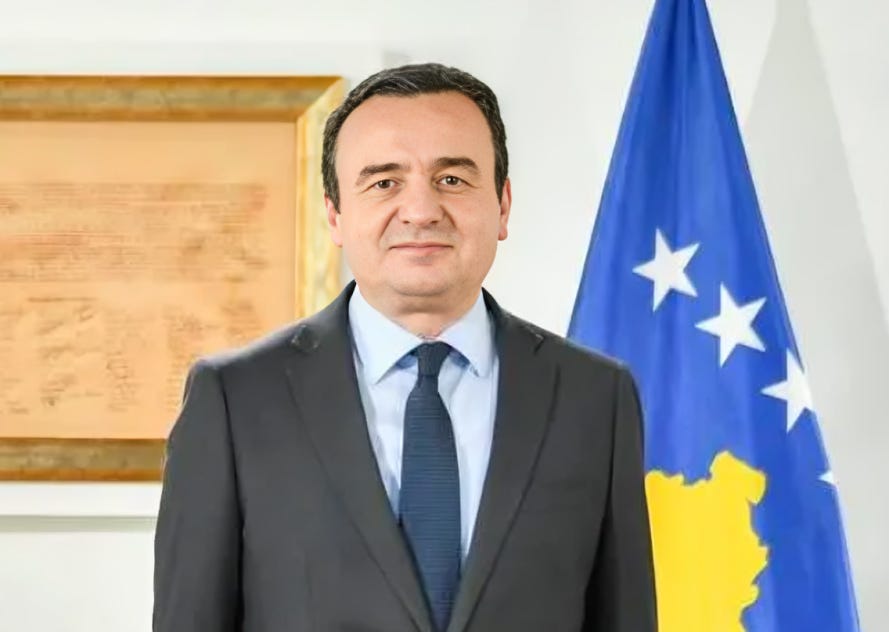
For the first time since independence in 2008, Washington has indefinitely suspended its Strategic Dialogue with Kosovo. This Dialogue is the central forum where the two governments coordinate on security cooperation, democratic reforms, energy policy, and economic growth. For a small state that depends on US protection, it has functioned as a diplomatic lifeline: the mechanism through which Washington reaffirmed its role as guarantor of Kosovo’s sovereignty. To see that lifeline cut is unprecedented — and the blame lies largely with Prime Minister Albin Kurti and his brand of populist politics.
Kosovo itself is the product of extraordinary turmoil. Belgrade has long portrayed the territory as central to its identity, but that view has often overshadowed the Albanian experience. For ethnic Albanians, who today make up nearly 90 percent of the population, Kosovo is not a “cradle” of someone else’s history but their homeland — a land where they endured decades of systemic repression, discrimination, and violence. When Yugoslavia collapsed in the 1990s, Belgrade’s policies escalated into ethnic cleansing. By 1999, NATO, led by the United States, launched its first major war to halt the campaign, forcing Serbian withdrawal and placing Kosovo under international administration.
Independence followed in 2008, with the United States taking the lead. Washington not only recognized Kosovo immediately but pressed European allies to follow suit, lobbying across capitals worldwide.
More than 100 countries have since recognized Kosovo, yet several powerful states — including Russia, China, and India — still refuse. Even within the European Union, five member states including Romania with their own separatist anxieties continue to withhold recognition.
The opposition to independence rests on several overlapping arguments. Serbia insists that Kosovo remains inseparable from its sovereign territory, citing history, faith, and law. Yet the International Court of Justice delivered a clear advisory opinion in 2010 affirming that Kosovo’s declaration of independence did not violate international law — a ruling that undercuts Belgrade’s legal claims and strengthened Kosovo’s international legitimacy. Others warn of precedent: if Kosovo can secede successfully, why not Catalonia in Spain, Transnistria in Moldova, or countless other contested regions?

Prizren, Kosovo’s second-largest city (Photo by Larry Luxner)
Against this background lies periodic talk of unification with Albania. While not formally on the table, the idea surfaces often enough to trouble international observers. For some Albanian nationalists it represents the completion of an unfinished project, but for most of Kosovo’s partners it raises alarms. Unification would redraw borders, inflame Serbia, and risk destabilizing a region where stability has long depended on keeping frontiers frozen in place. Even sympathetic governments resist such a prospect, fearing the precedent it could set for other separatist movements across Europe and beyond.
Amid such complications, Kosovo’s independence has always been dependent on credibility with the US. The 1999 intervention gave NATO’s first demonstration of resolve in Europe’s post–Cold War order. The recognition of 2008 was possible because Washington championed it. And since then, US diplomacy has shielded Kosovo from Serbian and Russian pressure at the United Nations.

It is this foundation that Kurti’s politics now endanger. He rose as a firebrand outsider, railing against corruption and the entrenched elite. His brand of leftist nationalism — suspicious of privatization, skeptical of Western influence, and merciless toward rivals — resonated with voters tired of broken promises. The timing amplified his message: until early 2024, Kosovars were the only people in the Balkans without visa-free travel to the European Union, a humiliation that made self-reliance attractive. Kurti’s defiance seemed at first like empowerment.
But once in power, his government proved more adept at confrontation than at reform. Diplomacy became theater, with provocation substituting for strategy. He cultivated popularity at home but alienated allies abroad. Instead of strengthening institutions and partnerships, he has pursued politics of unilateralism, pleasing his domestic base but jeopardizing the external guarantees that Kosovo cannot live without.
Populists elsewhere have sometimes found a sympathetic ear in Washington during the Trump years. Leaders like Hungary’s Viktor Orbán or Turkey’s Recep Tayyip Erdoğan have learned to flatter Trumpian instincts by invoking nationalism, Christianity, or blunt talk of sovereignty. Their defiance of liberal institutions is reframed as strength, and their posture against Brussels wins a measure of indulgence from a White House that mistrusts the European project.
But Albin Kurti’s brand of populism fits none of these molds. His politics are rooted in leftist nationalism, hostility to privatization, and suspicion of foreign investment — positions far removed from the pro-market right-wing populism that resonates with American conservatives. For U.S. institutions such as the State Department and Pentagon, his rhetoric is not merely provocative but destabilizing. Even under a Trump administration, indulgence is unlikely, because Kosovo’s survival rests on NATO credibility and American diplomacy. Kurti’s defiance may win him cheers in Pristina, but in Washington it offers neither ideological affinity nor strategic benefit.
The suspension of the Strategic Dialogue is a warning from Washington that patience is running out. Kurti promised to defend sovereignty, but his tactics have produced the gravest rupture in Kosovo’s external security since independence. If he stays the course, Kosovo risks dangerous isolation at precisely the moment when Serbia, emboldened by Russia, stands ready to exploit divisions. Without Washington’s firm backing, Kosovo would be marginalized in negotiations and vulnerable to pressure it cannot withstand alone.
Kosovo’s trajectory has never been merely a local concern. It remains a hinge point in Europe’s fragile post–Cold War architecture. To see the US–Kosovo partnership unravel would weaken NATO’s credibility, embolden Russia and Serbia, and call into question the Western commitment that stabilized the Balkans after 1999.
Unless Kosovo restores trust with the United States, the achievements of the past quarter-century risk unraveling. The suspension of the Dialogue is not just a diplomatic measure. It is a red line, signaling that the guarantor of Kosovo’s independence will not indulge endless defiance. A project built with American support can only be preserved by leaders who treat that alliance not as optional, but as existential.
Arbana Xharra, award-winning investigative journalist from Kosovo, has exposed corruption, extremism, and abuses for over two decades; recipient of the U.S. State Department’s Courage Award, she now works in the United States. Follow her at x.com/xharraarbana
Romania awarded 3-0 win against Kosovo but fined for fans’ ‘racist’ chants
