












A French senator put it best: America wasn’t supposed to be just another bully
For Anglophones, as are most readers here, it can sometimes feel as if a thing said not in English has hardly been said at all. That’s why I feel dutybound to draw attention to the words of Claude Malhuret, a French senator who recently issued the most clear-eyed takedown yet of Trump 2.0. Assuming you missed this speech, you really do need to hear it.
“Donald Trump is a traitor,” declared the former mayor of Vichy. “A traitor to Ukraine, a traitor to democracy, and a traitor to the very alliances that have kept the world stable for 75 years … Washington now looks like the court of Nero, with a fiery emperor, submissive courtiers and a ketamine-fuelled buffoon in charge of purging the civil service. This is a tragedy for the free world, but it is first and foremost a tragedy for the United States.”
“The message from Trump is that there is no point in being his ally: he will not defend you, he will impose higher tariffs on you than on his enemies, and he will threaten to seize your territory while at the same time supporting the dictatorships invading you,” he continued.
“Never has any President of the United States surrendered to the enemy, nor supported an aggressor against a US ally. None has so trampled on the American Constitution, issued so many illegal decrees … dismissed senior military staff, weakened all the checks and balances. In one month, Trump has done more harm to America than in four years of his previous presidency.”
You must believe me: This is the standard view in Europe. Many Americans dislike Trump, but I assess that his mainstream opponents don’t quite grasp the depths of the despair felt across the Atlantic. In a way it is reassuring, because their grief over what is being torn up betrays an appreciation of what was: They bought the story of American exceptionism.
So, in fact, did I. And for good reason, I think.
For decades, the United States stood apart. It wasn’t merely the most powerful country in the world — it was the anchor of the international system it built after World War II. The American-led order was far from perfect, and the U.S. could act hypocritically at times, but the setup had a purpose: to discourage territorial expansionism, promote stability, and uphold a set of rules that kept great-power competition from spiraling into chaos.
President Trump is breaking with that paradigm, clearly considering it a thing for losers and suckers. His vision is not of America as a guardian of international norms but as a raw, self-interested force willing to extort allies, impose tariffs on friends and even threaten their sovereignty. This is a rupture with the entire post-World War II consensus, disdainful of “expertise” and indifferent to criticism.
Nowhere is this clearer than in his treatment of America’s closest partners. His administration has waged trade wars against allies, using national security as a flimsy excuse to impose tariffs on Canadian and European goods. He has floated the idea of seizing Greenland from Denmark, questioned why the U.S. ever gave up the Panama Canal, and engaged in open economic coercion against Mexico.
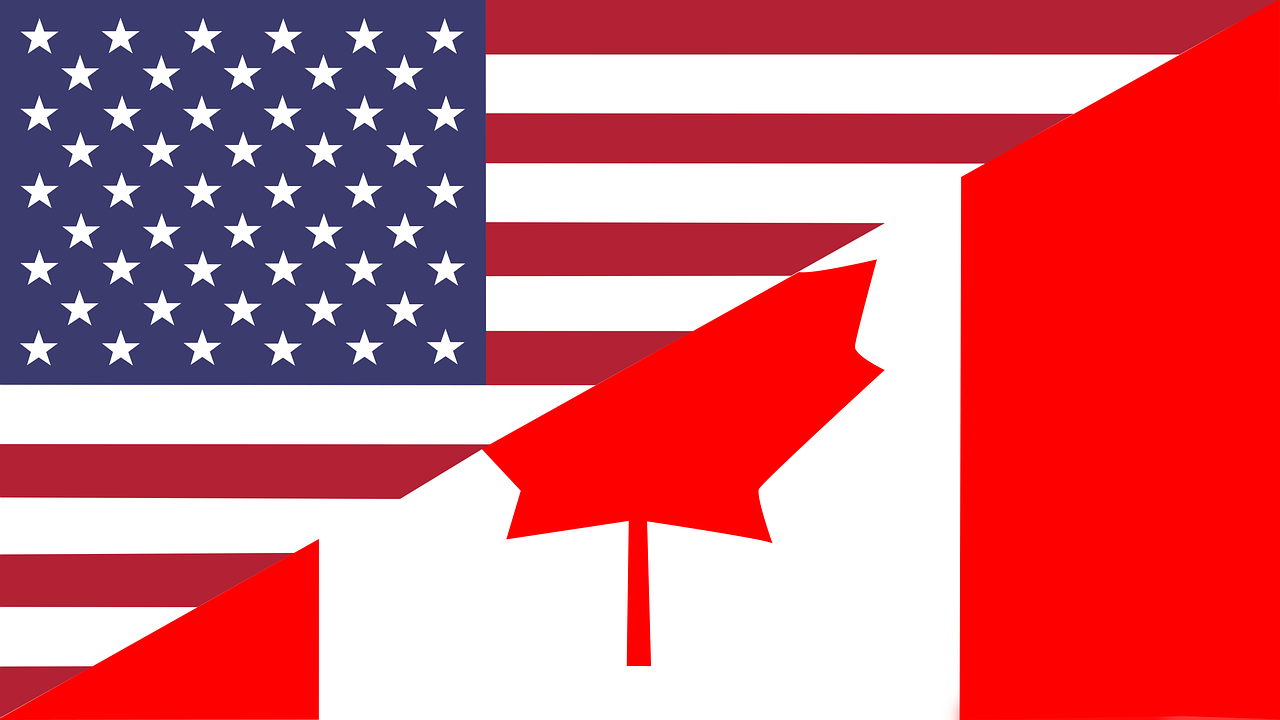
Perhaps the greatest outrage is his treatment of, our long-friendly neighbor to the north with whom we share major league baseball and hockey leagues and much more. This week, when challenged on Fox about his harsh tariff assault on Canada, he replied: “Here’s my problem with Canada … Canada was meant to be the 51st state … We don’t need their cars. We don’t need their lumber … We don’t need their energy. We don’t need anything.”
Even in the Trump era, words have value, so it’s important to deconstruct this nonsense.
Canada was never intended to be part of the U.S., having chosen a different path after the American Revolution. The War of 1812 cemented its independence, and it has built its own institutions and economy. Canada is actually the U.S.’s largest export market, supporting American businesses and jobs – and the assertion that the U.S. doesn’t need Canadian goods is false. The North American auto industry is deeply integrated, with American car manufacturers depending on Canadian-made parts. The U.S. also relies on Canada for over 80% of its softwood lumber imports, and without it, housing prices would soar. Canada is also America’s largest foreign energy supplier, providing over half of U.S. crude oil imports and virtually all its electricity imports from abroad.
Moreover, trade deficits aren’t inherently bad, don’t measure economic strength, and reflect financial realities rather than unfair trade. Countries with surpluses, like China and Germany, reinvest in the U.S. by buying stocks, real estate, and government bonds. Eliminating the deficit could weaken growth by reducing this investment and raising interest rates. Indeed, trade deficits often signal strength: A wealthy country with a strong currency and high consumer demand will naturally import more. Many surplus countries suppress wages and consumption—hardly a model to follow.
Moreover, the quickest way to fix trade deficits is to weaken the dollar, making U.S. exports more attractive and imports more expensive; the price of that will be paid by U.S. consumers via price rises of everything from pure exports to domestic products with foreign components, which includes … most things of high economic value.
Either way, the message that is being understood around the world – on tariff madness and territorial covetousness both – is that in the new era alliances with the U.S. are not based on shared values or mutual defense, but on submission. The tragedy is that the distrust this breeds will outlast Trump in office. A future less bellicose leader will struggle to fix the damage – economic and reputational damage that’ll harm America for years.
The idea that stronger nations should not seize (or extort) territory from weaker ones has been a foundational principle of the world order America helped construct. It was the logic behind the formation of the United Nations, the legal basis for NATO’s deterrence strategy, and the moral underpinning of U.S. opposition to Russia’s invasion of Ukraine.
Yet Trump has explicitly rejected this notion. In 2019, when Denmark refused to entertain the sale of Greenland, he responded with petulance, attacking the Danish prime minister as “nasty.” When it was later suggested that the U.S. could simply take Greenland if Denmark refused to cooperate, his administration did not dismiss the idea — allowing it to circulate.
A similar impulse has surfaced with Panama. Trump and his allies have begun questioning why the U.S. ever relinquished control of the canal, calling it a historic mistake. At first, such statements sounded like throwaway campaign bluster. But more recently, voices within his orbit have suggested that if Panama does not align with U.S. economic demands, stronger measures could be taken. The language is deliberately vague, but the implications are clear: Trump does not see sovereignty as an inviolable principle, but as a bargaining chip.
For much of its modern history, the United States has justified its vast power by claiming that it operated differently from traditional empires. Unlike the colonial powers of the 19th century, America positioned itself as a force that upheld principles rather than just raw national interest. This was, of course, always an ideal rather than a perfect reality. But ideals shape global perceptions, give legitimacy to power, and reinforce the stability of the system. Trump’s America is instead just another large country throwing its weight around, unconcerned with long-term consequences. The notion that the U.S. stands for anything greater than itself has been binned in favor of international relations as a zero-sum struggle.
This shift does not merely alienate allies — it accelerates global instability. If the United States no longer upholds the idea that sovereignty must be respected, why should anyone else? If America treats its friends as rivals, what incentive do those countries have to stand with the U.S. in times of crisis? If America no longer differentiates itself from aggressive powers, it cannot credibly lead a coalition against them.
It is telling that some of the most blunt warnings about this transformation are coming from outside the U.S. Earlier this month, French Senator Claude Malhuret gave a speech describing Trump as a leader who has “done more harm to America in a month than in four years” of his previous term. He argued that the free world must prepare for an America that is not merely unreliable but actively hostile to the system it once defended.
“Donald Trump is a traitor,” he declared. “A traitor to Ukraine, a traitor to democracy, and a traitor to the very alliances that have kept the world stable for 75 years.”
Strong words to be sure, but Malhuret is correct to be alarmed.
Thomas Hobbes, writing in the 17th century during the chaos of the English Civil War, saw a world where might made right — a brutal state of nature where life was “nasty, brutish, and short.” Out society’s progress since then has been an effort to escape that cycle, to build systems based on laws rather than force, cooperation rather than conquest. We called it Western civilization, a project that culminated in the postwar order America helped create—one that sought to contain raw power with rules, alliances, and shared values.
That’s what Trump is messing with.
