














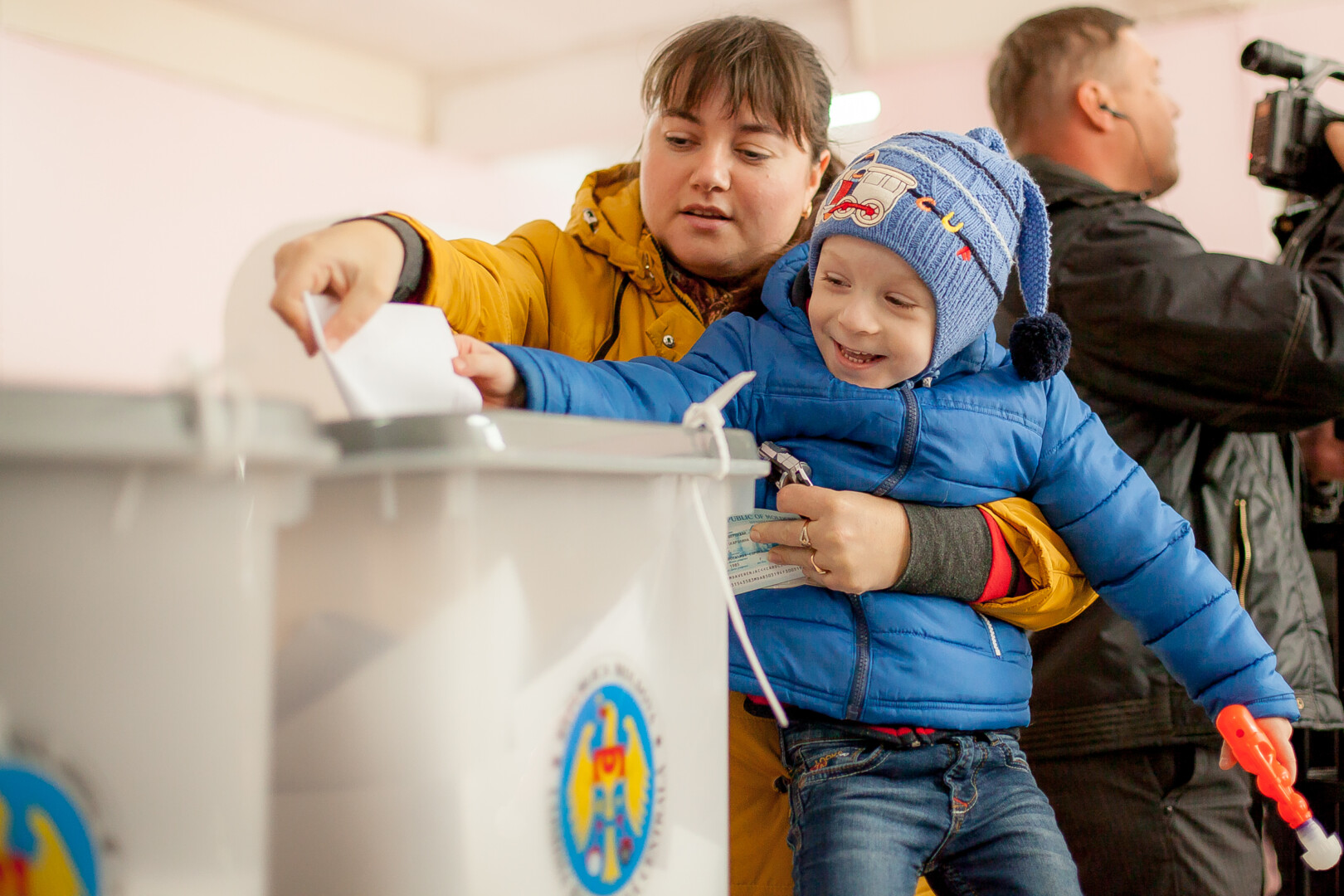
Moldovans on Sunday were voting in the runoff of a presidential election seen as a choice between a European future or a return to Russian influence.
Pro-European President Maia Sandu faces Alexandr Stoianoglo, who she fired as chief prosecutor. He has promised to balance foreign policy between the West and Russia and has the backing of the pro-Russian Party of Socialists.
Ms. Sandu and Moldova’s authorities have warned that a fugitive oligarch now based in Russia is trying to overturn the election for the Kremlin.
Moscow has denied interfering in the vote, as it during last weekend’s disputed elections in Georgia.
“We resolutely reject any accusations that we are somehow interfering in this. We are not doing this,” said Kremlin spokesman Dmitry Peskov.
Sandu won the first round of the vote two weeks ago with 42.4%, well ahead of Alexandr Stoianoglo on 26%, but short of the 50% she needed to win outright. His vote is likely to increase because of the votes of candidates who failed to reach the run-off.
Stoianoglo has told Moldovans he would be an “apolitical president” for everyone, with a goal of security, peace and prosperity, and a “truly European model”.
Commentators and politicians say a Stoianoglu victory could radically change the political landscape in the Black Sea region because Russia has thrown its weight behind him.
The former Soviet republic which lies between war-torn Ukraine and EU member Romania is one of Europe’s poorest countries, with a population of 2.5 million.
There are 1.2 million Moldovans abroad, whose votes could give Maia Sandu the edge in the run-off.
Moldova has opened talks on joining the European Union, and voted by a razor margin to change to the constitution embracing the commitment to join the EU on Oct. 20.
Moldova’s pro-EU president fights for re-election amid claims of Russia meddling
