














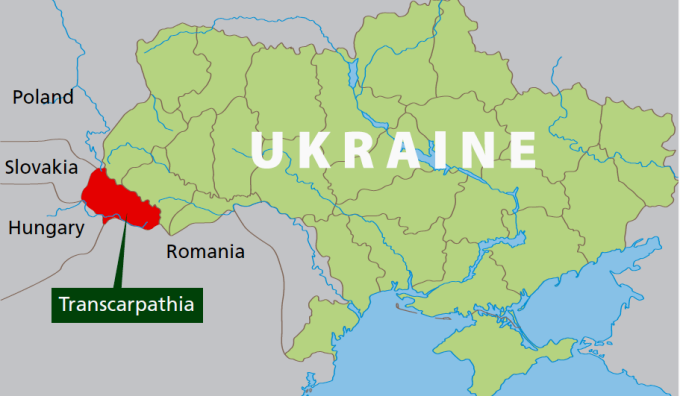
Hungary’s new government has already made a strong impression by sharply escalating its rhetoric toward Moscow after a massive Russian drone attack struck Ukraine’s western Transcarpathia region near the Hungarian border.
This marks potentially the clearest foreign policy breaks yet from Hungary’s openly Russia-friendly posture cultivated for years under former Prime Minister Viktor Orbán.
Prime Minister Péter Magyar announced that Budapest had summoned the Russian ambassador following what Ukrainian authorities described as the heaviest strike on Transcarpathia since the start of the full-scale invasion.
“The Hungarian government strongly condemns the Russian attack on Transcarpathia,” Magyar told reporters, adding that Foreign Minister Anita Orbán would demand clarification from Moscow about “when Russia and Vladimir Putin plan to finally end this bloody war.”
The unusually forceful reaction comes amid a broader Russian escalation across Ukraine. Kiev has said that Moscow launched at least 800 drones in a sweeping daytime assault targeting roughly 20 Ukrainian regions, followed by another overnight barrage involving hundreds more drones and dozens of missiles. Ukrainian President Zelensky described the strikes as among the largest and longest of the war, warning that Russia appeared intent on overwhelming Ukrainian air defenses through sheer volume.
Judging from Hungary’s reaction, we also see that the attack on Transcarpathia carries a particular symbolic weight for Hungary in a way that strikes elsewhere in Ukraine often have not. The region, which borders Hungary directly, was historically part of the Kingdom of Hungary until the aftermath of the First World War and still contains a sizable ethnic Hungarian minority concentrated near the frontier.
For decades, Hungarian governments of virtually every ideological orientation have treated the protection of ethnic Hungarians abroad as a core national issue, especially in neighboring states carved from historical Hungarian territories after the Treaty of Trianon.
Under Viktor Orbán, that concern was often deployed antagonistically toward Kiev, as Budapest repeatedly blocked NATO-Ukraine meetings and delayed European Union initiatives over disputes concerning the language and educational rights of ethnic Hungarians in Ukraine. Critics accused Hungary of weaponizing minority issues while simultaneously acting as Moscow’s most reliable spoiler inside the EU. However, we cannot know how Viktor Orbán would have reacted to this splitting between his sympathies had he still be on the throne — although the second question, of whether Moscow would have struck this particular space under Orbán, also remains valid. In any case, the deed is finished, and therefore, once Russian drones began targeting a borderland deeply embedded in Hungarian historical consciousness (and populated by ethnic Hungarians whom Budapest claims to defend) maintaining strategic ambiguity toward the Kremlin became significantly more difficult politically.
Neighboring Romania has had a strikingly different approach to drone attacks. Since the start of the war, Romania has repeatedly experienced Russian drone debris or airspace violations connected to attacks on Ukrainian Danube ports near the Romanian border. Fragments of Russian drones have landed on Romanian territory multiple times, prompting concern among NATO allies and occasional technical military responses, but rarely generating the sort of dramatic political reaction now seen in Budapest.
Equally notable is the difference in discourse surrounding ethnic minorities across the border. While Hungary has consistently framed the approximately 150,000 ethnic Hungarians in Transcarpathia as an issue of national strategic importance, Romanian political discourse has been comparatively muted regarding the estimated 400,000 to 500,000 Romanian-speakers living in Ukraine’s Chernivtsi region and surrounding northern Bukovina areas. Despite periodic disputes over language laws and minority education rights, Bucharest has generally subordinated those concerns to broader strategic priorities, particularly maintaining strong alignment with NATO, the EU, and Ukraine during the war.
Hungary’s post-Cold War governments have frequently integrated historical memory, lost territories, and diaspora protection into mainstream political identity. Romanian governments, by contrast, have traditionally avoided rhetoric that could be interpreted as territorial revisionism or historical revanchism, partly out of concern for regional stability and partly due to Romania’s strong emphasis on presenting itself as a predictable Atlanticist partner. This, then, splits the problem into two factions: the obvious, immediate and urgent political crisis, which Hungary was right in addressing, and the spillover of the conflict into certain regional recalibrations of soft power.
The contrast with Hungary has reignited an old criticism within Romania itself: that Bucharest’s instinctive preference for caution and external approval can, at times, resemble a modern geopolitical version of “capul plecat sabia nu-l taie.” The situation itself is analogous to the deeper divide in regional political psychology, with Hungary embracing an emotionally assertive nationalism while Romania continues to favor a restrained, technocratic, and intensely Atlanticist model of statecraft.
There is a truth in the fact that Romania was often comparatively passive in the international cultural and narrative battle over Transylvania after 1989, especially when compared to the sophistication and persistence of Hungarian historical diplomacy. Hungary invested heavily in diaspora institutions, cultural networks, translation programs, lobbying, museums, historical memory projects, academic conferences, dual citizenship policies, and international messaging centered on the trauma of Treaty of Trianon. The loss of historic Hungarian territories became a mainstream emotional and political reference point across large parts of Hungarian society, not merely a fringe nationalist obsession. That gave Budapest a coherent long-term narrative infrastructure abroad. Romania, in contrast, largely assumed that postwar borders were internationally settled facts and therefore did not require constant narrative defense. Romanian elites after 1989 were intensely focused on NATO accession, EU integration, avoiding instability, and escaping the Balkans/post-communist “problem zone” image. As a result, Bucharest often treated historical disputes as dangerous or embarrassing subjects better minimized than aggressively contested internationally. In many Western intellectual and media spaces, Hungarian narratives about Transylvania often became more visible, emotionally compelling, and institutionally organized than Romanian counter-narratives — frequently unappealing in their bureaucratic note, or worse yet, perceived protochronism, or absent altogether. Romanian historical claims were almost always communicated less effectively internationally, and as a result Transylvania is filtered through Hungarian aristocratic nostalgia, Austro-Hungarian imagery, Saxon villages, or “borderland melancholy,” while Romanian historical centrality is often muted or treated as secondary — also simply because of Hungary’s structural advantages, and its stronger integration into Central European intellectual circuits.
We see this now as continuity in Romanian state behavior: a preference for de-escalation and external alignment over emotionally assertive nationalism: in other words, psychologically ingrained over-caution bordering on self-erasure. Some would call that excessive submissiveness or survival through habitual accommodation. Perhaps this is unfair, but the recurring Romanian strategic instinct is still obvious: avoid becoming the disruptive actor, avoid unilateral escalation, preserve alliances at almost any cost, and prioritize international legitimacy over theatrical displays of sovereignty. That instinct is visible both in the drone incidents and in Romania’s broader handling of historical or minority issues.
When Russian drone debris landed on Romanian territory, Bucharest’s reactions were notably restrained, technical, and alliance-centered: investigations, NATO consultations, radar discussions, air-defense coordination, carefully measured condemnations. However, there was no dramatic diplomatic confrontation whatsoever, on the contrary, public commentary was very mild.
Likewise, Romania has generally avoided aggressively internationalizing questions concerning Romanians in northern Bukovina or southern Bessarabia, especially during the Ukraine war, even when Ukrainian language laws caused unease domestically. The state’s overriding priority has been maintaining its image as NATO’s disciplined eastern-flank actor and one of the West’s most predictable regional partners, but Hungary has shown that despite changing its government, it still operates in its quintessential way: for Budapest is far more willing to dramatize symbolic grievances and publicly weaponize national emotion in foreign policy. The Transcarpathia episode, then, makes Hungary seem stronger or at the least more self-assertive in its public rhetoric.
Things are moving quickly. It will be interesting if Hungary will glide out of its “EU problem child” position, or if there will be frictions that the Commission didn’t initially anticipate, going on, and if Romania will be emboldened to show a stronger public backbone, particularly in light of internal chaos and public discontent.
