




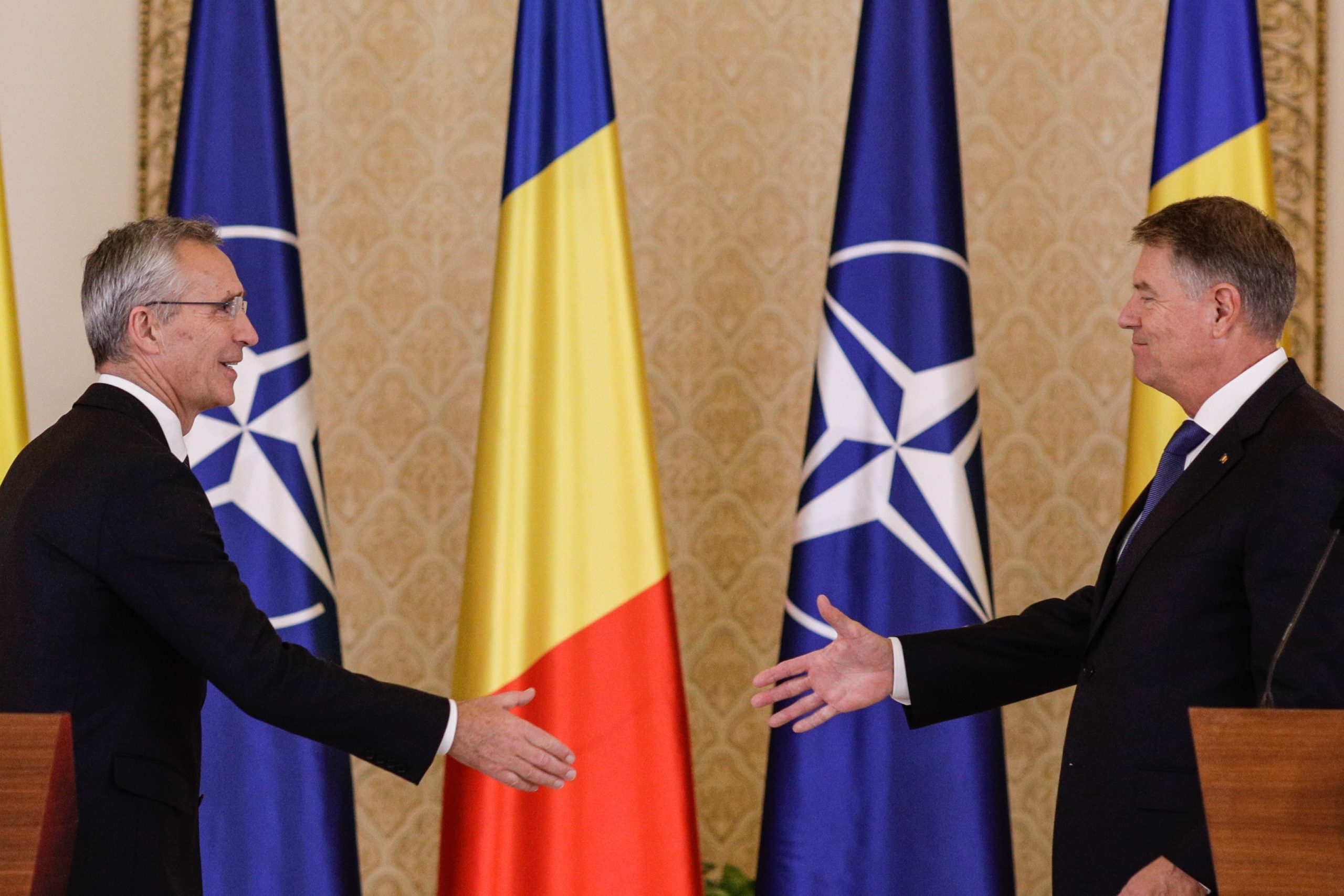
President Klaus Iohannis has signaled his intention to become the next NATO chief and lead the world’s most important military alliance.
Outgoing Dutch Prime Minister Mark Rutte is the favorite to step into the role as the next NATO secretary-general when Jens Stoltenberg leaves in October. The big boys, France, Germany the UK and the US, are rooting for him. And suddenly on Thursday it was reported by Bloomberg and POLITICO that the Romanian leader was throwing his hat in.
Who he? Such confidence, such daring, such strategy. Romania believes it is ready to lead the 31-member military alliance at the most difficult time in its history.
Klaus Iohannis is the right person for the job.
Mr. Rutte has his good points and important supporters, but he’s unpopular in the East because of the Netherlands’ opposition to Romania and Bulgaria joining Schengen, the borderless zone for EU countries citing corruption and crime. The Netherlands is lax by NATO standards on defense spending. Jens Stoltenburg is reliable, serious and western. Mr. Rutte is more-or-less same old same-old, only worse.
NATO doesn’t need worse.
We don’t know what effect this last-minute bid has had behind closed doors, but if Mr. Iohannis became NATO’s chief, it would bring a new perspective and talent to the military alliance and show it is serious about collective defense.
For who can understand better the need for Article 5 (an attack on one member is an attack on all) than a country who spent almost half a century shackled by the Soviet-led Warsaw Pact.
Klaus Iohannis is the perfect blend of West and East. Born into Romania’s ethnic German minority and with ties to Germany, he thinks like a westerner: he’s pragmatic, logical and rational, but he understands the East in a way that no Western European politician can.
More than that, the ethic German minority to which he belongs suffered terribly under the Soviets: thousands were deported to Siberia just because they had German names. Hundreds of thousands of Germans emigrated to West Germany during communism, sold to the German state by Communist strongman Nicolae Ceausescu, but not Mr. Iohannis. He stayed in his native Sibiu, married a Romanian, and became mayor of Sibiu from 2000 to 2014. Then a career in Bucharest beckoned and he was elected president.
Make no mistake. NATO’s problems lie on its eastern flank not somewhere in the Ardennes. It is here on the Black Sea where countries feel the need for protection, smell the threat of invasion and know history the keenest. Russia gobbled up these countries at the end of World War II and plunged them into various shades of dictatorship. Romania was one of the worst under Ceausescu. Mr. Iohannis, a former high school physics teacher, knows this well.
Spain, Luxembourg and the Netherlands don’t spend the agreed 2% of their GDP on defense. They simply don’t fear the Russians (despite a couple of executions of Russian dissidents in Spain in recent times) the way the Romanians and Poles do. Better the Germans as enemies than the Russians friends I was told when I first moved to Romania in the 1990s
The 64-year-old Iohannis, with his impeccable German and English and serious manner understands the threat and the fears, and he’s also diplomatic and cool-headed. I imagine he knows how to convey these sentiments to Western allies. He’s their most reliable ally in the East.
Whatever his shortcomings, (detractors curiously say that he is not Romanian enough, though that’s unfair), ever since he took office in 2014, Romania’s place as a solid European and Western ally has never been in doubt.
He is the eyes of the West in the East and the voice of the East in the West. He is a European, a westerner. He is what NATO needs right now.
