











We cannot know what how Nicușor Dan wants to be remembered or what legacy he intends to leave for Romanians when his mandate or mandates end. If he has thought this far ahead of course.
Given the context in which he was elected to Romania’s highest office in the May presidential election redo, he would not have ruled out having set at least one general priority: that at the end of his presidential term, he would not be succeeded by a pro-Russian president or at least by one at odds with liberal democracy.
In any case, however, no matter what you intend to leave in history, as a statesman, the reality is that the struggles that arise along the way and the priorities that crystallize throughout the mandate may very well be very different to the one initially imagined or even planned.
In the case of Nicușor Dan, whose has faced gigantic challenges since he took office ( stabilizing the country’s finances, Russia’s hybrid war in Romania, the outcome of Russia’s war in Ukraine), it is increasingly clear that justice will impose itself as one of the great themes that will shape his activity and define his legacy.
Since Ion Iliescu, none of Nicușor Dan’s predecessors has escaped the judgment of history according to what he did in the judiciary.
Iliescu did not want to strengthen justice at all, but in his last term even he could not avoid a minimum effort in this regard, being constrained by the start of Bucharest’s efforts to join NATO and the EU.
Thus, in fact, the irony arose that, in Iliescu’s time and precisely under his prime minister, Adrian Năstase, the most corrupt post-revolution prime minister, the National Anticorruption Prosecutor’s Office (PNA, the precursor of the DNA; DNA which, a decade later, would send Năstase to prison).
Instead, Băsescu, Iliescu’s successor, campaigned directly on the issue of justice, promoting a war on corruption through the famous slogan: “Impaled, in Victory Square!”.
Justice has marked, in fact, both mandates of President Traian Basescu, even as he was impeached twice (the mafia’s interest in undermining justice is not, therefore, an invention of the present we are living in).
Under Basescu’s mandates, the DNA massively strengthened its role in the justice system and in society, but the legacy left by Traian Basescu, although clearly defined by the issue of justice, was not spared by controversies.
Iohannis, Basescu’s successor, started with a bang with the story of “educated Romania”. A story that, although the former president held on to the end, he nevertheless advanced only modestly or even less. .
Instead, Iohannis’ legacy was even better shaped by the story of justice. The taste left is, however, at best a mixed one – after a reformist sprint, during the Liviu Dragnea period, the endurance race of the vigilante Iohannis ended up leaving something to be desired.
The activity of the DNA has slowed down in recent years, and today, when the theme of justice has exploded again, after the Recorder documentary, one of the central problems that magistrates and analysts point the finger at is represented by the package of justice laws, adopted in his second term.
And after Iohannis came Dan.
In just six months, the weight of the subject of justice has also acquired mammoth dimensions for him, comparable in terms of general interest generated with the anti-corruption offensive of the Basescu era and the offensive against anticorruption and the rule of law of the Iohannis era.
It is impossible for the story of justice not to impose itself as the biggest struggle or at least one of the Top 2 during Nicușor Dan’s mandate/mandates, given the fact that two tectonic plates are colliding: the reform of the special pensions of magistrates and the somewhat revolutionary dimension of the revelations about the mafia at the top and in the bowels of the justice system.
In fact, at the beginning of his mandate, Nicușor Dan is faced with the existence of three unprecedented elements:
- This kind of reform of the special pensions that magistrates benefit from.
- This kind of unveiling of the level reached by the mafia of justice: testimonies from the inside; the solidarity of magistrates with their more courageous colleagues, now numbering almost a thousand professionals; the questioning of laws and finally, the revival of civil society street protests.
- The unprecedented synchronicity of the two unprecedented events.
As far as Nicușor Dan is concerned, the question that really arises is not whether he will be touched by the issue of justice – this is a given, he will not be able to avoid the fact of getting involved in any way – but how he will get involved and what the effects of his actions will be.
The way he chooses to find his place and role in the debate on justice will depend not only on the trace in history that Nicușor Dan will leave, but, until then, every day of exercising his mandate as president will depend.
In the constitutional and legislative framework in Romania, on the issue of justice, the president can play a massive to decisive role or only a modest one – it all depends on him.
The levers he has are sometimes restrictive, as in any democracy, but sometimes generous too. In addition, the voice that the president has in the public space, in the political environment and in the diplomatic sphere is one that carries a heavy weight if, of course, the head of state is also willing to use it to its full potential.
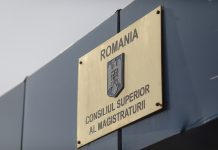
There are times when President Nicușor Dan can choose to isolate himself in his Cotroceni Palace or he can choose to spend more time in the meetings at the Superior Council of Magistrates headquarters and intervening publicly rather than sitting in the presidential office.
There are times when President Nicușor Dan can choose to play the referee’s card excessively cautiously or, on the contrary, to position himself adequately offensively – both in public communication and interacting with the parties.
For or years, Nicușor Dan managed as an independent to play the card of diplomacy very effectively, walking on a tightrope at times in his relation to the parties and institutions that were hostile to him. The times has come for him to make a serious upgrade to his refined political software because the type of forces he is facing now exceeds everything he encountered in his previous life as a civic activist and the mayor.
In the realm of the revolution that has just broken out in the judiciary, the head of state will have his political will, personal interest, resistance, sense of duty and sense of history tested like never before.
Nicușor Dan has something to learn from the experience of each of the predecessors who have succeeded each other in Cotroceni in the last 25 years.
He has, first of all, to learn how not to proceed – how not to start, what compromises not to make, how not to communicate and where not to stop. And above all, why he shouldn’t deceive his own and more importantly, people’s expectations.
