













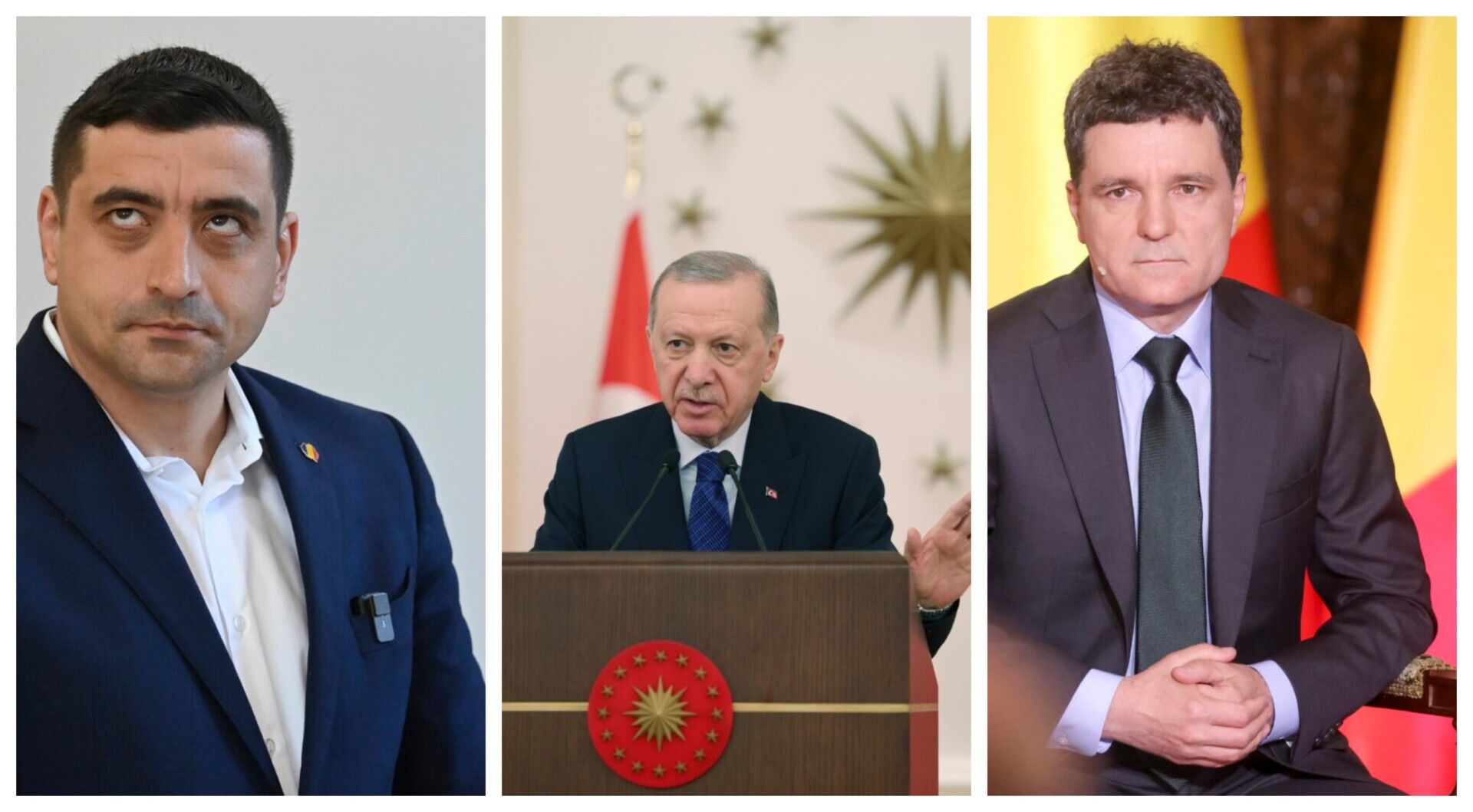
The way in which Turks in the diaspora voted in their presidential elections in May 2023 is dangerously similar to the way in which Romanians in the diaspora voted in the first round of the presidential election in May 2025. The misfortune is that so far the result has not been more different.
Turks in Western Europe elected Erdogan in large numbers, while Turks in the US and Canada mostly opted for his democratic opponent.
Romanians in Western Europe and Romanians in the two North American countries were divided in the way they voted two weeks ago just like the Turks two years ago.
The trends recorded were also similar in the two cases compared here:
- Voting mobilization increasing from one presidential election to another.
- The themes were unbridled populism, nationalism, patriotism, traditional values, faith, promises in the metaphorical, hyperbolic sphere.
In a way, both the Turks who left for Europe and the Romanians who left for Europe seem significantly more sensitive to “poetry” than their compatriots who stayed at home, although they have adapted well to life in the “decadent” West. They have mastered almost all the customs: they seem to really know the value of money, they know what competitiveness and being reliable means, they go on vacations. All in all, they are integrated into Western European realities and at the same time unhealthily disconnected from the reality of their country of origin.
It is true, the political forces for which the Turks and Romanians in Europe preferred to vote for in large numbers – the autocrat Erdogan and the extremist Simion respectively – were also those who campaigned systematically with the diaspora.
In the case of Turkey, Erdogan managed it because he had both bread and a knife. Turkey’s opposition, no matter how much it struggled, couldn’t compete in terms of resources and penetration.
In the case of Romania, on the other hand, the situation was significantly different, as everything was primarily related to flair and zeal, resources wasn’t the real problem.
AUR has focused for years in a row and extremely strongly on having an overwhelming physical, narrative and media presence among Romanians in the diaspora, and not just during electoral campaigns, but also outside elections. The other parties, on the other hand, treated this precious electoral pool – the diaspora – with a laziness and a lack of imagination that is making history and not in a good way!
Regardless of results, this should become immediately after Sunday’s elections, a major topic of discussion in the civic society and politics for pro-European parties.
You can accuse Simion and his AUR party of countless flaws, but not of ignoring the Romanians who went abroad. Just as you can unknowingly praise the virtues of the other parties, especially compared to AUR and Simion, but you cannot overlook their absence from the Romanian diaspora, especially in Europe which is close to home.
In Turkey’s elections exactly two years ago, the diaspora counted in Erdogan’s victory. And it was all the more precious because the Turkish leader was at that time in the most vulnerable situation of his long rule, with the economy devastated, huge inflation, the lira was tanking and corruption was rife, exposed by the tragedy produced by the most powerful earthquake recorded in over 80 years just three months before the election.
We know what happened in Turkey after Erdogan’s victory in those elections which he could very well have lost if there had been just a little more wisdom among the Turks in the country and abroad. Have barely dodged a bullet, the regime tightened its grip on the population, and this year Erdogan did the unimaginable – he arrested and removed from any future electoral race the only candidate who posed a real danger to Erdogan’s re-election in the next presidential election. The international context simply fueled his boldness.
Warning, therefore, to the amateurs in the context of Romania’s second round of the presidential elections! From Monday onwards, the future will be either or:
- Or we will continue to live in this imperfect country, but at least keeping theoretical chances of making it less imperfect in the next five years.
- Or we will continue to live in a country that, given the promises and plans of the Simion-Georgescu duo, is preparing to fail dramatically, moving away from everything that is essential: the EU, NATO, an economy that is somewhat stable internally and integrated into Europe, democracy, freedom, the rule of law. And not necessarily for the next five years, but it is possible that it will be so for a much broader time horizon.
Perhaps the Romanians in the diaspora have moved over to the anti-Western extremists, represented on Sunday at the polls by George Simion, for all sorts of reasons: nostalgia, frustration, eccentric patriotic feelings cultivated by the eccentric “poems” uttered non-stop by the extremists.
It is probably also the fact that they liked being taken notice of and flattered by Simion and AUR, after they’d been ignored and humiliated by the pro-Western parties.
And maybe there is something else. Perhaps, subconsciously at least, they felt somehow safe abroad, even if things take a terrible turn in the country after Sunday’s vote.
After all, after May 18, the Romanians in the diaspora, will continue to live on France, Germany, Italy, Spain and Great Britain, and not in Romania.
They will continue to have the same personal joys and problems, regardless of the result at home.
After all, they will not live under the Simion-Georgescu duo or return to the past promised by the pair of them, the darkest period in Romania’s history.
It will be just like the Turkish case: Turkish voters in the diaspora, those who massively voted for Erdogan, continue to enjoy the benefits of living in German democracy, French democracy and Dutch democracy. Their compatriots, on the other hand, those who remained in Turkey, today live in a situation that is more difficult than it was two years ago.
While the skin of the Turk in Germany, France or the Netherlands remained velvety after Erdogan’s re-election, the skin of the Turk in Turkey, already tanned until the moment of that failed election, is burned now.
- PS: I am among those who admit that they feel frustrated seeing how many Romanians in the diaspora voted for the pro-Putin extremists in Romania. But at the same time, I am among those who consider that it is inappropriate, dishonest and dangerous to question the vote of the diaspora. Or to question the fact that there are generous voting facilities in the diaspora. I strongly believe that any Romanian citizen, no matter where he lives or works at the time of any national election, is entitled to vote, must be encouraged to go to the polls. Voting is the fuel of legitimacy and democracy. Of course, the informed vote is the guarantee of the durability of both. The fact that Romanians in Romania know better how to vote than Romanians in the diaspora seems to me to a false theme. In the past, a huge number of Romanians living abroad voted for the pro-Western candidates, even if since AUR and extremist parties appeared (Eds: in 2020), a fair amount of Romanians in the diaspora have switched. I think the main blame for this switch lies with the pro-Western parties that have failed disastrously to connect the diaspora to Romania and the genuine national interest. As I said above, AUR and Simion were present and active among the Romanians who left, and with their well-known lack of scruples, Simion managed to spread their poisoned message more effectively. The competitors of AUR and Simion, on the other hand, stood out by their absence or, at best, by a feeble presence, while their message barely reached the diaspora. The solution is obviously simple: the pro-Western parties need to learn the lesson of AUR, and the Romanians in the diaspora still have time to learn from what happened in Turkey. Everyone would benefit, all of Romania could become better at some point.
Romania’s presidential frontrunner candidate rebuked after calling opponent “autistic”
