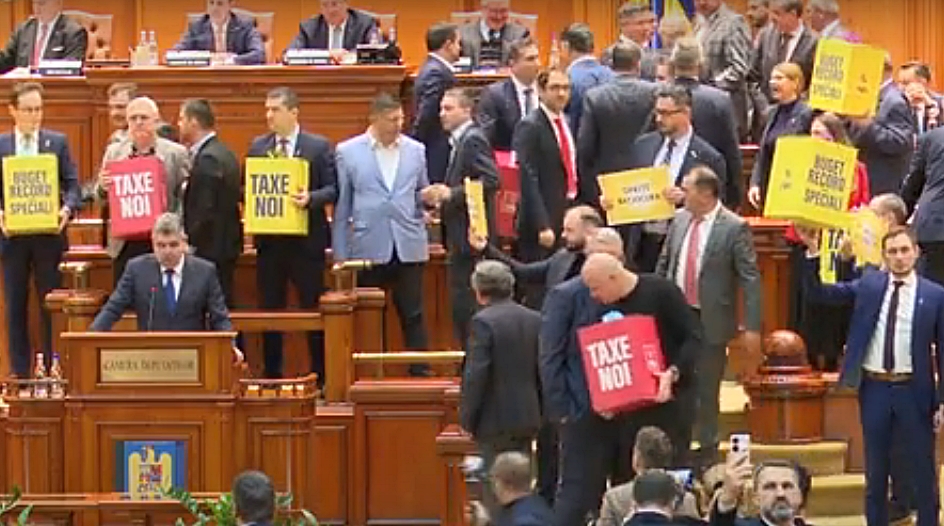
Romania’s new government is facing a backlash from unions and business groups over planned austerity measures that critics say punishes public workers and the private sector but doesn’t fix basic issues such as low VAT collection. Prime Minister Ilie Bolojan on Monday rolled out a new austerity package to slash the deficit of more than 9% of GDP, the highest in the European Union, but trade unions and business groups said they will lead to falling living standards.Bogdan Hossu, president of the Cartel Alfa trade union, said around 600,000 public sector employees will be affected by a new cap on some bonuses, while a VAT hike will raise the cost of living.Key measures include raising the main VAT rate from 19% to 21%, and the VAT on food and medicine from 9% to 11%.The dividend tax will go from 10% to 16%, and fuel duties by 10%, driving up business costs. Union leaders claim the measures disproportionately affect workers and retirees and could lead to protests. Employers have also pushed back, claiming the measures unfairly target the private sector. Business groups have called for urgent talks to avoid destabilizing Romania’s economy.Faced with criticism about the low rate of VAT collection, Finance Minister Alexandru Nazare said the government was under pressure to come up with a package, and Romania had lost investor confidence and was battling to obtain international loans.He stressed that the government had “limited options” and described the measures as necessary to “protect Romania”, adding that it had received positive feedback from the European Commission.
Bolojan says his government aims to adopt this fiscal package by next Tuesday, ahead of the EU’s Economic and Financial Affairs Council (ECOFIN). A second set of measures is planned for the end of July.
He warned that delaying or avoiding these measures could lead to Romania defaulting on payments, losing access to future credit, and being unable to cover state expenses, including salaries and pensions.
In its Spring forecast, the European Commission has forecast a drop in the budget deficit this year, from 9.3% in 2024 to 8.6% this year.