













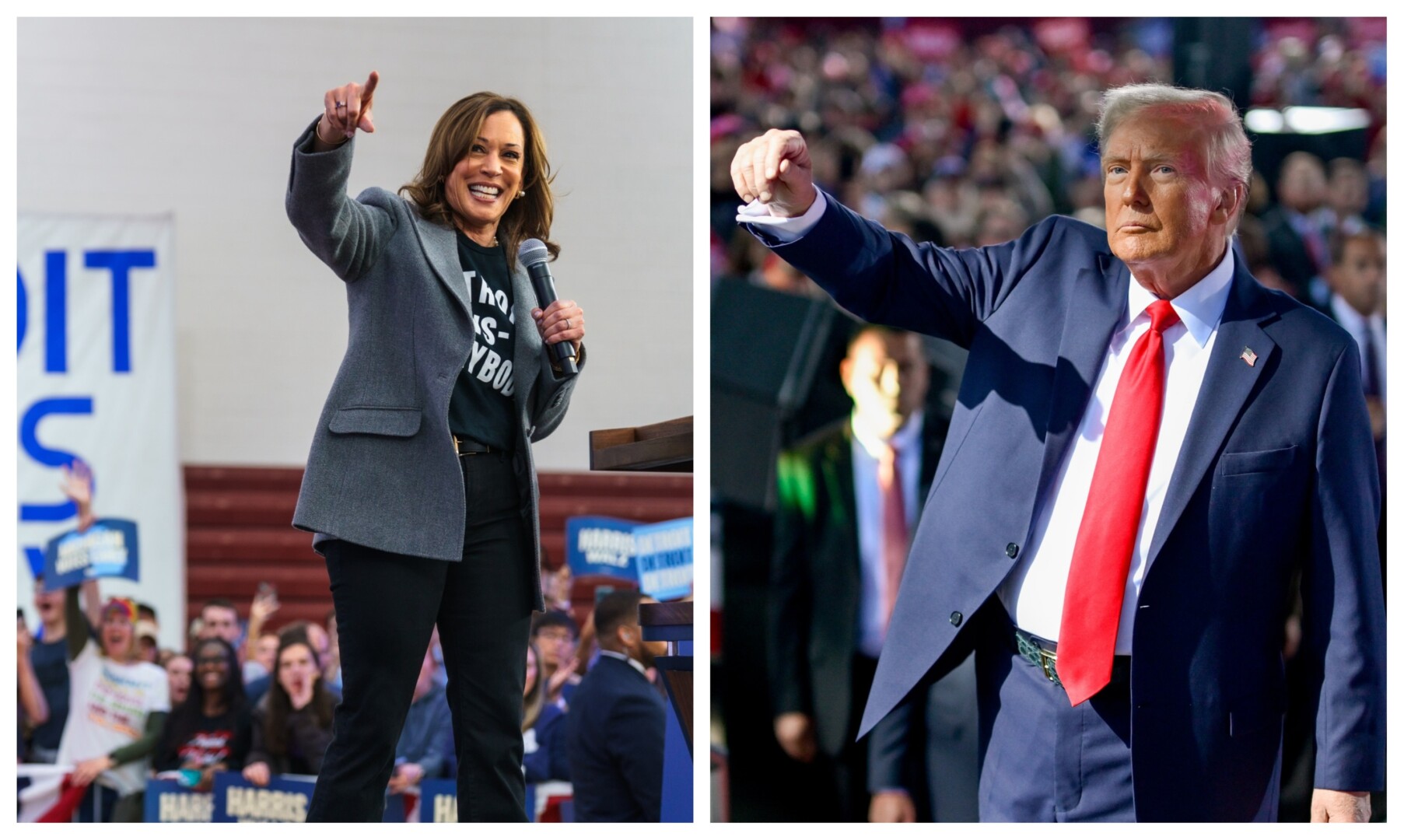
Dark clouds threaten the Shining City on a Hill. And the Democrats come to the party with poor politicians, complacency and a squabbling coalition.

The 2024 election will be scrutinized for years, but it is not too early to draw certain conclusions in the extraordinary reelection of a twice-impeached convicted felon whose campaign grotesquery including simulating a sexual act with a rally microphone days before the vote. It is a grim landscape for the Democrats, whose once-assumed “natural majority” appears to be falling apart, among other misfortunes.
A series of strong performances in the popular vote had brought many on the American center-left to the seductive belief that they would maintain the support of most voters, and that the main challenge was overcoming the unfairness of the Electoral College, which advantages the Republicans. The electoral system is certainly skewed, but it is becoming clear they have bigger problems still: their coalition is being torn apart at the seams by conflicting values among its constituent groups.
So exit polls show that Trump made gains in critical states among blacks, Latinos, Muslims and in some cases Jews. Strange bedfellows in Trumpland.
All these groups are part of the Democrat coalition, which ideologically is torn between progressives and liberals to boot. It is an understatement to say that these groups don’t always align. Pew finds strong levels of conservative instinct among blacks in particular. And critically, many minority voters are put off by progressive agendas around trans and LGBTQ+ rights. Simply put, each time a progressive figure seems to suggest that men can get pregnant, for example, Democratic support among these minorities takes another hit.
Moreover, the hyper-focus on group identities in general alienates traditional and moderate voters. And that includes people who call themselves “classical liberals” – a group with a deep traditional in European philosophical thinking and which does not align with the way the term has mutating in the US. Liberals prize individualism and freedom of thought – not limitless fidelity to and interest in unchosen hyphenated group affiliations. Moreover, liberals often view progressives as illiberal due to their strict ideological demands.
Liberals and moderates also tend to accept that borders should be policed and defended – especially when waves of immigration may be based mostly on people who in fact do not share especially liberal values. They do not defending one’s culture from waves of emigration as racism, or anything of the sort. But the far-left component of the Democratic coalition basically does. So the Dems’ perceived weakness on immigration was a massive Achilles Heel; it’s a lie that they want to fill the land with millions of future voters, but it’s not untrue that they tiptoe around the issue.
Dealing with the progressives – the rifts they cause in the party, and the flight to the right that they compel among minorities and moderates – is just one of the challenges facing the Democrats. The below survey finds many.
While the 2024 election was not an overwhelming endorsement by the American public, as some will claim, it does represent, as such events do, some critical shifts among significant sub-groups. Many will argue against “drawing conclusions from a sample of two” (as The Economist did) – but neither should we stick our heads in the sand. While no one factor can be proven to have been determinant, each contributed to a result that looks shocking. Here’s a quick survey of the wreckage.
Immorality and indecency don’t matter much
The Trump brand is an unabashed carnival of outrageousness, from sex scandals to brazenly offensive rhetoric to utter stupidities that come out of his mouth with regularity. The Madison Square Garden rally a week before the election exemplified this, as comedian Tony Hinchcliffe made racially charged jokes targeting Latinos, blacks, and Jews (he actually called Puerto Rico a ”floating island of garbage” – even though Trump was courting Puerto Ricans on the mainland!); others suggested that Kamala Harris was a whore. At another rally, in Georgia, Tucker Carlson urged “Dad” to discipline “bad girls” with “vigorous spanking,” referencing the candidate.
For many Americans, this preposterous spectacle places Trump utterly beyond the pale. But Trump’s majority, achieved days after the microphone incident, suggests most voters do not see it this way. His victory reflects that a significant portion of Americans are either desensitized to his antics or support him regardless – perhaps even because of them. For them, Trump embodies a break from political correctness and the status quo, making him more palatable than his detractors can understand. We can hope this perverse national degradation will end after Trump, but I would not hold my breath. Vulgarity may be us.
America may not be ready for a female president
Trump’s two presidential wins came against female candidates: Harris in 2024 and Clinton in 2016. Harris consciously avoided making gender central to her campaign, perhaps sensing the latent misogyny in the electorate. Trump’s campaign played on this by emphasizing traditional masculinity, especially through Carlson’s speech, which likely resonated with many voters.
Despite the fact that abortion rights have been curtailed by a Trump-aligned Supreme Court, white women gave Trump a 5-point lead, and women’s support for Harris fell below what Biden had garnered. Meanwhile, Trump made notable inroads among Latino and Black men. These trends suggest that many voters may be more inclined to choose a male candidate, especially one who rejects progressive values and upholds traditional masculinity. Bottom line: Exit polls showed men gave Trump an 11-point lead, while women only gave Harris a 7-point advantage; most women voted, but not by a sufficient margin to wipe out this gap.
The Gaza conflict created complications for Harris’s campaign, particularly with key groups like Jewish and Muslim voters. Muslim voters, especially in Michigan, were disillusioned with what they saw as Biden’s excessive support for Israel, while Jewish voters in Pennsylvania felt Biden’s support was insufficient. Caught between these divergent expectations, Biden’s policy ultimately alienated both sides, and both traditional Democratic groups moved just enough toward Trump to contribute to his win in the two key swing states. Moreover, many people bought that while Trump achieved the Abraham Accords between Israel and the United Arab Emirates and other countries, Biden’s term say the region on fire.
The Ukraine war likely also played a surprising role in Trump’s victory. While Biden’s approach aimed to balance lofty support for Ukraine with restraint—avoiding escalation by withholding advanced weapons like long-range missiles, fighter jets, and certain air defense systems that might enable a Ukrainian victory—the result may have backfired. Instead of delivering a swift outcome, Biden’s strategy prolonged the conflict, turning it into what many Americans now perceive as another “forever war.” Public support for sustained involvement has waned, as Americans grow weary of a costly, open-ended conflict. Many have begun questioning the true benefits of protecting Ukraine’s borders, which feels distant from their immediate concerns.
Some may even see Trump’s prior deference to Putin as pragmatic, as it perhaps avoided conflict and kept the status quo stable. Trump may have looked very foolish in his dealings with dictators, but the world was not on fire.
Harris was a weak candidate
Harris’s campaign was hampered by her association with Biden, and a gaffe where she told an interviewer she’d change nothing, only to reverse herself later. She was specifically vulnerable on immigration — in the context of her fictitious “czar” role in that area. Trump wants to deport millions — which will fuel inflation but is popular. Harris’s nuance is less resonant.
But while she faced unfair attacks, Harris’s biggest vulnerability was her inability to connect with voters on an emotional level – or even, frankly, an intellectual one. Unlike charismatic figures like Bill Clinton or Barack Obama, Harris’s speeches felt cautious and scripted, failing to engage viscerally. Heck — even on abortion rights, which should have been a slam dunk — she failed to genuinely make Trump look as guilty as he is. People were angry about inflation — but Harris couldn’t explain that it was global and inherited from Covid, and that Trump’s tariffs and deportations would fuel worse.
Effective leaders either naturally embody charisma or learn to project it. Harris lacked a natural gift for oratory – and too often appeared clueless. That creates a “less bad option” choice – and most people are not wired to easily make that accommodation.
Furthermore, her “coronation” as the Democratic candidate without a primary fed into Trump’s (nonsensical) narrative that the Dems are the ones who are dangerous to democracy. A quick national primary with a debate or two would have offered Harris a chance to earn her place, countering claims of illegitimacy, and possibly yielding a superior candidate, like … well, almost any of the prominent alternatives. The Dems’ inability to field politically masterful nominees — since the 1970s, Clinton and Obama were the only ones — is becoming a pattern. Perhaps they are overthinking.
Incredibly, this imperfect storm of political incompetence and bad luck neutralized the unpopularity of the Republicans’ unpopular positions on abortion (majorities want it allowed), guns (majorities want to limit access) and healthcare (majorities want insurance expanded, not gutted). The inescapable conclusion is of a cultural war: The progressives are alienating not just actual racists, and not just traditional conservatives, but also the liberals in their midst and now even members of minority groups whom the “woke” agenda was originally aiming to serve.
Perhaps more than anything, it can no longer be denied that a huge number of Americans are very upset. The Democrats want to keep the system; Trump wants to burn it down; a majority chose Trump, despite who he is. There’s no way around it: The city on a hill shines far less brightly than was thought.
