












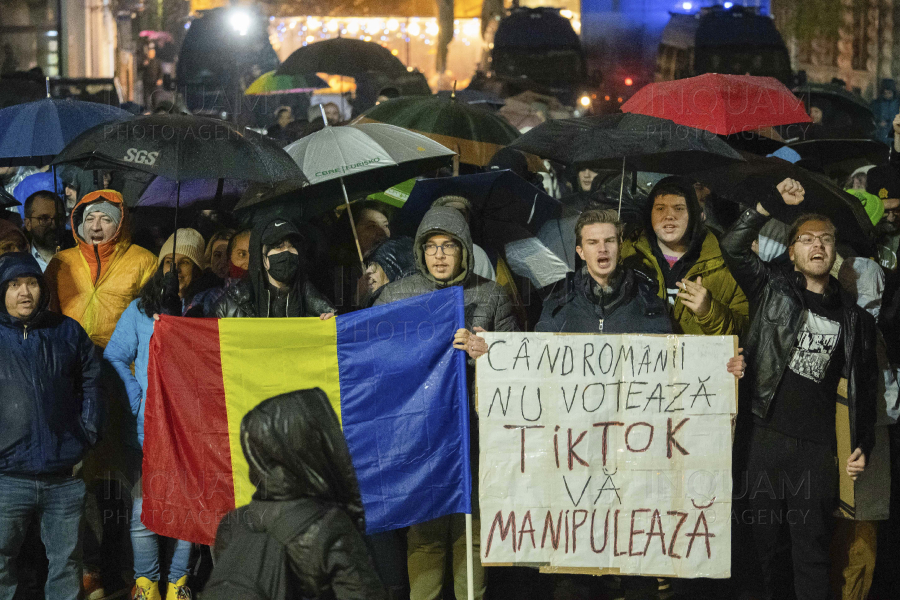
Romania’s score was downgraded after a “shaky decision” by the Constitutional Court to annul presidential election following allegations of Russian interference, illegal social media tactics and campaign finance violations, according the Economist Intelligence Unit (EIU).
A total of 36 countries are classified as “hybrid regimes”, which combine elements of electoral democracy with authoritarian behavior.
Romania was downgraded from the rank of “flawed democracy” to “hybrid regime” in The Economist’s Democracy Index, an annual ranking which analyzes five criteria: electoral processes and pluralism, the functioning of government, political participation, political culture and civil liberties.
Romania’s score was downgraded after allegations of Russian interference, illegal social media tactics and campaign finance violations led the Constitutional Court to annul the presidential election and request a new vote, The Economist reported.
The report was made before more evidence was released about a sophisticated Russian interference campaign and before an ex presidential candidate was charged with undermining Romania’s constitutional order, of setting up a fascist organization, and of lying about the financing of his electoral campaign.
Across platforms such as TikTok, Facebook, and Instagram, pro-Georgescu content flooded timelines, amassing millions of views overnight, a report in US publication Artvoice said.
Romanian intelligence analysis was supported by a coalition of international partners, including NATO, the UK, Canada, Ukraine, Estonia, and the European Commission, which deployed Osavul, an AI-powered information threat detection tool, to analyze Georgesecu’s online campaign.
Osavul identified that over 85% of Georgescu’s online campaign content originated from fake profiles, bots, and AI-generated videos—manipulating social media algorithms to amplify pro-Georgescu narratives.
In the ranking, which analyzes the situation in 167 countries, 36 are classified as “hybrid regimes,” which combine elements of electoral democracy with authoritarian behavior. Also, 71 countries are classified as democracies—25 “full democracies” and 46 “flawed democracies.” The remaining countries—60 in number—live under an “authoritarian regime.”
Romania’s score fell by 0.46 points to 5.99, and dropped 12 places in the ranking to join the other four “hybrid regimes” in the region – Armenia, Bosnia and Herzegovina, Georgia and Ukraine.
Polling data confirmed that public trust in political parties and the government has fallen further in the past year, leading to a decline in several indicators. In line with a global benchmarking exercise, Romania’s score for the prevalence of corruption has also been downgraded.
There is a risk that Romania’s score will drop even further in 2025, depending on how it handles the repeat presidential election and what else emerges about the original reasons for canceling the election, the study’s authors say.
