














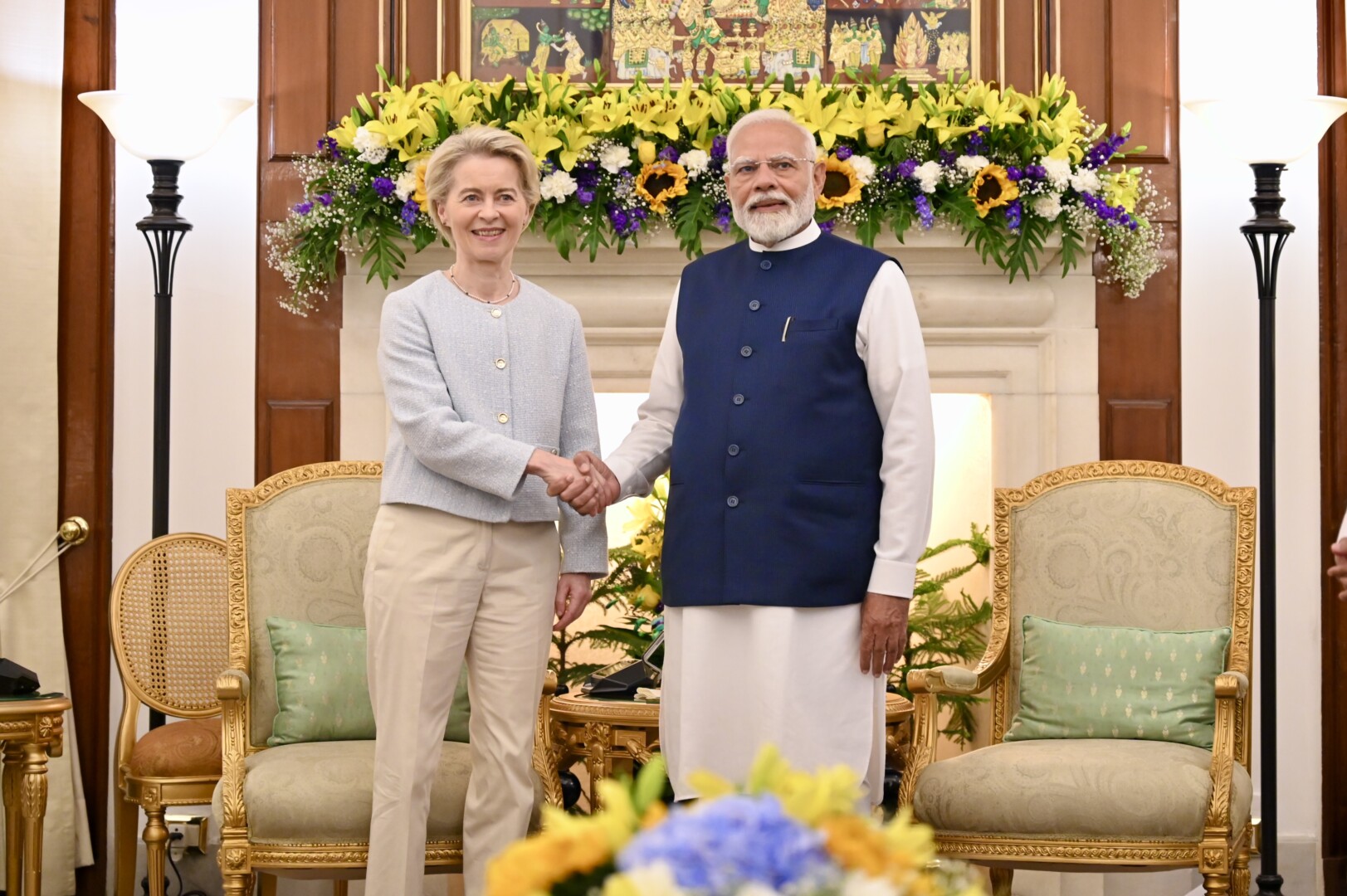
India and the EU have announced the “mother of all deals”: a trade pact which will create a market of two billion people.
This is the result of two decades of negotiation.
The pact is intended to counterbalance the domination of both the United States and China.
The agreement will cut or eliminate tariffs on nearly 97% of European exports.
The EU bloc claims that this should save it up to €4 billion annually in duties.
The agreement “represents about 25 percent of global GDP, and one-third of global trade”, India’s PM informs.
Europe’s key agricultural, automotive and service sectors should see benefits. Meanwhile, India could a) improve its infrastructure and b) provide Indians with a renewed job market through Europe’s technology sector.
Bilateral trade in goods reached €120 billion in 2024, which is 90% up over the past decade, according to EU figures, with a further €60 billion in trade in services.
Tariffs on European cars will be gradually lowered from a top rate of 110% to as low as 10%, while duties on wines shall drop from 150% to as low as 20%.
Tariffs on processed foods (including pasta and chocolate) will be entirely eliminated. Right now they stand at 50%.
Ursula Von der Leyen thinks that this will lead to exports to India to double.
European firms will benefit from privileged access to the Indian financial services and maritime transport market.
The EU remains uncomfortable with India’s close relationship with Russia, but India claims that it is attempting to curb its reliance on Moscow — just as Europe is doing with the United States.
The project should also facilitate movement for seasonal workers, students, researchers and highly skilled professionals.
