






STEVEN GUTKIN WRITES: Maria Corina Machado’s Nobel Prize shines a light on decades of misrule, economic collapse, and human suffering, underscoring that restoring democracy in Venezuela is essential
By Steven Gutkin
I arrived in Venezuela in the late 1980s with eagerness and a sense that I was entering a remarkable country. Caracas greeted me with salsa in the street, the scent of arepas and empanadas wafting from stalls, merengue floating on humid evening air, and a generosity of spirit that I can’t fully convey. Chevere – that word kept echoing in my head, meaning roughly “great!” – the delight in people’s voices, in the laughter late at night, in the warmth of friendships that continue to this day.
At that moment, I believed I was witnessing one of the most hopeful nations in Latin America. But what came after would break my heart. The remarkable nation descended into chaos, undone by some of the most ruinous policies ever enacted by any government.
Awarding María Corina Machado the 2025 Nobel Peace Prize reminds the world that Venezuela’s agony has not ended, and that restoring democracy there remains an urgent moral test. The fall of Nicolas Maduro’s kleptocratic regime is not merely desirable – it would be a major marker of humanity turning a corner.
To understand how Venezuela reached this point, I often think back to my early years there, when the cracks in its foundation were already showing. When I arrived in Venezuela in 1987, a deeply unequal society, a political elite extractive and distant, and a neglect of vast swaths of the population all simmered beneath a fragile democratic veneer. When riots erupted in 1989 after the government imposed harsh austerity measures, I witnessed the thunder of tanks on the streets, the curfews, the crowd surging, the force unleashed to restore order.
It was in that moment I began to understand a truth that would follow Chavez: many Venezuelans felt the elite had taken everything – land, dignity, opportunity – and left them little. In 1992, when Chavez staged his first coup attempt, I was there, covering it, watching as a new kind of challenge to the status quo emerged.
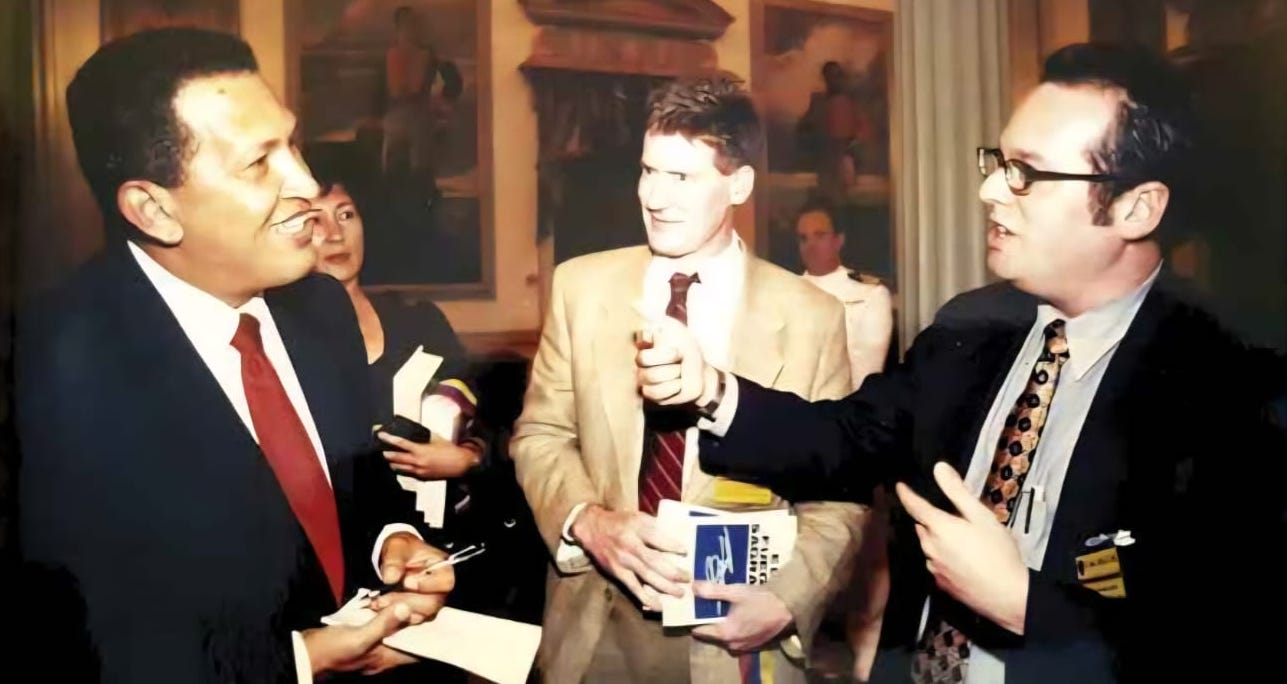
When I returned a decade later, appointed as the bureau chief in Caracas for The Associated Press, Chavez was no longer an outsider. He was the front-runner. I was in his orbit. I accompanied him on state visits; I conducted a private interview in his suite on his presidential plane. He spoke of the poor, of revolution, of inequality, but his personal digs were opulent.
I remember his speeches as he campaigned for the presidency: his neck veins bulged, his face flushed, his voice a roaring wave. He lambasted “the rancid oligarchy” and called them “pigs.” The words reverberated across plazas. Yet hours later, I would sit beside him at lunch. He would eat rice and beans quietly, smile, perhaps joke, with a gentleness you wouldn’t expect from that speaker. He could be warm, even intimate, privately, beyond the stage.
Chavez’s “Bolivarian Revolution” did address some real grievances. Expanded social programs improved literacy and access to basic services for many. Yet what began as a cry for justice curdled into a system of control and corruption that shattered one of Latin America’s great democracies. Chavez centralized authority, politicized the judiciary and electoral institutions, and obliterated independent media. Loyalty to the presidency increasingly eclipsed competence and accountability. When Nicolas Maduro succeeded Chavez after his death, in 2013, the institutions that might have checked disastrous policy were already in shambles.
Economically, the collapse was brutal—hyperinflation, shortages, poverty as norm in the nation with the largest proven oil reserves in the world.
I had witnessed the promise; now the collapse under Maduro was staggering. What was once one of Latin America’s most joyful, prosperous countries has become a cautionary tale of how democracy dies when populism and corruption consume the state.
Hyperinflation peaked at over 1.7 million percent in 2018 and remained extraordinarily high in subsequent years. Oil production — once roughly 3.2 million barrels per day — fell toward 700,000 bpd. Basic goods disappeared from shelves; power cuts and water shortages became routine; hospitals ran without medicine or reliable electricity.
The human toll is wrenching: more than eight million Venezuelans — roughly a quarter of the population — have fled, creating one of the largest displacement crises in the world. Over 70 percent of those who remain live in poverty. Tens of thousands have been detained for dissent, hundreds killed in crackdowns, and more than 1,600 people are widely reported as political prisoners. Internationally, Venezuela has become a pariah: sanctions, diplomatic isolation, and reputational collapse reflect a global judgment about the regime’s brutality and kleptocracy.
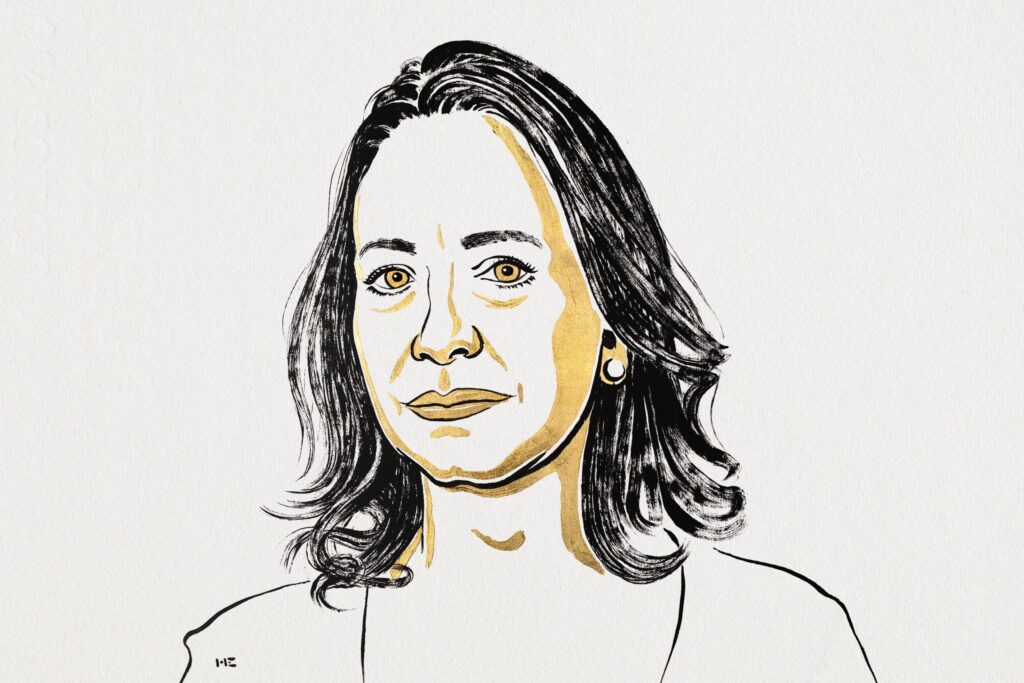
Machado, born in Caracas in 1967, is a Venezuelan opposition leader and founder of the civic group Sumate. A fierce critic of Chavez and Maduro, she was elected to the National Assembly in 2010 but later expelled for denouncing government abuses. As head of Vente Venezuela, she has become the leading voice for restoring democracy despite bans, threats, and persecution.
Her Nobel Prize underscores both the scale of the crisis and the urgent need for action. She is the key opposition figure, but this need not be seen as a partisan endorsement; it is a signal that the world must back a credible, peaceful path to remove a regime that has brought so much suffering. But removing Maduro peaceably requires a strategy that rejects bluster and coercion. “Gunboat diplomacy,” tariff tantrums, or unilateral military adventurism will either harden the regime’s grip or impose yet more pain on ordinary Venezuelans. The alternative is a disciplined, sequenced, multilateral plan that combines domestic nonviolent pressure, calibrated international levers, a credible transitional compact, and rapid stabilization measures for the economy and security sector.
First, Venezuela’s own civic forces must be strengthened. People power — disciplined, decentralized, and protective of activists and journalists — is the most plausible engine of change without mass bloodshed. Coalitions need secure communications, legal support, and decentralized organizing. Clear, achievable demands — release of political prisoners, independent election timelines, civilian control over security forces — help sustain domestic legitimacy and international sympathy. Democracies should provide training, secure communications, legal aid, and rapid consular assistance for activists, while avoiding actions that can be portrayed as foreign control.
Second, international pressure must be smart and conditional. Broad sanctions that hurt ordinary citizens play into regime propaganda. Instead, allies should target the kleptocratic networks: asset freezes, travel bans on elites and enablers, and secondary sanctions on those who traffic illicit funds. Crucially, these measures must be linked to a credible ladder of relief: verifiable political steps by the regime should trigger phased easing. Coordinated leverage by the United States, the EU, the OAS, and regional partners multiplies the pressure while preserving humanitarian channels.
Third, diplomatic isolation should be paired with credible exit incentives for key regime actors, especially within the security apparatus. Back‑channel negotiations can offer conditional amnesties for lower‑rank personnel, reintegration packages, pensions, and guarantees against summary reprisals — in return for the immediate surrender of command and exit by hardline leaders. Getting segments of the security forces to defect or stand down peacefully is the clearest path to avoiding mass violence.
Fourth, a transitional compact must be pre-negotiated. Opposition leaders, civil society, and international guarantors should agree in advance on a short, enforceable timetable: immediate humanitarian relief and prisoner releases; formation of a nonpartisan interim government; international supervision of security‑sector reform; and free, internationally monitored elections. The compact should include forensic audits of state oil revenues, emergency stabilization of currency and banking systems with IMF and World Bank technical help tied to governance benchmarks, and a reconstruction finance mechanism with transparent procurement.
Fifth, security‑sector reform and transitional justice must proceed in tandem. Disbanding abusive units, vetting security forces, and reintegrating rank‑and‑file personnel must accompany narrowly focused transitional justice: truth commissions, asset recovery, and selective prosecutions for the most egregious crimes. Conditional amnesties can be part of negotiated exits, but blanket impunity must be avoided. International peacekeepers should remain a last resort and only under a clear UN mandate with explicit, time‑limited objectives.
Finally, immediate humanitarian relief and a diaspora‑driven economic reboot will be essential. Humanitarian corridors, restoration of medical supplies, secure remittance channels, diaspora bonds, a transparent reconstruction fund, and conditional foreign investment — anchored by oil‑sector audits and anti‑corruption guarantees — can jump‑start recovery once political benchmarks are met.
I once danced to salsa in Caracas and watched tanks roll through its streets. I’ve seen both the promise and the tragedy of Venezuela. The world owes it to its people to help them reclaim the promise.
Steven Gutkin is the former Associated Press chief of bureau in Venezuela.
