



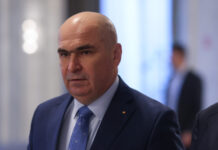
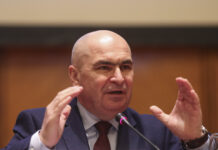







Former presidential candidate Calin Georgescu who caused a stunning upset by winning the first round of Romania’s presidential elections campaigned on negative messaging about NATO and the European Union.
The pro-Russia candidate who also said he doubted the war in Ukraine, was guilty of ‘challenging the essential purpose of NATO’ according to Andrew Baker, the director of the American Jewish Committee.
Romania celebrated 20 years of NATO membership this year and it will fully join the Schengen area on January 1, ending 14 years of frustration and accusations of discrimination. The development will save Romanian hundreds of millions of euros as truck drivers and tourists will no longer have to wait for hours at border crossings.
Romania joined the European Union on 2007 and since then billions of euros of investment has poured in, fueling rural and institutional development, leading to greater prosperity.
Romania’s nationalist parties which won a historic number of seats in Dec. 1 parliamentary elections are EU and NATO skeptic, saying Romania has been historically discriminated against and even suggesting it would fare better remaining neutral.
Mr. Georgescu in November said he was pleased Romania had not joined Schengen.
CaleaEuropeană.ro examined these claims looking at two simple questions:
- How do the European Union and NATO respond to the main concerns and needs of Romanian citizens?
- What do Romanians, at home and abroad stand to lose if Romania leaves the European Union and NATO?
The majority of Romanians trust the EU and NATO, above the EU member state average, according to Eurobarometer survey carried out between October 10-30. The survey found the highest level of trust in the bloc since 2007.
Some 56% of Romanians trust the EU, above the EU average of 51%. As for optimism about the future of the EU, Romanians are also above average, with 67% of respondents declaring themselves optimistic. As far as NATO is concerned, 61% of Romanians trust NATO, compared to the European average of 56%.
Eurobarometer detailed Romanians’ main concerns:
- The cost of living, inflation and rising prices, which are the major concern for both Romanians (40%) and other European citizens (33%);
- The general economic situation is perceived by Romanians (24%) as a major challenge in a context of global economic instability;
- The public health system, which remains a constant priority for Romanian citizens (16%);
- Security and defense, a topic amplified by the tense geopolitical context in the region, with 32% of Romanians considering the war in Ukraine as the EU’s main concern.
In the annual poll that the Alliance publishes every spring, Romania was in the top six allied countries with the strongest popular support for NATO, with 82% of Romanians voting to remain in NATO.
The survey showed that 75% of Romanian citizens believe that NATO membership protects us and “makes an attack from a foreign country unlikely”.
So how do the European Union and NATO respond to the current concerns of Romanian society?
Romania has exclusive access to over 75 billion EU euros by 2027 (European funds and the National Recovery and Resilience Plan) which are ready to be accessed and based on reforms for the modernization of the country.
As part of the post-pandemic economic recovery mechanism, Romania benefits from €29.2 billion (€14.2 billion in grants and €14.9 billion in loans taken at an interest rate below 1% thanks to the European Commission’s credit rating) for investments and reforms in multiple areas under the PNRR.
The funds are allocated for investments and reforms in multiple areas with the aim of reducing the cost of living, investment-based economic growth, energy efficiency, supporting vulnerable categories, modernizing the public health system, reforming education and supporting research and innovation. Of these:
- €9.5 billion is allocated to the modernization of energy networks, support for green transport and investments in environmental infrastructure;
- €3 billion goes towards the digitalization of public administration, education, health and supporting SMEs for the digital transition;
- €5.7 billion is earmarked for reducing development gaps between regions, supporting vulnerable groups, and improving access to public services;
- €3.6 billion for the modernization of educational infrastructure, the rehabilitation of schools, digital laboratories and the training of teaching staff;
- €1.5 billion for research, development and innovation;
- 2.5 billion euros for strengthening the health system by modernizing hospitals, building regional hospitals and improving health infrastructure.
A message for Romanian farmers. EIB announces €3 billion financing for farmers and bioeconomy
