







In the Russian-Ukrainian war, we’ve been witnesses to various eccentric efforts by Donald Trump, but one thing became crystal clear is this (and it is linked to the “Peace is not the key, but war” story of May 26.)
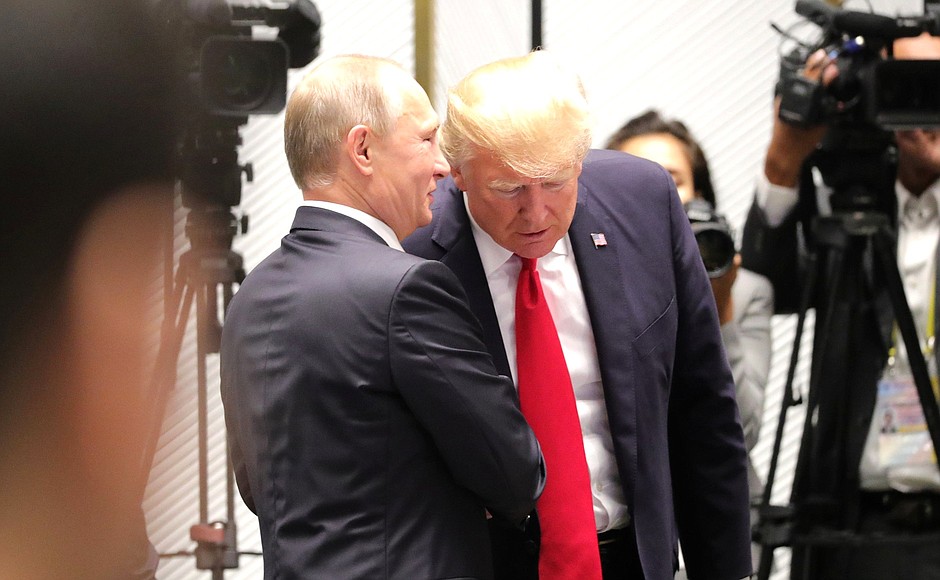
Those who have become somewhat familiar with Donald Trump’s way of expressing himself after each discussion with Vladimir Putin, on Wednesday, June 4, noticed something new: that Donald Trump has emerged from the bombastic denial of reality and has stepped, ever so slightly, into the realm of accepting it.
“It was a good conversation, but not a conversation that will lead to an immediate peace“, the US president said on Wednesday, after a telephone conversation with the Russian dictator. And it is imperative to remember the second part of the statement!
It goes without saying that it took him four months to stop blindsiding the world with smoke bombs from a hyper-ventilated optimism about how close peace was after he or his special emissary Steve Witkoff spoke to Putin.
It’s easy to anticipate the ‘bankruptcy’ of the “Trump method”, if we think about the well-known cruelty of the “Putin method”, the tenacity of the “Zelensky method” and the authenticity of the “European awakening”.
For Trump would not have come to admit that “it was not a conversation that led to an immediate peace” if peace had indeed been looming on the horizon.
And peace has not been on the horizon because, in all these months since the US has had a new president, Putin has done nothing but drag it out, telling his American counterpart only what he wanted to hear, and at the same time, on the ground, he, Putin, acting diametrically opposite.
Peace was not on the horizon because, if it had happened on Trump’s terms, it would have been an unjust peace for Ukraine. Therefore, Ukraine not only did not give up its fierce defense but also switched to an extremely offensive and increasingly asymmetrical defense.
Finally, peace was not on the horizon because, on Trump’s terms, it would have been a dangerous peace for the rest of Europe. It would have been a peace that would have predisposed to the outbreak of war again, perhaps of a war even more far-reaching than the current one.
Europeans cannot forget the lessons of the two world wars and especially the lesson of the flawed peace in the years between the wars as World War II brewed. Europeans know to defend themselves in advance: despite Trump’s pressure, they have strongly closed ranks in these four months, stubbornly supporting Ukraine, and at the same time carrying out the necessary clarification with the stubborn White House.
What is certain today is that Donald Trump really felt humiliated by Vladimir Putin, that he really came to see things closer to the way Volodymyr Zelensky sees them, that he came to an unexpectedly similar conclusion as his European counterparts.
The uncertainty that hovers, however, has to do with what is called consistency.
Given the history of Trumpist changes of mind, it is not yet certain whether the June 4 revelation will last long enough to actually take root, and thus lead to a relevant mutation in Trump’s approach to the Russian-Ukrainian war.
But even so, it is commendable that the ice axe from Washington still made at least one crack in the ice.
And it is also a signal that, indeed, the path of dialogue and the potential of understanding with Donald Trump depend on a detail long anticipated by many: the fact of speaking the same “language” as Donald Trump.
Not the English language, of course, but the language of power, determination, daring, of the equal who proves that he really is equal, of the perspective of profit in all its manifestations and especially the language of the spectacular.
If we look at the four months and a bit, since January 20, when Donald Trump was anointed president, I think it is easy to see that Ukraine, and its European and non-European allies have sought to have a dialogue with Trump in the same “language”. And above all, I think it can now be noted, that they have actually succeeded.
From the tariffs, to Ukraine’s rare minerals, NATO and up to the actual file of the Russian-Ukrainian war, Ukraine’s allies and Ukraine itself quickly overcame the initial astonishment, retreated on the fly, and in a timely manner and in the right directions went on the offensive – charm offensive… followed by a military offensive.
Trump treated Ukraine and treated Europe exclusively with a stick. Ukraine and Europe treated Trump with the stick… and also the carrot. It seems that the success has stuck with the camp that relied on… Dialectics (Eds: the art of investigating or discussing the truth of opinion ).
On June 4, Trump’s attitude, which followed his discussion with Putin, provided a confirmation that this approach really does work.
I think that, in this regard, a significant and last-minute impetus was given by the four days – from Saturday to Tuesday – in which Kyiv managed to ensure the total spectacle, through four extensive sabotage operations on Russian territory – close to the border, but also in an unprecedented depth.
Basically, Trump’s tone after Wednesday’s conversation with Putin is an invitation addressed to Europeans and Ukrainians to continue on the path they have taken – both in the relationship with America and in the relationship with Russia.
What else could you have wanted from an American president who, just four months ago, had started his term in office with a bang blocking your path and putting obstacles in your way?
