







Where the old world lingers, stubbornly and beautifully
I recall waiting impatiently in line at a Würstelstand, well past midnight, anticipating my favorite sausage in the world: eine Kasekrainer mit viel scharfem Senf (filled with cheese, spicy mustard, surrounded on all sides by bread). Before me three young toughs were arguing; they had only enough money among them for two sausages. “Ich will auch essen!” cried the odd man out. I want also to eat!
The tall, ungainly fellow’s Adam’s apple bobbed in youthful desperation. A commotion ensued. No one offered them money, and I stayed out of it myself; if there is one thing I have learned, it is to leave young idiots alone. The problem was never fully resolved, and the troublemakers receded, cursing each other bitterly. Sausages were no laughing matter in Vienna in the 1990s.
It is over three decades later and I am back. I spent some time looking for these Wurstel stands this weekend. There seem to be fewer than before. There is much encroachment from all sides, also by McDonalds, but mainly by kebap dispenseries. The dreaded Ottomans are making their return, of a fashion.
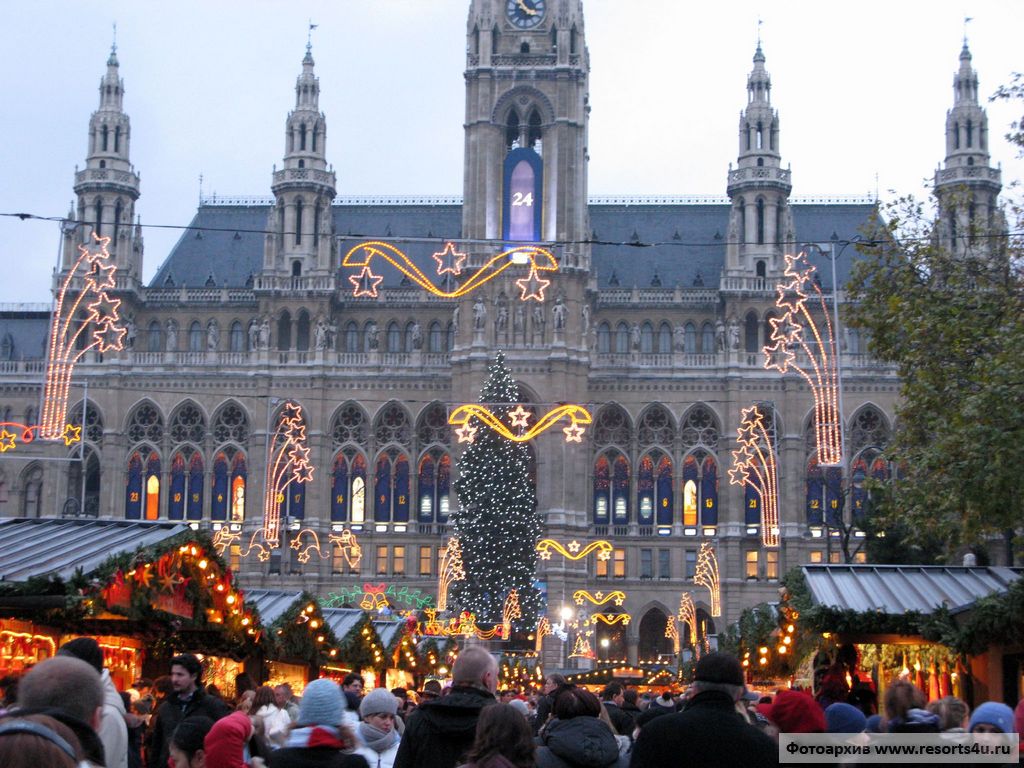
Mostly, though, it still seems the very same Vienna, and it may be the most successful failed city in the world. Not failed in the Somalia sense. It is wealthy, orderly, cultured, and routinely ranked among the world’s most livable places. The trams arrive on time. The parks are immaculate. The cakes are extraordinary. Stoic horses drawing carriages along cobblestone streets.

Here and there, one of the remaining native waiters will still wear a tuxedo and carry himself with the exhausted dignity of a man whose forebears served ministers of empire yet must now tolerate tourists, as heartless history left no choice. It’s still a fine place for a political debate, but mostly it seems to live in the past. Some characters seem oddly flamboyant, sporting a huge mustache or a well-groomed pooch. The reality is much diminished; the aesthetic is the same.

Most great European capitals evolved through catastrophe, or at least upheaval. London burned, industrialized, and reinvented itself. Paris became modern through imperial planning. Berlin was trashed and rebuilt into something jagged and contemporary. Even Rome absorbed some modernity through chaos.
To understand Vienna, meanwhile, we must remember what it was before the First World War: in effect the capital of the Austro-Hungarian Empire, one of the great supranational states in European history. Czechs, Hungarians, Croats, Jews, Italians, Poles, Slovenes, Ukrainians, and countless others passed through its ministries, cafes, universities, salons, concert halls, and military academies. Vienna was cosmopolitan, theatrical, hierarchical, and deeply self-confident.

Austria-Hungary was also the intellectual center of the wider Mitteleuropa – which attached to the strange idea that something very special was to be found in Germanic central Europe. To its lovers it was a civilized meeting point at some remove from the vulgarity of the margins – Balkans, Slavs, French and Italians, Iberians and even silly Brits all jostling for supremacy and making noise about the world. With a minor German exception it no colonies. It had culture. By the middle of the twentieth century, alas, we saw what all that culture was worth.
But until that happened, the beating heart of this culture was the Jews. Jewish Vienna, and its nearby extension in Prague, was a global juggernaut. Sigmund Freud, Gustav Mahler, Stefan Zweig, Arthur Schnitzler, Franz Kafka, Walter Benjamin, Hannah Arendt, even Albert Einstein (who worked in Prague). The list goes on. Fans of Kubrick (and Tom Cruise and Nicole Kidman) might know that the movie Eyes Wide Shut is really about Vienna – read Schnitzler’s novella and be amazed at how faithful to it the film was.
In general, if I may, do yourself a favor and read The Post Office Girl by Zweig; contemporary novels are by comparison a pale and pitiful shadow consumed with trivia and tweeting. Then read The World of Yesterday, Zweig’s brokenhearted lament for what had happened, before his 1942 suicide in Brazil. “The world of my own language sank and was lost to me, and my spiritual homeland, Europe, destroyed itself,” Zweig wrote in his suicide note. He meant central Europe.
So the empire vanished. The First World War destroyed Austria-Hungary and partitioned it into nationalist states. One struggles to comprehend this period. On one hand WWI seems the silliest of wars, triggered by the assassination of the heir to the throne, Archduke Ferdinand, by a Serb, followed by a bizarrely joyous rush to continental butchery as a result of an interlocking web of alliances. But on the other hand, it defined the modern world as we know it.
Directly or indirectly, the war put paid not just to the Habsburg monarchy but to the Ottoman Empire and the Russian Empire as well; turned Germany into what it is today through defeat, the disgrace of World War II, and its postwar rebirth; and made America the dominant world power. Everything from decolonization to Elon Musk followed from it. The energy of Europe shifted westward away from Mitteleuropa. A dark curtain fell over most of the region, but Vienna — surrounded on three sides by the Soviet empire — somehow escaped communism.

For long decades it sat there, suspended in time, yet physically intact: an enormous imperial capital suddenly governing a small republic far too minor for all the grandeur that radiated outward in concentric rings of opulence from the Stephansdom cathedral, one of Europe’s most imposing.

I had to wander inside; these places are amazing. Think of what was left undone, in the 12th and 13th centuries, in order for this pile to be erected!

The mismatch still defines the city. The boulevards are too grand, the buildings too monumental, the ceilings too high.

The palaces seem built for a vanished civilization that faded into the wallpaper, and the streets are often strangely empty, except for tourists.

Moreover, Austria after the collapse of the empire was not just small but oddly uncertain, stripped of the multinational framework that had justified its existence. Many Austrians in the interwar years struggled to imagine the German-speaking country as separate at all. The pull toward Germany was too powerful. That unresolved identity culminated catastrophically in the Anschluss of 1938, when Austria was annexed into Nazi Germany to widespread enthusiasm. Hitler himself, after all, was Austrian. Not a point of pride now; not the finest moment.
Modern Vienna has invested heavily and sincerely in memorialization. Holocaust monuments, museums, plaques; it does memory very well.
I went to a street called Judengasse (Jews Alley). There are some rather sorry bars there, I must say. Things there were snazzier in the 1990s.

But also, perhaps fittingly, there is still the excellent Shakespeare & Co., where you can sense the love of books like a powerful incense in the air.

And not so far away, a packed Irish Pub with a remarkable assemblage of bric-a-brac threatening to come crashing down at any moment from the ceiling. The fellow in red was extremely determined to keep the seats next to him free. You don’t mess with an angry oldster in an Irish pub; that’s another thing I’ve learned.

I used to come to Vienna frequently. In 1990, the legendary AP journalist Alison Smale hired me to chronicle Romania’s calamitous post-communist transition. Alison, whose posh-adjacent British accent made her sound world-weary before her time, ran AP’s regional editing hub in Vienna and would occasionally bring me there to help edit. Soon it was mostly about the Yugoslav wars. In every capital of each new “country” there was some correspondent who adored her.
Alison later became deputy foreign editor of The New York Times and editor-in-chief of the International Herald Tribune. Decades later now, she is back in Vienna with her Russian-Jewish musician husband, Seryozha. We reminisced about vanished colleagues, old wars, the way things were back then in the 1990s.

Here’s what happened then: the collapse of communism and the Yugoslav wars unexpectedly, for a few years at least, restored some of the city’s geographic importance. Vienna was no longer a sleepy frontier city at the edge of the Iron Curtain. It became a gateway again between Western Europe and the former imperial east. Business surged. Diplomats returned. Refugees and migrants arrived — Russians, Ukrainians, Serbs, Croats, Bosnians, Hungarians, Slovaks, and countless others seeking stability and opportunity. In a curious way Vienna partially resumed its old role as a crossroads. Put another way: the migrants here, at least until recently, were not from the Middle East, and they wanted very much to blend in. These patterns, too, have affected the politics of the place.
One of our colleagues, George, was quite proud of his source reporting on the UN nuclear agency, which is located in Vienna. Iran gave it relevance with its nuclear deceptions. George, we imagined, would wink and nod at officials in the elevator— perhaps tapping his beret thrice with his left index finger, raising a prominent eyebrow, but only once. Those who needed to understand — would understand.
So here we are. This is now the European Union; mock it all you want, but it has beauty and ideals. Can Vienna truly be one of its co-capitals? Not so clear. The claimants are many. I was just in Berlin — it has a case. Perhaps London once more? Paris — to be sure. The head spins at the thought of all these wonderful cities. So what if it’s largely a museum? Vienna has some innovation, but being the leading edge of business is not the thing here. That’s all OK with me.

As a teenager, when I was developing my particular musical tastes, one of my first purchases was Billy Joel’s album (ah, albums) called “The Stranger.” The big hit was the angry, syncopated “Movin’ Out”; romantics liked “Scenes from an Italian Restaurant”; lovers of saccharine and weirdly sexist nonsense preferred “Always a Woman.” But for me, the masterpiece was “Vienna.” There is a tendency when first hearing this song to imagine it addresses a lover – or a son or daughter; the lyrics sound intimate. “Slow down, you crazy child, you’re so ambitious for a juvenile, but then if you’re so smart, tell me why are you still so afraid?”
But the song is actually about the city of Vienna! It emerged from Joel’s reunion with his estranged father, a German-born Jew who never took to the United States. Visiting him here, Joel arrived carrying the familiar American conviction that life is a race against irrelevance, that one must constantly achieve and grow and produce. And he encountered Vienna’s very different relationship to time.
“Where’s the fire, what’s the hurry about? You’d better cool it off before you burn it out,” Joel sings. “Slow down, you’re doing fine — you can’t be everything you wanna be before your time … When will you realize? Vienna waits for you.” Vienna symbolizes a civilization still attached to patience, cultivation, aging with dignity — in a song that’s a sublime companion to the city. The magic of art!
Seryozha – an artist’s artist – says life is about “light, love and beauty.” He promises that “they will never guide you to anything bad.” Technically, this is not exactly true. But if there is a third thing I have learned — perhaps the most useful of all — it is never to argue with an artist. Of any age.
Seryozha and Alison have found their place for quiet contemplation. We should all seek such a thing, I do believe. For we are all for now still here, against at least some of the odds — a shade rumpled to be sure, but more appreciative than once we were.
