














Bad Bunny, this year’s Super Bowl halftime show star, wore Zara during his performance. It was a surprising departure from consecrated luxury labels as Inditex, the company behind the brand, is taking a bold step toward a more accessible luxury concept, eToro analyst for Romania, Bogdan Maioreanu.
Bad Bunny’s monochromatic cream outfit, custom-designed by Zara, was a surprise for the Super Bowl audience. The brand also dressed the backup dancers, the band and the orchestra. For Inditex, and especially for Zara, the move has clear implications. When Bad Bunny appeared on the world’s most expensive and symbolic stage dressed in Zara, he broke an aesthetic tradition.
In previous shows on the same stage, huge names in entertainment wore luxury brands like Versace, Christian Louboutin, Dolce & Gabbana, and Givenchy. Until now, that space belonged to classic luxury. This time, the brand highlighted on stage was an accessible one.
Stars are lobbying to participate in the Super Bowl halftime shows despite not being paid a performance fee, because the gig is considered a career-defining honour. However, behind the musical performance, the star’s outfit has a financial performance of its own. The influence of a specific artist creates business opportunities for the respective company. It is estimated that Bad Bunny’s 14-minute halftime performance generated $3.1 million in brand value for Zara, and similar Zara T-shirts have circulated on international resale platforms, selling for up to 30,000 euros.
With this move, Inditex, the company that owns the Zara brand, demonstrated a rare ability to generate global relevance without resorting to direct advertising expenditure with a cultural moment. The market tends to focus on margins and comparable sales, but here is an intangible asset that reduces the need for incremental investment to sustain brand and growth.
But Zara was not the only brand to benefit from the exposure created by Bad Bunny. The Latino singer also debuted the all-white version of his Adidas x BadBo 1.0 sneaker during his performance. As a result, Adidas generated $1.6 million in media impact value. This media impact value metric measures the monetary value of a brand’s social media and article mentions.
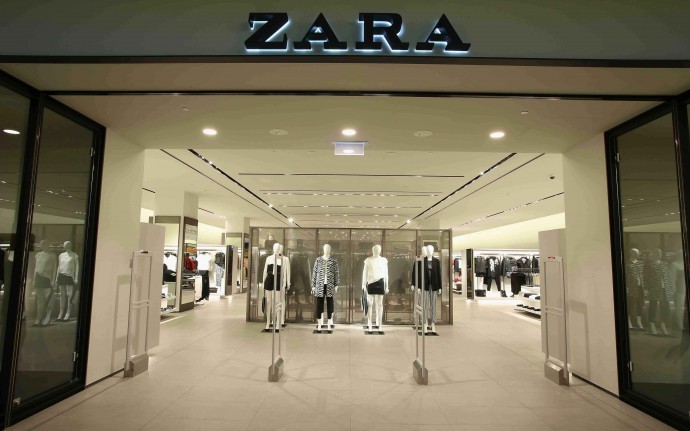
Bad Bunny’s outfit by Zara looks to be part of a greater project. Inditex has announced a collaboration with Ludovic de Saint Sernin, the Belgian designer consecrated at the Paris Fashion Week. The launch of a joint collection follows the line of recent initiatives to raise the brand’s positioning, from the opening of flagship Zara stores under new premium and sophisticated concepts such as the one in Serrano, Madrid, or the one in on Barcelona’s iconic Avenida Diagonal, to high-flying collabs on selected collections, such as the one launched with former YSL head designer Stefano Pilati. Fashion critics view these collaborations as limited‑edition capsule drops, with fashion‑week‑style campaigns and minimal emphasis on volume, reinforcing a more exclusive, luxury‑like narrative.
In a very crowded advertising space, brands are craving for customers’ attention, and opportunities like the Super Bowl are not to be missed. But beyond the show, Zara’s luxury‑adjacent strategy appears to be a multi‑pronged push: higher‑end pricing and capsules, designer and creative‑industry collaborations, architecturally elevated stores, editorial‑style storytelling, and lifestyle experiences are pushing the brand into a more upscale position. One that might be fashion‑culture‑oriented rather than a purely volume‑driven fast‑fashion retailer.
When a company changes the category in which it plays, the market is often slow to adjust prices. That is where value may appear. And apparently investors noticed, as in the past 30 days, before the start of the Middle East conflict, which brought important corrections on stock markets, Inditex’s stock price increased by over 5%, while Adidas was up 11%.
_
