






Since Russia’s invaded Ukraine in 2022, the European Union has adopted nineteen successive packages of sanctions aimed at weakening the Russian economy and, in particular, its energy revenues.
Coal imports were banned first, followed by crude oil and refined petroleum products. Natural gas flows were drastically reduced through sanctions and embargo.
However, one major sector has remained almost entirely untouched: the Russian nuclear industry.
Discussions about extending sanctions to the nuclear sector were initially scheduled for June 2025 in Brussels, but these were postponed due to the lack of political consensus among EU member states.
Actually, several governments, led most notably by France, have expressed strong reservations about any measure that could disrupt nuclear fuel supplies.
These delays reinforce criticism from environmental organizations and political actors who are arguing that nuclear energy is a blind spot in Europe’s sanctions strategy.
A report published on January 28 by Greenpeace reveals that nuclear trade links between France and Russia are persisting.
The report informs that, in what reveals itself to be a disappointedly opaque gesture, uranium is continuing to circulate between Paris and Moscow despite the broader sanctions regime.
Despite or because of the confidential nature of nuclear supply contracts, France’s actions are legal, but morally removed from public credibility.
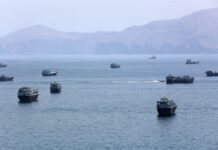
However, this isn’t something new: the ongoing connection has been well-documented over the years. Russian cargo vessels departing from ports such as Saint Petersburg or Ust-Luga on the Baltic Sea continue to dock regularly at the Port of Dunkerque in northern France. These ships transport containers holding uranium in various forms, including enriched uranium and processed nuclear fuel assemblies destined for French reactors.
French authorities insist that France does not import uranium mined on Russian territory. The claim is technically accurate, however, Greenpeace’s analysis of customs data shows that between 2022 and September 2025, nearly half of France’s uranium imports originated from Kazakhstan and Uzbekistan. While these countries are independent states, their nuclear industries remain closely intertwined with Russia’s. Uranium mined in Central Asia is frequently transported through Russian infrastructure and may be converted or enriched by Russian facilities before reaching Western Europe.
This distinction between the geographical origin of uranium and the industrial processes it undergoes is not trivial. Russia, through its state-owned nuclear corporation Rosatom, controls a significant share of the global market for uranium conversion and enrichment. These stages are indispensable for nuclear fuel to be used in reactors. Even when European countries source uranium from non-Russian mines, it appears they often remain dependent on Russian services further along the supply chain.
Greenpeace is now arguing that this system is allowing Russia to continue generating revenue from nuclear activities while formally complying with EU sanctions, and takes umbrage with the lack of transparency surrounding these transactions, noting that nuclear fuel contracts are often classified as commercially sensitive or strategically confidential. As a result, neither the public nor European institutions have full visibility into the financial flows involved or the precise role played by Russian companies.
But many European governments fear that a sudden break with Russian nuclear services could jeopardize electricity supply and drive up energy prices. Unlike oil or gas, nuclear fuel cannot be easily replaced on short notice, as reactors are designed to operate with specific fuel types and certification processes can take years.
France generates roughly 70% of its electricity from nuclear power and values continuity in this regard, both for grid stability and carbon-reduction goals. Other Western European countries with nuclear fleets, such as Belgium and Spain, share similar concerns, but want to reduce dependency on Russia over time, not cold turkey — similarly to France, should it be given the benefit of the doubt.
Eastern European countries, by contrast, often view Russian nuclear involvement through a more explicitly geopolitical lens. These states tend to support tougher sanctions, arguing that any continued economic relationship with Russia undermines Europe’s support for Ukraine. Hungary and Slovakia are the exceptions, for their reactors are specifically designed to run on Russian fuel, actively oppose nuclear sanctions and maintain close cooperation with Rosatom. Hungary, in particular, has expanded its nuclear partnership with Russia.
In short, the debate over nuclear sanctions exposes a fundamental tension within the European Union. Some states are more transparent, others are more…pragmatic.
