















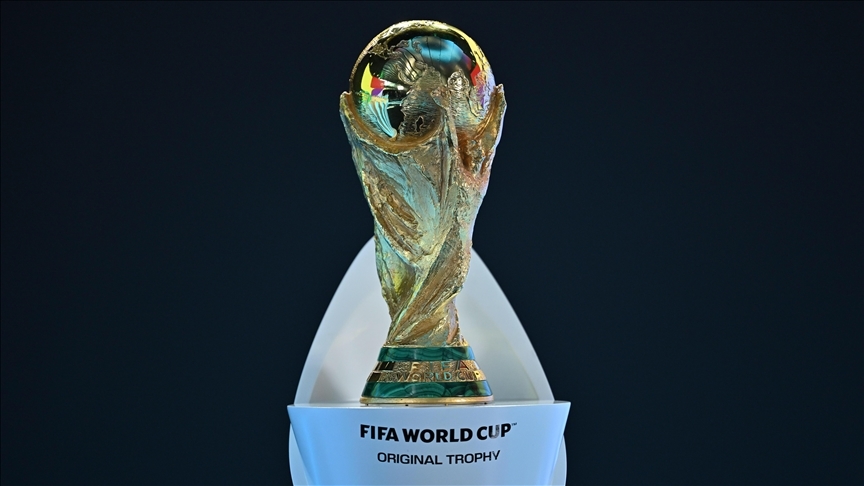
For nearly two weeks, football has captured global attention as the best teams in the world are competing for glory. In Romania, enthusiasm is more muted this year as the national team is again left out of the World Cup. Our national team’s last qualification at the final tournament was in 1998.
Yet beyond sport, the competition is one of the world’s largest business events, where global brands compete as fiercely as national teams, except they do so for the public’s attention and their wallets, writes eToro analyst for Romania, Bogdan Maioreanu. And this year’s tournament, hosted by North America, is the latest place where a long-term rivalry between the European brand Adidas and the US-based Nike is unfolding under supporters’ eyes.
Adidas, this year’s tournament’s official sportswear partner, has been supplying the official match ball for over 50 years, including this year’s innovative Trionda ball featuring a motion sensor which connects to the VAR system. Nike, while not directly sponsoring the event, outfits many top teams and the two different types of promotion are sharing the spotlight. In theory, such a massive stage should benefit the two companies on multiple levels, including boosting their stock market values. However, history tells a different story. Data from the last six World Cups shows that stock declines during tournaments were more common than gains. Adidas shares fell during five of the last six tournaments, averaging -3.95%, while Nike delivered a modest +0.56% on average. Notably, neither company achieved strong gains simultaneously during any tournament.
Even sponsoring the winning team offers no guarantee. Adidas backed champions in 2010 (Spain), 2014 (Germany), and 2022 (Argentina), with mixed post-tournament returns of +1.99%, -6.12%, and +21.63%. The situation is similar for Nike, which sponsored the winning teams in 2002 (Brazil) and 2018 (France). During the first month after the tournament ended in those years, Nike shares generated returns of minus 7.45% and plus 2.86%, respectively. It is difficult to find any clear patterns in these figures. Ultimately, financial performance, growth prospects, and macro conditions matter far more than on-field victories. However, real divergence appears during the period between tournaments. Since December 2022, Adidas shares have risen over 57%, while Nike has lost about 57%. This year, Adidas is almost flat, while Nike is down roughly 34%. Thus, the difference between the two sportswear giants’ stock market performance reflects strategy execution and investors’ expectations rather than the top tournament’s exposure.
Under CEO Bjørn Gulden, Adidas has strengthened its position by focusing on sportswear-lifestyle integration and expanding in key markets like China and Latin America. In Q1 2026, revenue grew 14% and operating margin reached 10.7%. Nike, by contrast, is undergoing a more difficult turnaround under Elliott Hill, facing inventory issues, tariff related costs, weaker wholesale demand and slowing sales, including a sharp decline in China.
Adidas entered this World Cup from a position of strength, while Nike remains under pressure despite early signs of stabilization. However, both companies cannot afford to lose the public’s attention. Notably, while the World Cup boosts brand visibility, stock performance ultimately depends on fundamentals, revenues, margins, and strategic execution – and less about who wins on the pitch.
_
